

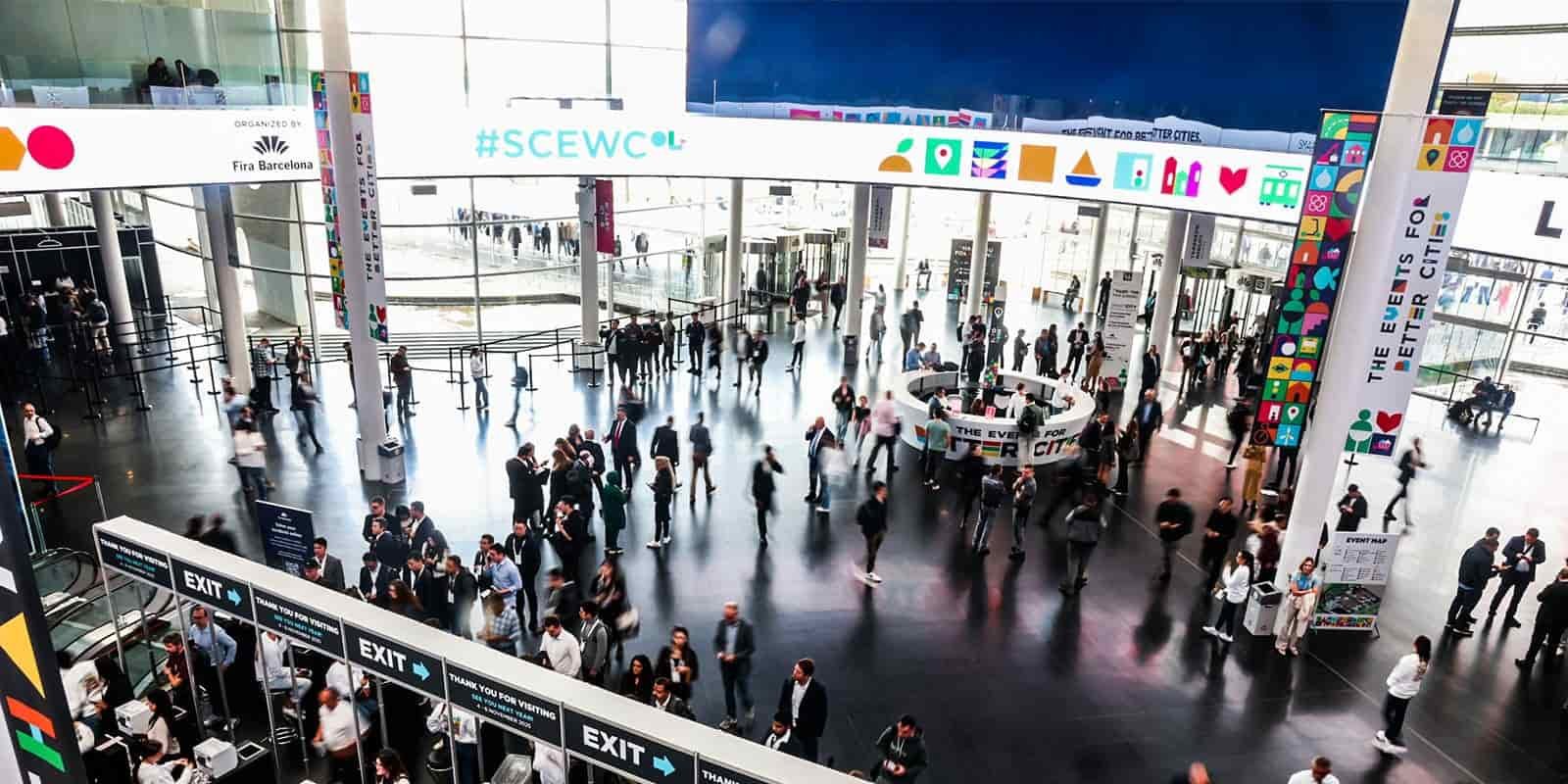
Smart City Expo World Congress 2026 – Barcelona, Spain
What to expect
Smart City Expo World Congress (SCEWC) is one of the world’s leading events dedicated to urban innovation, smart cities and the technologies transforming how people live, work and move through cities. Organised by Fira de Barcelona, the event brings together city governments, public authorities, technology companies, researchers, investors, urban planners, infrastructure providers and international organisations to discuss practical solutions for more sustainable, connected, resilient and inclusive urban environments. The official event positioning describes SCEWC as a global meeting point for cities and organisations working on urban transformation.
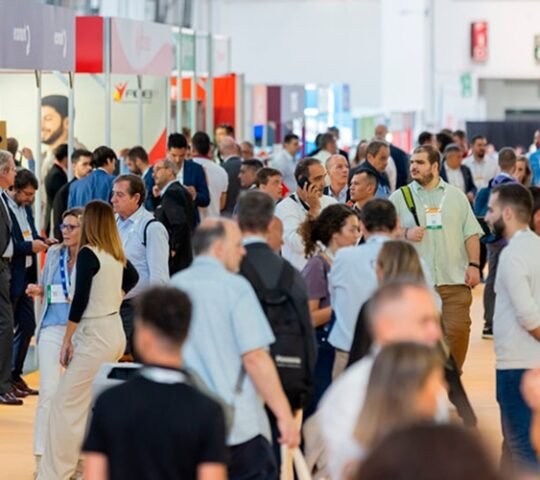
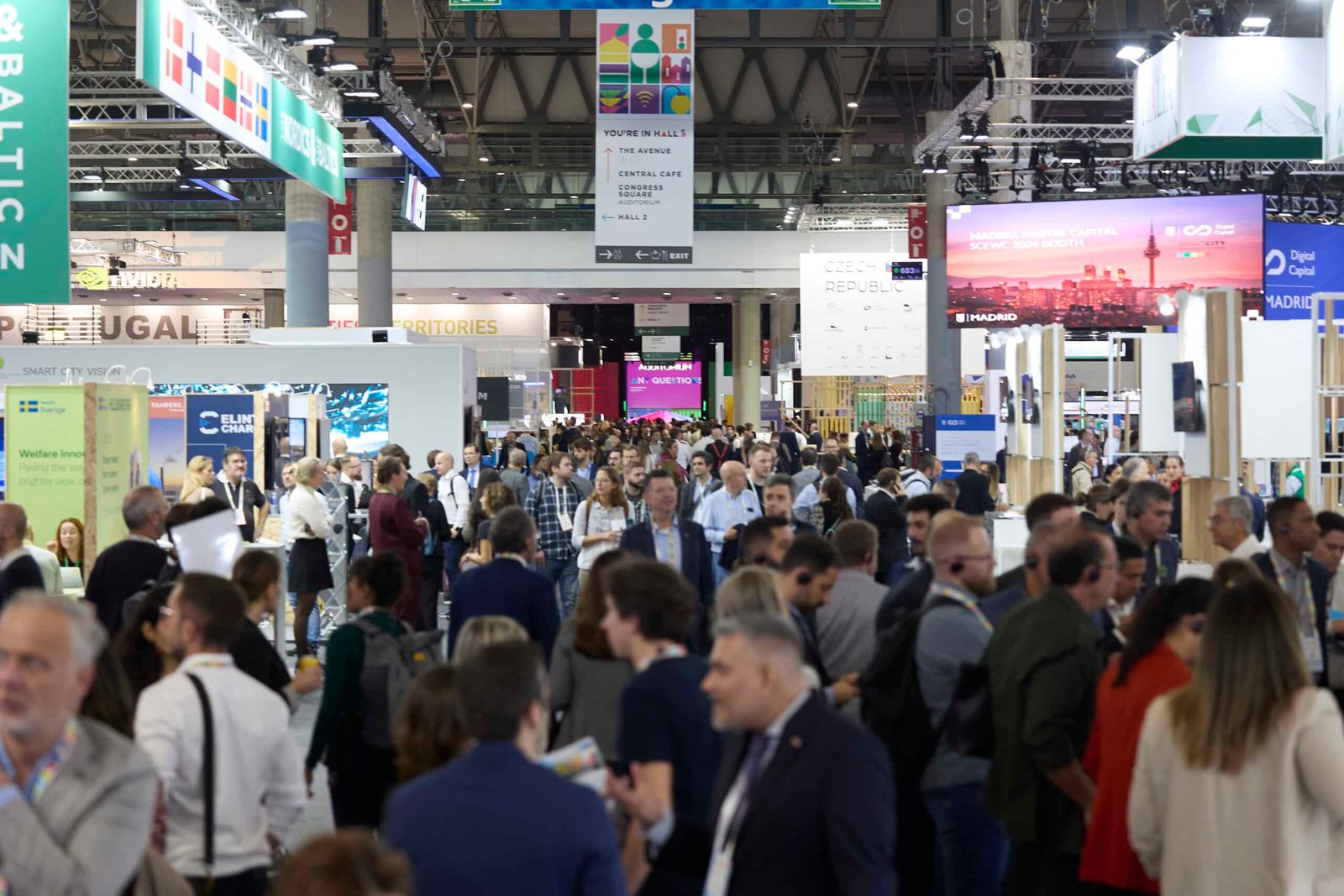
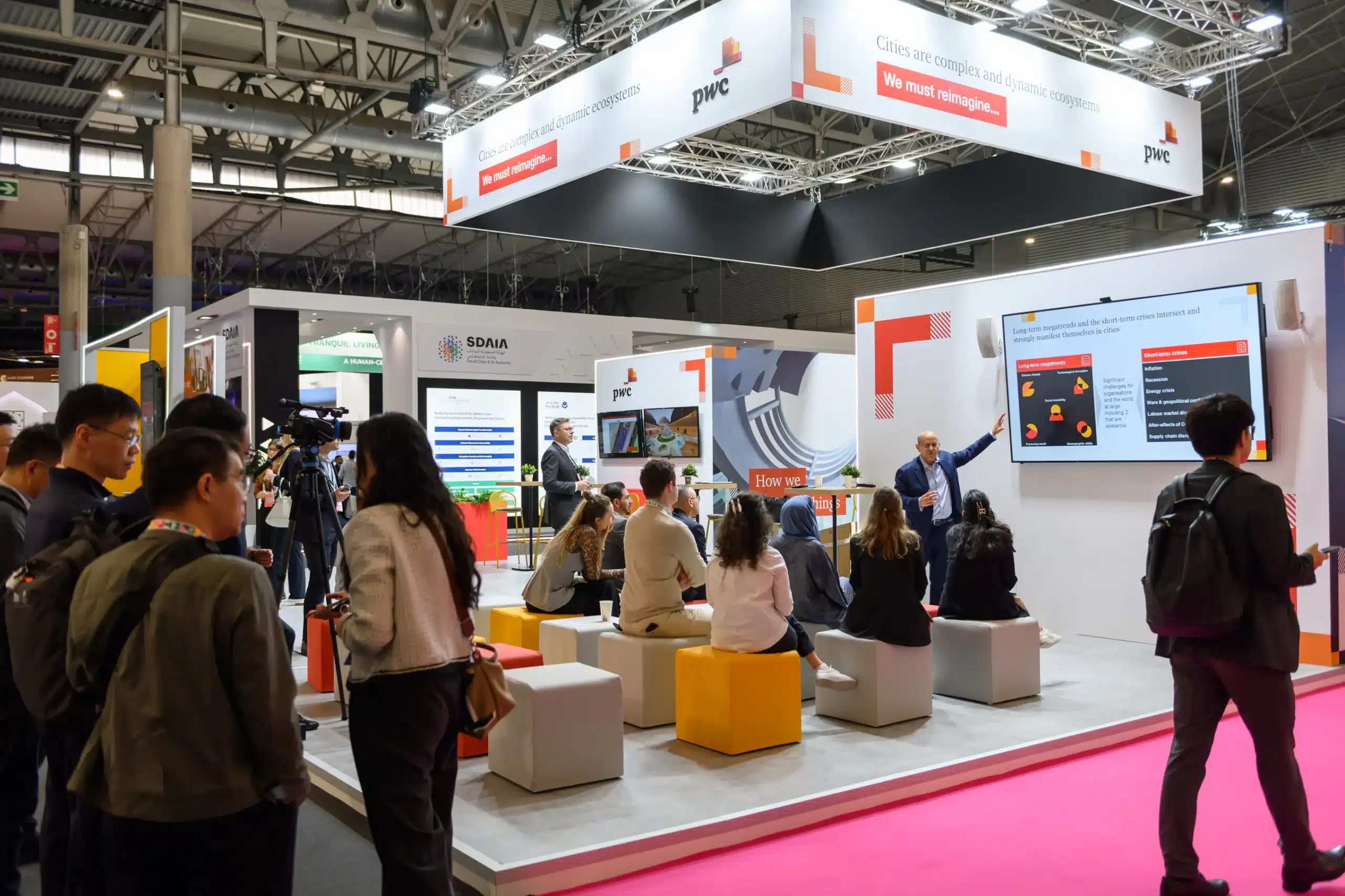
Visitors can expect a combination of a large international exhibition, a major congress programme, specialist stages, city and country pavilions, startup activities, networking opportunities and co-located events. The exhibition provides an opportunity to see technologies and services covering mobility, energy, infrastructure, artificial intelligence, digital government, urban planning, public services, housing and sustainability.
The congress focuses strongly on moving from ideas to implementation. Rather than discussing smart-city concepts only at a theoretical level, sessions examine real projects, financing models, governance approaches and technologies already being tested or deployed by cities around the world.
Enjoy Your Event Stress-Free with Spain Travelo
Planning a trip around a festival, concert, cultural celebration, or business event in Spain can be time-consuming—finding tickets, accommodation, transportation, and local information takes effort. Spain Travelo makes it easier by bringing essential event information, travel planning, and support together in one place.
The event also has a strong international character. The organisers’ current event information highlights more than 27,000 attendees, over 1,200 exhibitors and participation from more than 1,000 cities, while the event’s audience includes a significant proportion of senior-level management and government-related professionals.
For visitors interested in artificial intelligence, mobility, climate resilience, digital transformation, urban infrastructure or public-sector innovation, SCEWC offers an unusually broad view of how these technologies are being applied at city scale.
Event dates
Event: Smart City Expo World Congress 2026
Dates: 3 – 5 November 2026
City: Barcelona, Spain
Venue: Fira Barcelona Gran Via
Halls: Halls 2 & 3
Opening hours: Tuesday and Wednesday, 9:00 AM – 7:00 PM; Thursday, 9:00 AM – 5:00 PM
The official practical information page confirms the dates, venue, halls and visitor opening hours.
Visiting this event? Don’t miss out on these amazing activities and local experiences while you’re here.
Venue & exhibition site
Smart City Expo World Congress takes place at Fira Barcelona Gran Via, one of Europe’s major exhibition and convention venues. The official address is Av. Joan Carles I, 64, 08908 L’Hospitalet de Llobregat, Barcelona. The venue is technically located in L’Hospitalet de Llobregat, within the Barcelona metropolitan area, rather than in Barcelona’s municipal centre.
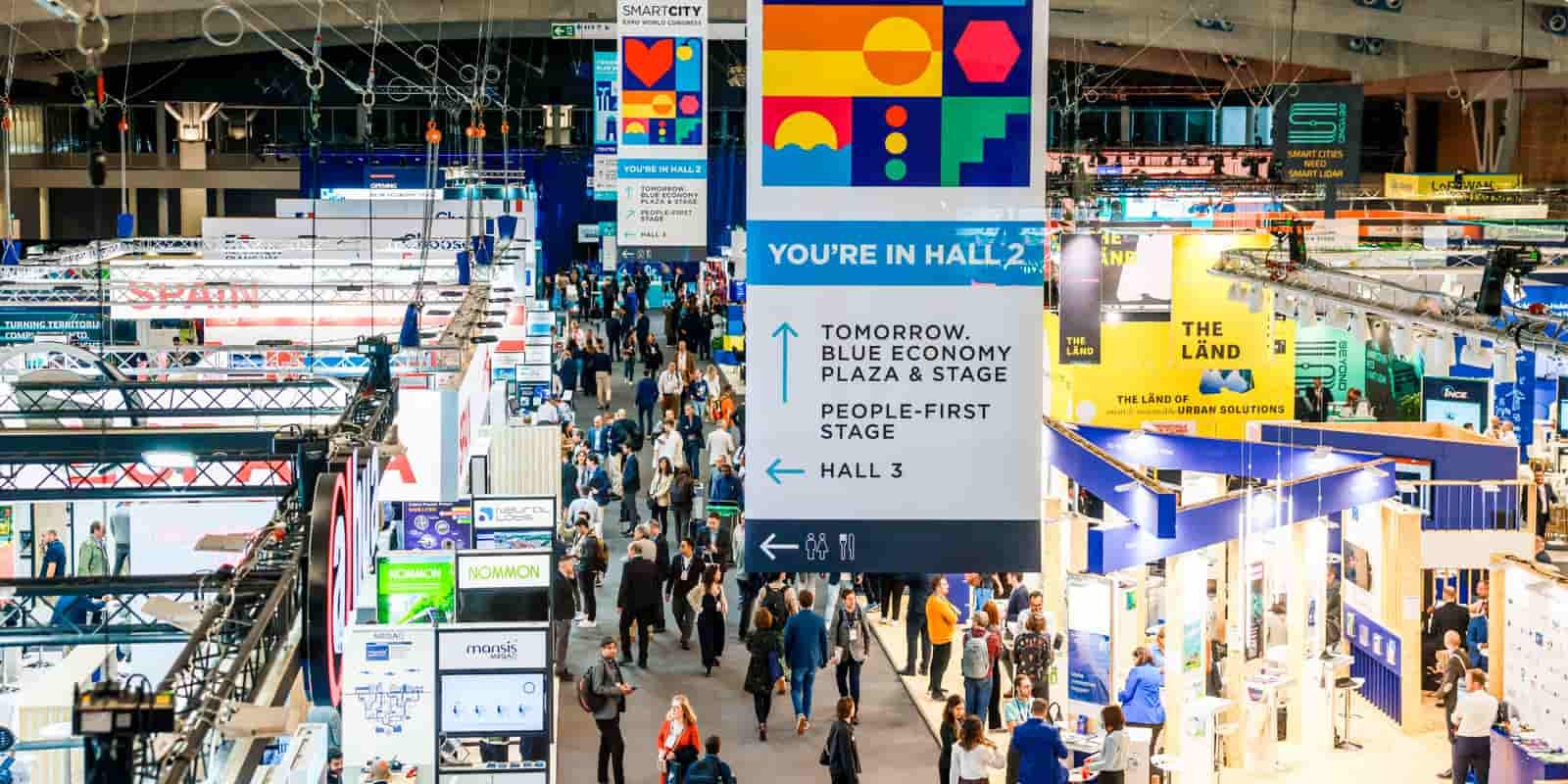
The exhibition occupies Halls 2 and 3, providing a large environment for technology companies, public institutions, city delegations and specialist organisations. The venue’s large-scale infrastructure makes it possible for the main congress, exhibition and related urban-innovation programmes to operate simultaneously.
Fira Gran Via is particularly suitable for SCEWC because it combines large exhibition halls with conference rooms, meeting spaces, networking areas and facilities for international business events.
The exhibition environment is organised around different technology and urban-development themes. Visitors can move between company stands, city and country pavilions, specialist stages and dedicated innovation areas.
Because the venue is extensive, attendees should check the official event app and venue map before travelling to meetings or specific sessions. The official app includes exhibitor locations, products, agenda information and event activities.
Full event programme
The SCEWC programme combines the main Smart City Expo World Congress with a broad range of specialist sessions and related urban-innovation activities. The congress includes a Main Stage and nine thematic stages, with content covering practical urban implementations, funding, scalability and emerging technologies.
The programme is built around several major areas:
- Enabling Technologies: Artificial intelligence, data, digital infrastructure, connectivity and other technologies supporting urban transformation.
- Energy & Environment: Climate action, energy transition, renewable energy, sustainability, resilience and environmental management.
- Mobility: Public transport, shared mobility, autonomous vehicles, traffic management, active travel and integrated mobility.
- Governance & Economy: Digital government, public-sector transformation, economic development, investment and urban governance.
- Living & Inclusion: Housing, health, culture, education, social inclusion and quality of urban life.
- Infrastructure & Building: Smart buildings, construction, urban infrastructure and resilient physical systems.
- Blue Economy: Ports, marine innovation, coastal development and sustainable use of ocean resources.
- Housing: Housing affordability, urban development, new models of living and housing policy.
The agenda also contains specialist programmes and co-located activities, allowing visitors to focus on particular professional interests rather than attending only the main congress sessions.
Key speakers & keynote speakers
SCEWC attracts mayors, government officials, international organisations, technology executives, researchers, urban innovators and thought leaders. The current official speaker programme includes more than 600 urban innovators, policymakers and industry leaders.
Featured speakers include:
- Anne Hidalgo: Former Mayor of Paris and Global Covenant of Mayors Global Ambassador
- Haris Doukas: Mayor of Athens
- Teresa Riesgo: Secretary General for Innovation at Spain’s Ministry of Science, Innovation and Universities
- Yvonne Aki-Sawyerr: Mayor of Freetown
- Andre Dickens: Mayor of Atlanta
- Bilel Jamoussi: Deputy Director of the ITU Telecommunication Standardization Bureau
- Bibiana Aido: Regional Director for UN Women for the Americas and the Caribbean
These speakers represent the broad perspective of the congress, combining political leadership, urban policy, technology standards, innovation and social development.
The speaker roster remains subject to programme updates, so visitors should use the official speaker directory when planning attendance.
Conference sessions & tracks
The congress programme is organised around the major challenges facing modern cities and the technologies being used to address them.
Enabling Technologies: This area examines artificial intelligence, digital infrastructure, cloud computing, data systems, connectivity and other technologies supporting smarter urban services. Current programming includes discussions around sovereign intelligence, AI capabilities and the practical limits of emerging technologies.
Energy & Environment: Sessions examine renewable energy, energy sovereignty, climate adaptation, sustainable technology, green infrastructure and nature-based approaches to urban resilience.
Mobility: Mobility programming covers public transportation, shared mobility, mobility hubs, integrated transport, road safety, zero-emission systems, autonomous vehicles and intelligent traffic management.
Governance & Economy: This track looks at digital government, economic development, investment, public-private partnerships, procurement and new approaches to urban governance.
Living & Inclusion: Content focuses on urban health, housing, culture, education, social inclusion and creating places where people can live well.
Infrastructure & Building: Sessions examine resilient infrastructure, smart buildings, construction technology, urban systems and future-ready physical environments.
Blue Economy: This area focuses on ports, coastal cities, marine resources, ocean technology and sustainable economic activity connected with waterways.
Housing: Housing-related sessions examine affordability, urban housing challenges, design and new approaches to creating inclusive living environments.
The programme also includes thematic keynotes, dialogues, roundtables, breakout sessions and practical content blocks.
Session times & schedule
The official agenda provides a detailed timetable covering the Main Stage, thematic stages, specialist areas and side events. Sessions can begin in the morning and continue throughout the exhibition day, with several programmes operating simultaneously.
For example, the official agenda includes opening content, thematic keynotes, high-level roundtables, mobility sessions, AI discussions and housing sessions across different stages. This structure allows attendees with different professional interests to build individual schedules.
The official Smart City Expo app is particularly useful for managing the schedule. It lists congress sessions, side events, activities and speakers, allowing visitors to organise their programme before arriving.
Some activities have restricted access depending on the type of pass. Certain Main Stage sessions are marked as unavailable to Visitor Pass holders, while many thematic sessions and exhibition activities are accessible to broader attendee categories.
Visitors should therefore check the access requirements for each session when building their itinerary.
Ticket types & registration
Ticket prices can vary according to access level. Current published ticket information lists the following approximate amounts when converted into US dollars:
- Visitor Pass: approximately $196 for three-day access
- Full Congress Pass: approximately $1,114 for three-day access
- Investor Pass: approximately $1,456
These figures are converted from published ticket prices of €175, €995 and €1,300 respectively, using an approximate exchange rate of $1.12 per euro. The published ticket information identifies the Visitor Pass as providing access to the exhibition and selected open-stage programmes, while the Full Congress Pass provides substantially broader congress access.
The Visitor Pass is designed for attendees who primarily want to visit the exhibition, discover urban technologies, explore open stages and participate in selected event activities.
The Full Congress Pass is intended for professionals who want access to the complete congress programme and deeper conference content.
Students may qualify for a discount, subject to the applicable eligibility requirements and documentation. Group discounts may also be available under the organiser’s registration conditions.
Ticket availability, discounts and access rules should be checked through the official registration system before purchase.
Registration deadlines
There is no single final registration deadline stated for every visitor category. Registration remains dependent on ticket availability and the requirements attached to the selected pass.
Professional attendees should register through the official Smart City Expo registration platform and ensure that their digital credentials are ready before arriving at Fira Barcelona.
The official event app is an important part of the registration process because visitors need their Digital Badge to access the venue. The organiser states that attendees should download the app and log in using the email address used during registration.
Press representatives have a separate accreditation process. Registered journalists receive access to the exhibition, conferences, side events and Press Room, subject to approval.
Exhibitor list & major companies
The official exhibitor directory confirms a large international group of organisations participating in the event. Current confirmed exhibitors include technology companies, engineering firms, telecommunications businesses, urban-service providers, research organisations and public-sector institutions.
Examples include:
- Advantech Europe: Industrial computing and smart technology
- Bentley Systems: Infrastructure engineering software
- Arup: Engineering and urban development
- Microsoft: Cloud, AI and digital technologies
- Dassault Systèmes: Digital engineering and simulation
- Deloitte: Consulting and technology services
- Google: Digital and technology solutions
- Veolia: Environmental and urban services
- Axis Communications: Security and video technology
- FCC Medio Ambiente: Environmental and municipal services
- Barcelona City Council: Public-sector urban innovation
- Autoritat Portuària de Barcelona: Port and maritime infrastructure
The organiser continues to add exhibitors and detailed profiles, so the official exhibitor directory should be checked for the latest confirmed list.
Exhibition halls & floor plan
The main SCEWC exhibition is located across Halls 2 and 3 at Fira Barcelona Gran Via. The venue layout accommodates company stands, city and country pavilions, conference stages, networking areas and specialist programmes.
The official app provides an exhibitor catalogue and information about individual stands and products. Visitors can search for exhibitors, view company profiles and identify where particular organisations are located.
The exhibition layout is designed to encourage movement between commercial technology demonstrations and conference content. This makes it possible to attend a presentation and then immediately visit companies working on related solutions.
Visitors attending pre-arranged business meetings should check the stand location before arrival because the large Fira Gran Via complex can require significant walking time between halls and meeting areas.
Networking & business meetings
Networking is a major component of Smart City Expo World Congress because the event brings together public-sector decision-makers, technology providers, investors, researchers and urban-development professionals.
Companies can use the exhibition environment to demonstrate products directly to city representatives and institutional buyers. The event organiser highlights direct access to government leaders, procurement heads, chief digital officers and senior innovation professionals as one of the event’s major business advantages.
The official app also helps attendees discover exhibitors and products, while the event’s professional environment creates opportunities for planned meetings, informal conversations and partnership development.
Networking can take place through:
- Exhibitor meetings: Direct discussions with technology providers.
- City delegations: Meetings with representatives of municipalities and public authorities.
- Investor connections: Opportunities for startups and innovative companies.
- Congress networking: Discussions with speakers and fellow delegates.
- Side events: Smaller specialist gatherings around specific urban challenges.
- Innovation activities: Connections between startups, corporates, investors and public-sector organisations.
For businesses selling technology to governments and cities, the event can be particularly valuable because of its concentration of institutional decision-makers.
Industry sectors & highlights
Smart City Expo World Congress covers a broad range of urban-development sectors.
- Smart mobility: Public transport, shared mobility, autonomous vehicles, intelligent traffic systems and mobility planning.
- Artificial intelligence: AI-enabled urban services, data analysis, automation and emerging intelligent systems.
- Energy: Renewable energy, energy sovereignty, efficiency and sustainable infrastructure.
- Environment: Climate adaptation, waste management, environmental monitoring and circular systems.
- Urban infrastructure: Buildings, construction, utilities, public infrastructure and resilient systems.
- Governance: Digital government, public services, procurement, data governance and civic technology.
- Housing: Affordable housing, urban development and new approaches to living.
- Inclusion: Accessibility, urban health, education, culture and social participation.
- Blue economy: Ports, coastal cities, marine technology and sustainable ocean-related development.
- Security: Urban safety, cybersecurity, surveillance technology and resilience.
- Digital transformation: Cloud computing, data platforms, digital twins and connected infrastructure.
The event also works closely with co-located programmes focused on mobility, buildings, the blue economy and other specialist areas, creating a wider ecosystem around the main smart-city programme.
Event rules & visitor information
Visitors should register through the official event platform and bring their digital credentials for venue access. The official app provides the Digital Badge needed to enter the venue, making it important to download the application before travelling.
Different pass categories provide different access rights. Visitors should verify whether a particular keynote, stage or side event is included in their selected pass before planning their schedule.
Press registration is handled separately, with approved journalists receiving access to the exhibition, conferences, side events and Press Room.
The organiser also recommends using official event channels when arranging accommodation, transportation and event-related services. Registered visitors and exhibitors may have access to special discounts for accommodation and transport through the official visitor area.
The large exhibition environment means comfortable footwear and a planned itinerary are recommended, particularly for attendees with multiple meetings in different halls.
How to get there
Fira Barcelona Gran Via is located in L’Hospitalet de Llobregat, immediately within the Barcelona metropolitan area. The venue is well connected to central Barcelona, Barcelona-El Prat Airport and the wider public transport network.
Visitors arriving by air can travel from Barcelona-El Prat Airport using public transport, taxi or other airport transfer services. The venue’s location makes it practical for international visitors attending a professional conference.
Those staying in central Barcelona can use Metro, FGC trains and buses to reach the exhibition complex.
Because SCEWC attracts a large international audience, public transport is generally a practical choice for reaching the venue and avoiding traffic congestion around the exhibition centre.
Public transport & parking
Metro: Fira station on Line 9 Sud provides direct access to the exhibition complex. Europa | Fira is another useful connection, particularly for visitors approaching the venue through the FGC network.
FGC: FGC trains provide connections between Barcelona and the Fira area, making the railway network useful for attendees staying near central Barcelona.
Bus: Several metropolitan and Barcelona bus routes serve the Fira Gran Via area.
Taxi: Taxi services are available around the venue and can provide direct transport from Barcelona Airport, hotels and central Barcelona.
Airport: Barcelona-El Prat Airport is the main international airport serving the city and provides several transport options toward Fira Gran Via.
Parking: Fira Barcelona Gran Via has parking facilities, although availability can be affected by the scale of major events. Visitors driving should check the latest venue information before travelling.
The official event site also provides transport and accommodation information for registered attendees.
Accommodation areas
Visitors can stay either close to Fira Gran Via or in central Barcelona, depending on whether convenience or sightseeing is the priority.
L’Hospitalet de Llobregat and the Europa Fira area are among the most convenient locations for visitors who want to be close to the exhibition centre. These areas can reduce daily commuting time and provide easy access to the venue.
Plaça d’Espanya and Sants are useful choices for attendees who want good transport connections between the city centre and Fira Gran Via.
Eixample and central Barcelona are better suited to visitors who want to combine the conference with restaurants, architecture, museums, shopping and nightlife.
The official Smart City Expo practical-information page states that exhibitors and visitors can access exclusive discounts on accommodation and transport through the relevant customer or visitor area.
Previous year’s highlights
The previous edition was a record-breaking event for Smart City Expo World Congress and its associated programmes. More than 27,000 attendees from 143 countries gathered at Fira Barcelona Gran Via, while the event presented a strong focus on how cities can use artificial intelligence and other technologies to accelerate urban transformation.
The wider event ecosystem featured more than 1,100 exhibitors, with companies and organisations presenting technologies related to mobility, energy, digital infrastructure, public services, urban resilience and sustainability. Major participating organisations included Saudi Aramco, Axis Communications, Dahua Technology, Dassault Systèmes, Dell/Nvidia, FCC Medio Ambiente, KPMG, Microsoft, PwC, Veolia and other international technology and infrastructure leaders.
Artificial intelligence became an especially important subject, with the event demonstrating how AI can support urban management, public services, mobility, resilience and citizen-focused solutions.
The event also brought together representatives from hundreds of cities and international organisations, reinforcing its role as a platform for exchanging practical urban-development experiences.
The World Smart City Awards further added an international recognition programme for innovative city projects, technology initiatives and leadership in urban transformation.
Official registration & tickets
The official Smart City Expo World Congress website is the best source for registration, ticket purchases, programme updates, speakers, exhibitors, venue information and visitor instructions.
Visitors should register through the official event platform and download the official Smart City Expo app before arriving. The app contains the Digital Badge required for venue access and also provides the congress agenda, speakers, exhibitor catalogue, products and event information.
Official website: Smart City Expo World Congress (https://www.smartcityexpo.com/)
The official practical-information page should also be checked for the latest transport, accommodation, opening-hours and venue information.
Tickets Sell Out
in Minutes
Maps
Contact
Video
FAQ's
What is Smart City Expo World Congress?
Smart City Expo World Congress is a global event focused on urban innovation, smart-city technology and sustainable urban development. It brings together cities, governments, technology companies, researchers and investors to examine practical solutions for mobility, energy, infrastructure, governance, AI, housing and citizen wellbeing. The event combines a major exhibition with an international congress and specialist programmes.
Who should attend Smart City Expo World Congress?
The event is particularly relevant to city officials, urban planners, government representatives, technology companies, infrastructure providers, mobility professionals, sustainability specialists, researchers and investors. It is also valuable for companies developing AI, data, digital-government, smart-building, energy or urban-service solutions because of the event's strong public-sector and institutional audience.
What topics are covered at Smart City Expo World Congress?
The programme covers enabling technologies, energy and environment, mobility, governance and economy, living and inclusion, infrastructure and buildings, blue economy and housing. Sessions address subjects such as artificial intelligence, climate resilience, renewable energy, public transport, digital government, urban health, smart buildings and sustainable urban development.
How can visitors plan their schedule at the event?
The official Smart City Expo app provides access to the congress agenda, sessions, speakers, side events, exhibitors and products. Attendees can use it to identify relevant sessions, locate companies and organise their visit before entering the exhibition complex, which is especially useful because multiple stages operate simultaneously.
What makes Smart City Expo World Congress different from a normal technology exhibition?
SCEWC combines technology exhibition with direct participation from cities, governments and public-sector decision-makers. The event focuses not only on displaying products but also on discussing how technologies can be implemented, financed and scaled to solve real urban challenges, making it a major meeting point for public-private collaboration and urban innovation.