


Semana de la Educación 2027 – Madrid, Spain
What to expect
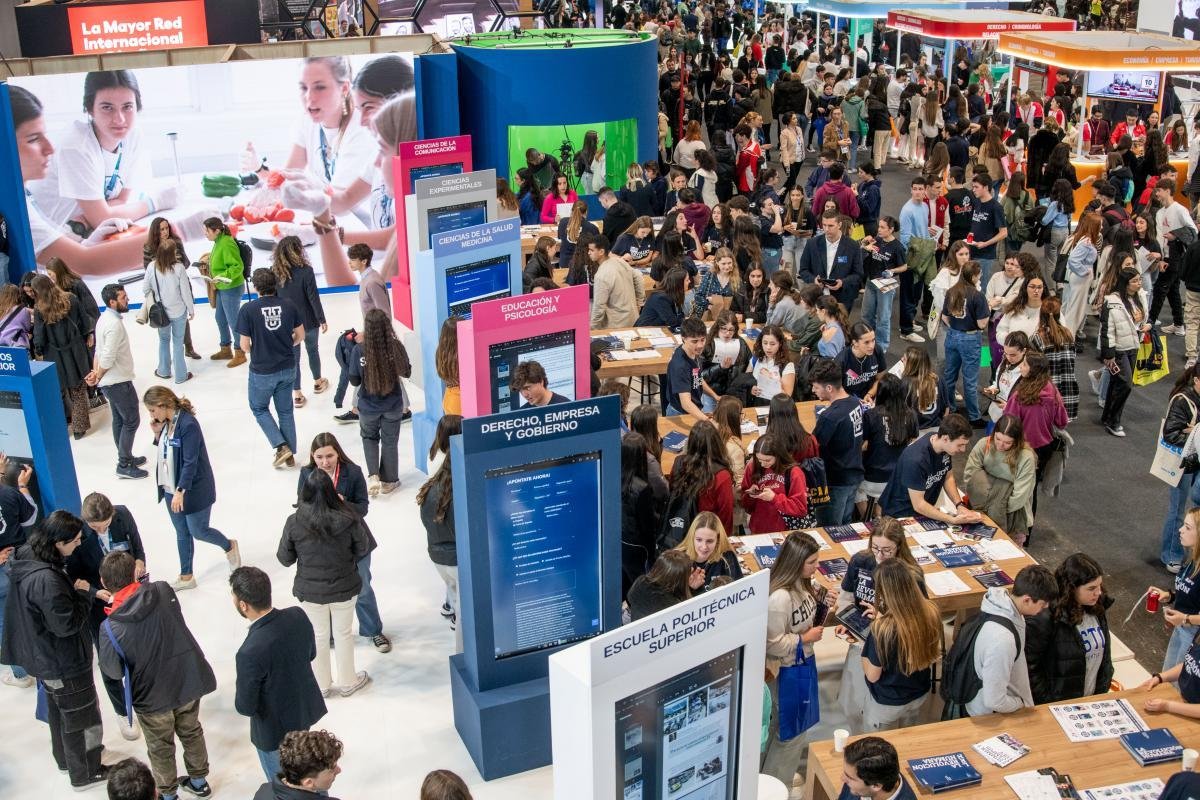
Semana de la Educación 2027 is a major education and training event organised at IFEMA MADRID, bringing together students, families, teachers, universities, vocational training centres, schools, public institutions, education companies and technology providers. It provides a broad overview of educational opportunities, allowing visitors to compare study pathways, discover training programmes, receive guidance and connect directly with institutions.
The event brings several complementary education-focused shows together under one umbrella, including AULA, Postgrado y Formación Continua, Schools Day and DIGIeLEARNING. Together, these areas cover university education, vocational training, postgraduate studies, continuing education, schools, camps, extracurricular activities and digital learning.
Academic orientation
Enjoy Your Event Stress-Free with Spain Travelo
Planning a trip around a festival, concert, cultural celebration, or business event in Spain can be time-consuming—finding tickets, accommodation, transportation, and local information takes effort. Spain Travelo makes it easier by bringing essential event information, travel planning, and support together in one place.
One of the central purposes of the event is academic and professional guidance. Students can investigate different study options, compare institutions and speak directly with education providers about their programmes, admission requirements and future career possibilities.
Higher education
Universities and specialist higher-education institutions provide information about degree programmes and other academic opportunities. The event is useful for students who are still deciding between different disciplines or institutions.
Vocational education
Vocational training is another important part of the education ecosystem represented at the fair. Visitors can discover practical training routes connected with employment, technical professions and changing labour-market requirements.
Schools and family education
Schools Day is designed particularly for families looking at schools, camps and extracurricular activities. It provides an opportunity to compare different educational proposals in one location.
Digital education
DIGIeLEARNING gives the event a technology-focused dimension, covering e-learning, educational platforms, artificial intelligence, digital methodologies and other technologies changing how people learn and train.
Event dates
Semana de la Educación 2027 will take place from 17 to 21 February 2027 at IFEMA MADRID in Madrid, Spain.
- Event: Semana de la Educación 2027
- Dates: 17–21 February 2027
- Venue: IFEMA MADRID
- Address: Avenida del Partenón 5, 28042 Madrid, Spain
- Confirmed exhibition halls: Hall 8 and Hall 10
- Programme status: Detailed activities programme forthcoming
The official IFEMA schedule confirms the dates, venue and halls, while the detailed activities programme is currently listed as coming soon.
Visiting this event? Don’t miss out on these amazing activities and local experiences while you’re here.
Venue & exhibition site
Semana de la Educación takes place at IFEMA MADRID, one of Spain’s principal exhibition and convention venues. The complex is located at Avenida del Partenón 5 in Madrid’s Campo de las Naciones area and provides extensive exhibition halls, visitor facilities, restaurants, parking and transport connections.
For the upcoming edition, IFEMA has confirmed Hall 8 and Hall 10 as the exhibition areas. Visitors should use the official event map when it becomes available because pavilion arrangements can change between editions.
IFEMA MADRID is particularly suitable for an education exhibition because the venue can accommodate multiple education sectors at the same time. Universities, schools, training organisations, technology providers and other institutions can operate dedicated stands while visitors move between different areas.
The location is also convenient for international visitors because it is relatively close to Madrid-Barajas Airport and has direct public-transport connections with other parts of Madrid.
Full event programme
The detailed programme for Semana de la Educación 2027 has not yet been released. The official IFEMA activities page currently states that the programme will be available soon, so specific workshops, talks, presentations, speakers and session times should be treated as pending until the organiser publishes the final programme.
The established structure of Semana de la Educación brings together several major components.
AULA
AULA focuses on academic orientation and educational opportunities, particularly for students considering university, vocational training, international education, languages and other study pathways.
Postgrado y Formación Continua
This section addresses postgraduate studies, specialisation and continuing education for graduates and working professionals who want to develop new skills or improve their employability.
Schools Day
Schools Day is aimed at families and covers schools, camps and extracurricular activities, helping parents compare different educational options.
DIGIeLEARNING
DIGIeLEARNING focuses on digital learning and educational technology. Its content has included e-learning solutions, artificial intelligence applied to learning, training platforms and digital methodologies.
The previous programme also included AULA Forum, Speaker’s Corner, a main stage and a dedicated digital-learning campus, with workshops, demonstrations, orientation activities and specialist talks.
Key speakers & keynote speakers
A confirmed 2027 keynote-speaker list has not yet been published by IFEMA. The official activities page currently indicates that the programme is forthcoming, so individual speakers should only be considered confirmed once they appear in the organiser’s official programme.
Previous editions have included education professionals, institutional representatives, technology specialists, training experts and representatives from universities and other educational organisations.
Education professionals
Speakers and specialists can provide information about academic pathways, teaching, employability, digital learning and changing education requirements.
Technology specialists
DIGIeLEARNING creates a professional environment for experts working with educational technology, artificial intelligence, e-learning and digital training.
Institutional representatives
Government departments, public organisations and other education-related institutions have previously participated, giving visitors access to information about public education pathways and professional opportunities.
Conference sessions & tracks
The event’s conference and activity programme covers a broad range of subjects connected with education, training, employability and technology. The exact 2027 session tracks remain to be announced.
Academic orientation
Sessions can help students understand different educational routes and make more informed choices about future studies.
Employability
Professional development and employability are important themes, particularly within postgraduate education, continuing training and vocational education.
Vocational training
The event gives significant attention to practical and technical education. Previous programmes included activities connected with professions, skills and vocational pathways.
Digital transformation
DIGIeLEARNING focuses on the technological transformation of education, including e-learning platforms, artificial intelligence and digital learning methodologies.
Family and school education
Schools Day provides content relevant to families choosing schools, camps and extracurricular opportunities.
Educational innovation
Workshops and demonstrations can introduce visitors to new approaches, technologies and methods being applied across education.
Session times & schedule
The detailed 2027 timetable has not yet been published by IFEMA. The official activities page currently lists the programme as forthcoming, meaning individual conference times, workshops, presentation schedules and room allocations should be checked after the final programme is released.
Previous programming has used several dedicated activity spaces, including AULA Forum, Speaker’s Corner, the main Stage and the DIGIeLEARNING Campus. These spaces have hosted workshops, talks, practical activities, orientation sessions and technology demonstrations.
Visitors should review the final online schedule before attending and identify priority sessions in advance. This is particularly useful for students and families who want to combine institutional visits with workshops or guidance activities.
Ticket types & registration
Semana de la Educación is designed for both members of the general public and education professionals. IFEMA’s general visitor guidance explains that public events use ticketing systems, while professional visitors use the appropriate professional registration process.
General visitor access
Students, parents and other members of the public can attend according to the access conditions published for the event.
Professional accreditation
Teachers, education professionals and other eligible industry visitors can use IFEMA’s professional registration system where applicable. Professional registration requires an individual IFEMA account.
School groups
The event is also designed to accommodate organised educational groups. Previous editions attracted a substantial number of school groups, demonstrating the importance of group visits to the event.
Previous pricing
The 2027 ticket price has not yet been published on the official event website. Previous public information reported general admission at approximately $8 when purchased online and approximately $10 at the venue, but these historical figures should not be treated as confirmed 2027 prices.
Visitors should check the official IFEMA ticketing page before purchasing because admission conditions and prices can change between editions.
Registration deadlines
No final registration deadline for visitors has been published for the upcoming edition.
Visitors should complete their registration or ticket purchase through the official Semana de la Educación website once the relevant system is available. Professional visitors should create or use their own IFEMA account when professional accreditation is required.
Professional registration
Professional accreditation is individual and should be completed using the visitor’s own details.
Exhibitor deadlines
Exhibitors have separate deadlines for participation, stand services, technical requirements and documentation. These deadlines are different from visitor registration deadlines and should be obtained directly from IFEMA’s exhibitor documentation.
School groups
Schools and organised groups should arrange their visit early enough to coordinate students, teachers, transport and the desired programme activities.
Exhibitor list & major companies
The complete exhibitor list for the upcoming edition has not yet been published. IFEMA provides an exhibitor catalogue and LiveConnect platform through which visitors can search participating organisations once the information becomes available.
The exhibition represents a broad range of educational organisations.
Universities
Public and private universities are central to AULA, presenting undergraduate studies, academic disciplines, student services and further education opportunities.
Vocational training centres
Professional training providers offer practical and career-focused programmes covering technical, industrial, business, healthcare and other professional fields.
Schools
Schools and educational organisations participate through the Schools Day section, where families can investigate educational models and extracurricular opportunities.
Postgraduate providers
Universities, business schools and specialist institutions present master’s programmes, postgraduate qualifications and continuing education.
Technology companies
DIGIeLEARNING brings together technology companies and providers working in e-learning, educational software, artificial intelligence, digital platforms and other learning technologies.
Previous participation has included institutions such as Universidad Autónoma de Madrid, Universidad Carlos III de Madrid, Universidad Politécnica de Madrid, Universidad Rey Juan Carlos, Universidad de Alcalá, Universidad Europea de Madrid, Universidad Nebrija, ICADE–Universidad Pontificia Comillas, CUNEF, UNED, ESIC University, UDIT, UNIE and other specialist centres.
Exhibition halls & floor plan
IFEMA has confirmed Hall 8 and Hall 10 for the upcoming edition. The final exhibitor floor plan and detailed stand allocation are not yet available on the official activity page.
The official FAQ explains that visitors will be able to consult the exhibitor catalogue and LiveConnect and will also have access to an exhibitor floor plan once it is available.
The final map should be particularly useful for students who want to visit several universities or training providers and for families comparing schools.
Visitors should avoid relying on older maps because Semana de la Educación has used different pavilion configurations in previous editions. For example, a previous edition occupied different halls from those currently confirmed for the upcoming event.
Networking & business meetings
Networking is an important part of the professional side of Semana de la Educación. Educational institutions, technology providers, training companies and other organisations can use the event to establish relationships with students, professionals, partners and potential clients.
Education partnerships
Universities, schools and training organisations can meet other institutions and explore possible academic or professional collaborations.
Technology networking
DIGIeLEARNING creates a specialised environment where EdTech companies can connect with educators, training providers and other organisations interested in digital education.
Professional connections
Teachers, education managers and training professionals can use the exhibition to discover new suppliers, educational resources and professional development opportunities.
LiveConnect
The official event FAQ identifies the exhibitor catalogue and LiveConnect as key tools for finding exhibitors and planning visits.
Industry sectors & highlights
Semana de la Educación covers a wide section of the education and training ecosystem.
University education
Universities and higher-education institutions present academic programmes and information for prospective students.
Vocational training
Professional training provides practical pathways for students interested in technical and career-oriented qualifications.
Schools and camps
Schools Day gives families access to information about schools, camps and extracurricular activities.
Postgraduate studies
Postgraduate providers offer opportunities for graduates seeking specialisation and advanced qualifications.
Continuing education
Professionals can explore programmes designed to update skills, change career direction or improve employability.
Digital learning
DIGIeLEARNING addresses online education, e-learning platforms, artificial intelligence, digital tools and emerging learning technologies.
Languages
Language education and international study opportunities form part of the wider educational offer.
Special education
The event also covers educational services and opportunities connected with special and inclusive education.
Employment and career development
The connection between education and employment is an important theme, helping visitors understand how different qualifications can relate to professional opportunities.
Event rules & visitor information
Visitors should follow the access conditions and venue regulations established by IFEMA MADRID. The specific ticket and accreditation requirements depend on whether someone attends as a general visitor, professional, exhibitor, media representative or organised group.
Accreditation
Professional accreditation is personal and should be completed using the visitor’s own information and IFEMA account.
Tickets
General visitors should use the official ticketing system and follow the instructions provided for the event.
Accessibility
Visitors who require accessibility assistance should contact IFEMA in advance so that appropriate arrangements can be made.
Animals
IFEMA’s general rules restrict animals inside the venue except for legally recognised exceptions such as assistance dogs or other cases specifically authorised by the venue.
Visitor planning
Because the event combines exhibition stands with workshops, presentations and orientation activities, visitors should review the official programme and exhibitor catalogue before arriving.
How to get there
IFEMA MADRID is located at Avenida del Partenón 5, 28042 Madrid, in the Campo de las Naciones area.
The venue is easily accessible from Madrid’s road network and public transportation system. The official Semana de la Educación FAQ lists Metro Line 8, several bus routes, taxi access and major road connections as options for reaching the exhibition centre.
International visitors can also reach IFEMA conveniently from Madrid-Barajas Airport, which is located close to the exhibition complex.
By car, visitors can approach the venue using the M-40, M-11 and A-2. IFEMA identifies specific exits and access points for drivers.
Public transport & parking
Public transportation is one of the easiest ways to reach IFEMA MADRID.
Metro
Line 8 provides direct access to the Feria de Madrid station, with the official event information identifying it as an access option for Semana de la Educación.
Bus
The official FAQ lists bus routes 73, 112, 122 and 828 as services connecting the exhibition centre with Madrid’s transport network.
Taxi
Taxi ranks are available at the Puerta Sur and Puerta Norte areas of IFEMA.
Car
Drivers can use the M-40, M-11 and A-2 to reach the exhibition complex. The official access information provides specific exits for these routes.
Parking
IFEMA MADRID has parking facilities serving visitors and exhibitors. During busy exhibition periods, visitors arriving by car should allow extra time for traffic and parking.
Accommodation areas
Madrid provides accommodation ranging from airport hotels and business properties to central luxury hotels, apartments and budget accommodation.
Campo de las Naciones
This is one of the most convenient areas for visitors who want to stay close to IFEMA. It can reduce commuting time and is particularly practical for exhibitors, teachers and professionals attending several activities.
Barajas
The Barajas area is useful for international visitors who want quick access to the airport as well as the exhibition centre.
Salamanca
Salamanca offers a more upscale environment with restaurants, shopping and good connections toward the exhibition centre.
Central Madrid
Areas around Sol, Gran Vía, Retiro and Atocha provide a much wider selection of hotels and restaurants and are suitable for visitors who want to combine the event with sightseeing.
For families and school groups, accommodation near a convenient Metro connection can be more important than staying immediately next to the venue.
Previous year’s highlights
The previous edition demonstrated the scale of Semana de la Educación and its broad appeal across education, training and digital learning.
IFEMA reported more than 125,000 visitors in its previous edition, while another official participation announcement recorded more than 150 educational entities participating in the following edition’s programme. The event has brought together universities, vocational training centres, public institutions, technology companies and other organisations connected with education.
Academic offer
The event has provided a broad overview of university education, vocational training, schools, postgraduate programmes and specialist education.
Orientation
AULA Forum has provided sessions focused on skills, employability, educational reflection and professional orientation.
Practical activities
The programme has included more than 70 activities in spaces such as AULA Forum, Speaker’s Corner and the Stage, combining talks, workshops, demonstrations and practical experiences.
Digital innovation
DIGIeLEARNING has become an important professional area for educational technology, with content covering e-learning, artificial intelligence applied to learning, training platforms and digital methodologies.
Institutional participation
Previous participation has included Spanish government ministries, public organisations, universities, professional bodies and other institutions connected with education and employment.
Official registration & tickets
The official Semana de la Educación website is the best source for visitor registration, tickets, exhibitor information, programme updates and the final floor plan.
Official Semana de la Educación website (https://www.ifema.es/semana-de-la-educacion)
The official FAQ states that visitors can consult the exhibitor catalogue and LiveConnect and that the exhibitor map will become available when it is ready.
The official 2027 programme is still being developed, so visitors should check the IFEMA website before travelling for the latest information about registration, activities, exhibitors and access requirements.
The upcoming general ticket price has not yet been published. Previous public admission information indicated approximately $8 for online admission and approximately $10 at the venue, but these are historical figures and should not be presented as the confirmed price for the upcoming edition.
For general enquiries, the event information supplied for Semana de la Educación includes +34 902 22 15 15 and fitur-related enquiries can be checked through the official IFEMA event page.
Tickets Sell Out
in Minutes
Maps
Contact
Video
FAQ's
Who can attend Semana de la Educación?
Semana de la Educación is suitable for students, parents, teachers, education professionals, graduates and people interested in further study or training. The event brings together academic institutions, schools, vocational training providers, postgraduate centres and educational technology companies. General visitors and eligible professionals should follow the relevant registration and access requirements published by IFEMA.
What can students find at Semana de la Educación?
Students can compare universities, vocational training programmes, postgraduate opportunities, international education, language studies and other academic pathways. They can also speak directly with institutions and participate in orientation activities designed to help them make better educational and career decisions. The event is particularly useful for students who are uncertain about which study route or professional direction to choose.
What is DIGIeLEARNING?
DIGIeLEARNING is the digital-learning component of Semana de la Educación, focusing on technology and innovation in education and training. It brings together areas such as e-learning, educational platforms, artificial intelligence applied to learning, digital methodologies and other EdTech solutions. The section is especially relevant to educators, training professionals, technology companies and organisations interested in the digital transformation of learning.
Where is Semana de la Educación held?
Semana de la Educación is held at IFEMA MADRID on Avenida del Partenón 5 in Madrid's Campo de las Naciones area. The official event information currently identifies Hall 8 and Hall 10 as the exhibition areas for the upcoming edition. Visitors can reach the venue by Metro, bus, taxi and car, with Madrid-Barajas Airport also providing convenient access for international travellers.
Has the complete programme been announced?
The complete programme has not yet been published by IFEMA, and the official activities page currently states that it will be available soon. The organiser has already confirmed the venue and exhibition halls, while individual workshops, presentations, speakers and session times remain subject to the final programme. Visitors should check the official IFEMA website before attending for the latest confirmed schedule and activity information.