



Mining and Minerals Hall (MMH) 2026 – Seville, Spain
What to expect
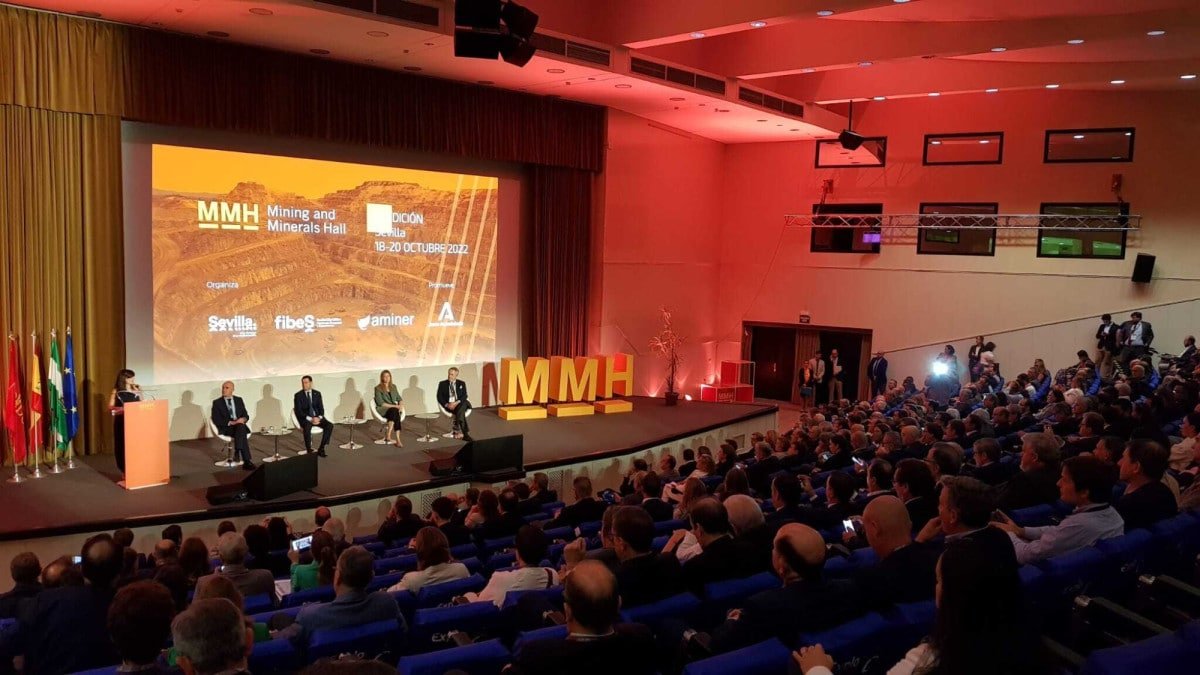
Mining and Minerals Hall (MMH) 2026 is an international professional meeting point for the mining and minerals industry, combining a major exhibition with a scientific congress, technical presentations, innovation activities, business networking, and professional meetings. Organised by Mining and Minerals Events together with Aminer, MMH brings together mining companies, equipment manufacturers, engineering firms, technology providers, research organisations, public institutions, investors, and specialist professionals from across the mining value chain. The organiser describes MMH as a biennial international mining event in Europe.
The event’s 2026 edition is built around the theme “Mining: A Strategic Pillar for Europe’s Future”. Its programme addresses the strategic importance of mineral raw materials, critical minerals, technological development, energy transition, digitalisation, sustainability, investment, regulation, and the future competitiveness of European mining.
Visitors can expect a large exhibition featuring machinery, drilling equipment, mineral processing technology, engineering services, geoscience solutions, environmental systems, digital technologies, safety equipment, energy solutions, and specialist services.
Enjoy Your Event Stress-Free with Spain Travelo
Planning a trip around a festival, concert, cultural celebration, or business event in Spain can be time-consuming—finding tickets, accommodation, transportation, and local information takes effort. Spain Travelo makes it easier by bringing essential event information, travel planning, and support together in one place.
The event is intended primarily for professional audiences, including:
- Mining and metals companies
- Exploration companies
- Mining equipment manufacturers
- Engineering and consulting firms
- Mineral-processing specialists
- Technology providers
- Environmental and sustainability companies
- Research institutions and universities
- Government and regulatory organisations
- Investors and financial professionals
- Industrial buyers and procurement teams
- Students and future mining professionals
The organiser has reported that the exhibition has reached more than 300 exhibitors, with companies from Spain and international markets participating. The exhibition area has also expanded substantially, while the scientific congress provides a parallel programme of technical and strategic content.
Event dates
October 20 – 22, 2026
MMH 2026 will take place at Fibes – Palacio de Congresos y Exposiciones de Sevilla in Seville, Spain. The official event website lists opening hours of 9:00 to 18:00 for the exhibition and identifies the event as the sixth edition of the Mining and Minerals Hall.
Visiting this event? Don’t miss out on these amazing activities and local experiences while you’re here.
Venue & exhibition site
The event will be hosted at Fibes – Palacio de Congresos y Exposiciones de Sevilla, one of Seville’s principal exhibition and congress venues. The official address is Avda. Alcalde Luis Uruñuela, 1, 41020 Seville, Spain.
Fibes is positioned in the eastern part of Seville, between San Pablo Airport and Sevilla-Santa Justa railway station. Its location makes it accessible for both domestic and international visitors arriving by air, rail, road, and local public transport.
The venue combines exhibition halls, conference facilities, meeting areas, outdoor spaces, visitor services, catering facilities, parking, and accessibility infrastructure. Its facilities are designed to accommodate large-scale professional exhibitions and congresses.
MMH uses the exhibition environment to create a direct connection between technical content and commercial activity. Visitors can move between company stands, conference rooms, networking areas, and innovation activities during their visit.
Full event programme
The MMH programme combines the commercial exhibition with a scientific congress and additional professional activities. The organiser describes the programme as a platform for sharing knowledge, discussing the major challenges facing mining, examining technological trends, and creating business opportunities.
The scientific congress is one of the central elements of the event. The published programme contains 64 technical presentations and eight round tables, with around 150 experts participating across the congress, Innovation Hub, and poster activities.
The programme is organised around three broad thematic areas:
- The present and future of mining within the current geopolitical environment
- An integrated model of mining development
- Innovation and execution across the mining value chain
Other programme elements include:
- Technical presentations
- Strategic round tables
- Innovation Hub sessions
- Poster presentations
- Commercial presentations
- Professional networking
- B2B meetings
- Outreach activities
- Industry showcases
- Scientific and technical discussions
The event also includes activities designed to introduce mining and minerals-related subjects to students and wider audiences, extending the programme beyond strictly commercial exhibition activity.
Key speakers & keynote speakers
The published scientific programme features senior figures from mining companies, government, research institutions, universities, industry organisations, and international mining bodies.
Ana Palacio, former Minister of Foreign Affairs of Spain and visiting professor at Georgetown University, is scheduled to deliver the opening presentation. Her participation forms part of the congress’s opening discussion around critical minerals and Europe’s strategic position.
Other published speakers include Manuel Viera of the Chamber of Mining of Chile, Mark Rachovides of Euromines, Jesús Portillo of the Junta de Andalucía, Daniel Torrejón Braojos of Spain’s Ministry for the Ecological Transition and Demographic Challenge, and Lluis Rodriguez of ICL and Euromines.
The scientific committee is chaired by Patricia Ferrer of Atalaya Mining and includes representatives from Aminer, the Spanish National Research Council, universities, government bodies, Atlantic Copper, and professional engineering organisations.
Conference sessions & tracks
The conference programme covers the mining value chain from strategic mineral policy through exploration, development, production, processing, technology, environmental management, and mine closure.
The main conference themes include:
- Critical minerals and strategic resources
- Geopolitics and mineral supply
- Social licence for mining
- Digitalisation and artificial intelligence
- Automation
- Mining project development
- Legal and fiscal frameworks
- Infrastructure
- Mining life cycles
- Research and development
- Energy transition
- Decarbonisation
- Operational optimisation
- Investment and financing
- Regulatory frameworks
- Mine closure and post-closure management
The first major thematic block examines Europe’s position in the global critical-minerals landscape and the relationship between domestic mineral capacity and external dependence.
The integrated-development theme looks at the full life cycle of mining projects, including technology, project viability, infrastructure, regulation, legal considerations, fiscal issues, and digitalisation.
The final thematic area focuses on innovation and execution, including investment risk, competitiveness during decarbonisation, operational improvements, research and development, and responsible mine closure.
Session times & schedule
The official online programme provides individual session times, rooms, speakers, and presentation subjects. Visitors can use the published agenda to organise their attendance around the exhibition and scientific congress.
The programme includes both round-table discussions and technical presentations. Technical and commercial presentations are structured as 30-minute sessions according to the organiser’s presentation guidelines.
The Innovation Hub operates differently from the main conference rooms. It is positioned within the exhibition area and is intended to make short presentations accessible to visitors while allowing direct interaction with speakers. The organiser provides listening and question facilities through the event app and microphones.
Visitors should check the official MMH programme and event app before attending specific sessions because room assignments and the detailed agenda should be treated as the definitive source.
Ticket types & registration
MMH provides separate access options for the scientific congress and the exhibition area.
The current published ticket structure includes:
- Congress daily ticket: $407.47 including applicable VAT
- Congress three-day pass: $950.76 including applicable VAT
- Exhibition daily ticket: $271.65 including applicable VAT
- Exhibition three-day pass: $679.11 including applicable VAT
The organiser is also offering reduced advance-purchase rates. Based on the published prices, the advance rates convert to approximately $203.73 for a congress daily ticket, $475.38 for a congress three-day pass, $135.82 for a single exhibition day, and $339.56 for a three-day exhibition pass, including applicable VAT.
The congress ticket includes access to the exhibition zone. The exhibition-only ticket provides access to the commercial exhibition without congress access. The official ticketing platform separately identifies the exhibition access product and its included benefits.
Registration deadlines
The organiser has published an advance-purchase period for reduced ticket prices, while the standard registration system remains available through the official MMH ticketing platform.
There is no separate general visitor-registration deadline stated beyond the organiser’s ticketing conditions. Visitors should register before travelling and check the official platform for any changes to availability, ticket categories, or advance-purchase conditions.
Scientific speakers and contributors have had separate submission procedures from ordinary visitors. The call-for-papers process required proposals to be assessed by the Scientific Committee before acceptance into the programme.
Exhibitor list & major companies
The MMH 2026 exhibitor directory includes hundreds of companies and organisations covering equipment, mining services, engineering, geoscience, mineral processing, energy, water, automation, digital technology, safety, and environmental solutions. The organiser’s exhibitor database is organised by exhibition pavilion and stand number.
Notable companies and organisations listed among the exhibitors include:
- Atalaya Mining
- Atlantic Copper
- Epiroc
- Komatsu
- Atlas Copco
- Liebherr Ibérica
- Normet
- Orica
- Sandvik-related industry participants
- Técnicas Reunidas
- IDOM Consulting
- INERCO
- Lhoist Calgovsa
- Magotteaux
- Molycop
- Weir Minerals
- Xylem Water
- Sika
- Klüber Lubrication
- Thyssen Schachtbau Spain
- Aqualia Industrial
- Moeve
- Pan Global
- Minera Los Frailes
- Minesur
- Miningland
- Minova
- Somincor
The official exhibitor directory should be used to confirm individual stand numbers because the list is extensive and includes companies, institutions, associations, research bodies, regional authorities, and specialist suppliers.
Exhibition halls & floor plan
MMH is spread across three exhibition pavilions at Fibes, with the official exhibitor directory categorising companies under Pavilion 1, Pavilion 2, and Pavilion 3. The online exhibitor database provides stand numbers to help visitors locate participating organisations.
The exhibition covers a wide range of products and services, so visitors planning a targeted business visit should identify priority exhibitors before arrival.
Major equipment manufacturers, mining companies, engineering organisations, technology suppliers, research bodies, and public institutions are distributed throughout the exhibition.
The official MMH website provides access to the event floor plan and the organiser’s event app also includes the official plan, exhibitor information, and personalised agenda functionality.
Networking & business meetings
Networking is a major part of the MMH format. The organiser promotes the event as an environment where mining companies, suppliers, investors, engineers, technology companies, and institutions can establish professional relationships and explore business opportunities.
Exhibitors are specifically offered opportunities to connect with buyers, investors, and industry opinion leaders. The organiser also promotes B2B meetings involving companies from mining, energy, transport, engineering, and technology.
Professional networking opportunities include:
- B2B meetings
- Exhibitor meetings
- Technical presentations
- Round-table discussions
- Innovation Hub interactions
- Industry association activities
- Scientific networking
- Investor and supplier discussions
- Professional social events
The official MMH app supports professional networking and allows attendees to find companies and professionals while creating a personalised event agenda.
Industry sectors & highlights
MMH covers the wider mining and minerals value chain rather than focusing only on mineral extraction.
Important sectors represented at the event include:
- Mineral exploration
- Mining operations
- Drilling
- Mineral processing
- Crushing and screening
- Conveying
- Pumps and fluid systems
- Engineering
- Geotechnical services
- Geoscience
- Laboratory and analytical services
- Environmental technology
- Water management
- Energy
- Automation
- Digitalisation
- Industrial safety
- Maintenance
- Heavy equipment
- Consulting
- Research and development
Strategic minerals are a major focus of the scientific programme because of their relevance to Europe’s energy transition, digitalisation, industrial manufacturing, and supply-chain resilience.
Technology is another major theme, with the programme examining artificial intelligence, automation, digitalisation, operational optimisation, and research-driven innovation.
Sustainability is integrated across the event, including environmental protection, decarbonisation, energy transition, circular approaches, and responsible mine closure.
Event rules & visitor information
MMH is primarily a professional mining and minerals event, although the programme also contains outreach activities for students and wider audiences. Visitors should complete the appropriate registration process before arrival and carry their digital or printed accreditation as instructed by the organiser.
Conference access and exhibition access are sold as separate products, so visitors should select the correct ticket according to the activities they intend to attend. The congress ticket includes exhibition access, while the exhibition-only ticket does not include the scientific congress.
Visitors should also check the official programme for individual conference rooms, Innovation Hub activities, poster sessions, and any activities requiring separate registration.
Fibes provides accessibility facilities including step-free access, adapted lifts, accessible toilets, reserved parking spaces, and assistance-dog access. The venue also uses accessibility technologies such as NaviLens and Bluetooth beacons for navigation support.
How to get there
Fibes is located at Avda. Alcalde Luis Uruñuela, 1, 41020 Seville, Spain. The venue is in the eastern part of the city, between San Pablo Airport and Sevilla-Santa Justa railway station.
Seville Airport is approximately five kilometres from Fibes. The venue can be reached from the airport by road and public transport. Fibes is also close to the city’s main railway infrastructure, making it practical for visitors arriving by high-speed and regional trains.
By road, visitors can access the venue via Seville’s road network and the SE-30 ring road. The venue’s location makes it accessible from the wider Andalusian region as well as from other Spanish cities.
Public transport & parking
Fibes has a direct connection to the Renfe Cercanías commuter railway through the Palacio de Congresos station. Line C4 connects the venue with Sevilla-Santa Justa and San Bernardo stations.
Local bus services also connect Fibes with different parts of Seville. The venue’s official information identifies services including bus 24 from the city centre and B4 from the Nervión area, while other current Fibes information identifies routes serving the venue and surrounding areas.
Fibes provides parking facilities, including surface parking and an underground rotating car park. The venue also has a taxi rank at the main entrance.
Cycling is another option. Seville has an extensive cycle network and Fibes provides facilities for visitors arriving by bicycle, including access to the municipal SEVICI bicycle system.
Accommodation areas
Visitors can choose accommodation in eastern Seville near Fibes, around Sevilla-Santa Justa, or in the central districts of the city.
The area around Fibes and Seville Este is particularly practical for visitors who prioritise a short journey to the exhibition venue. It provides access to local transport and road connections.
The Santa Justa area is useful for visitors arriving by train and provides connections to the rest of Seville through rail, bus, and taxi services.
Central Seville offers a wider selection of hotels, restaurants, historic attractions, and evening activities. Visitors staying in the historic centre can travel to Fibes using public transport or taxi services.
Previous year’s highlights
The previous completed edition of MMH attracted 14,700 visits and generated an economic impact of more than $7 million equivalent according to the organiser’s reporting. It also reinforced Seville’s role as an important European meeting point for the mining sector.
The previous edition featured more than 250 exhibitors, approximately 36% international participation, and more than 500 represented brands according to the event’s official summary.
Innovation and sustainability were major themes, with companies and institutions presenting technological developments, environmental approaches, new mining projects, and solutions aimed at improving industrial performance.
The following edition has expanded significantly, with the organiser reporting 322 exhibitors and approximately 8,500 square metres of exhibition space, while later official communications indicated more than 330 exhibitors from more than 25 countries.
The scientific programme has also expanded, with 64 technical presentations, eight round tables, Innovation Hub activities, and poster sessions involving around 150 experts.
Official registration & tickets
Official registration and ticket sales are available through the MMH event website and its dedicated ticketing platform.
Official MMH website (https://mmhevent.com/)
MMH ticket registration (https://entradas.mmhevent.com/selection/event/date)
Current published ticket prices, converted into USD and including applicable VAT, are approximately $407.47 for a congress day ticket, $950.76 for a congress three-day pass, $271.65 for a single exhibition day, and $679.11 for a three-day exhibition pass. Reduced advance-purchase prices are also published by the organiser.
Visitors should use the official ticketing platform for the latest availability and registration conditions because ticket categories, promotional rates, and access arrangements can change.
For general enquiries, the organiser lists info@mmhevent.com as the general information contact.
Tickets Sell Out
in Minutes
Maps
Contact
Video
FAQ's
What is Mining and Minerals Hall (MMH)?
Mining and Minerals Hall is an international mining event combining a professional exhibition, scientific congress, Innovation Hub, technical presentations, and networking activities. It brings together mining companies, equipment suppliers, engineers, researchers, institutions, technology providers, and other professionals across the minerals value chain.
Where is MMH held?
MMH takes place at Fibes – Palacio de Congresos y Exposiciones de Sevilla in Seville, Spain. The venue is located at Avda. Alcalde Luis Uruñuela, 1, and has connections by Cercanías rail, local buses, taxi, road, and cycling infrastructure.
What topics are covered at the MMH scientific congress?
The congress covers critical minerals, mining development, digitalisation, artificial intelligence, automation, infrastructure, regulation, financing, energy transition, decarbonisation, operational optimisation, research, and mine closure. Its programme combines round tables with technical presentations and Innovation Hub activities.
Who exhibits at MMH?
The exhibitor community includes mining companies, heavy-equipment manufacturers, drilling specialists, engineering firms, mineral-processing companies, technology providers, environmental businesses, research organisations, and public institutions. The official exhibitor directory includes companies such as Atalaya Mining, Epiroc, Komatsu, Atlas Copco, Liebherr, Orica, Técnicas Reunidas, Weir Minerals, and Xylem Water.
Does MMH offer professional networking opportunities?
Yes. The event includes B2B meetings, exhibitor discussions, professional networking areas, technical sessions, Innovation Hub activities, and an official event app with networking and personalised agenda functions. The organiser specifically promotes connections between mining companies, buyers, investors, engineering firms, energy businesses, transport companies, and technology providers.