



Bienal de Flamenco 2027 – Seville, Spain
What to expect
Bienal de Flamenco 2027 is expected to bring the world of flamenco back to Seville for a major celebration of cante, baile, toque, contemporary creation, and Andalusian cultural heritage. Organized by the City of Seville, the Bienal has become one of the most important international platforms for flamenco, bringing established artists and emerging performers together across theatres, historic monuments, cultural venues, public spaces, and distinctive locations throughout the city.
The Bienal is much more than a series of flamenco performances. Its programme traditionally combines large-scale stage productions with intimate concerts, experimental projects, premieres, unique one-night performances, workshops, exhibitions, film programmes, book presentations, educational activities, and outdoor events.
The event is especially notable for the way it connects flamenco’s traditional roots with contemporary artistic development. Established figures can appear alongside younger artists who are developing new approaches to dance, singing, guitar, composition, staging, and interdisciplinary performance.
Enjoy Your Event Stress-Free with Spain Travelo
Planning a trip around a festival, concert, cultural celebration, or business event in Spain can be time-consuming—finding tickets, accommodation, transportation, and local information takes effort. Spain Travelo makes it easier by bringing essential event information, travel planning, and support together in one place.
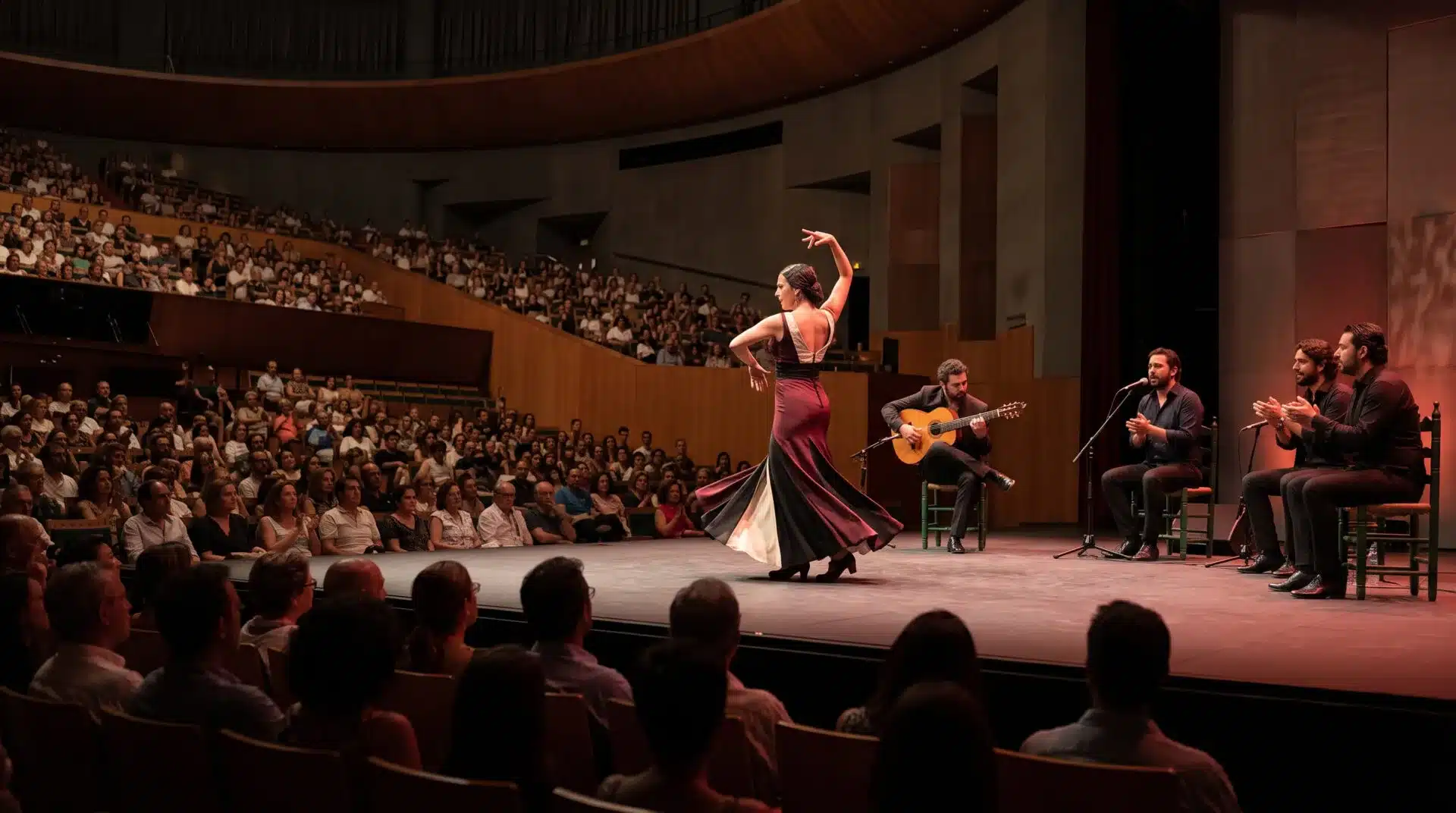
Visitors can expect three central pillars of flamenco: cante, baile, and toque. Depending on the final programme, performances may range from traditional singing and guitar recitals to highly choreographed productions and experimental works that combine flamenco with contemporary dance, jazz, classical music, theatre, visual arts, or new stage languages.
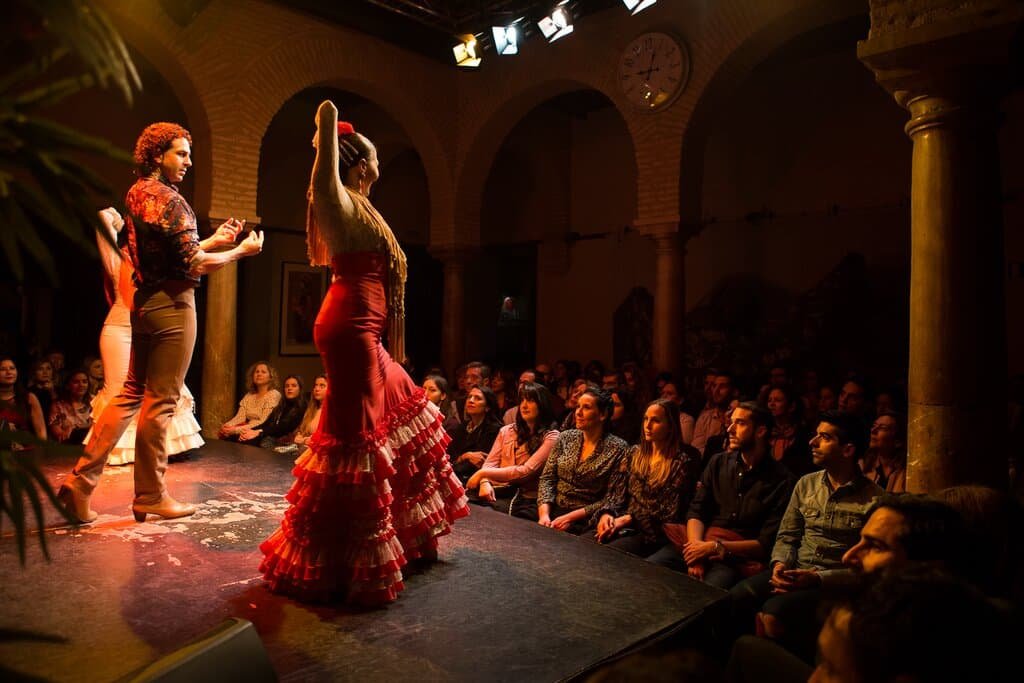
Another defining feature is the use of Seville itself as part of the artistic experience. The Bienal has historically used landmark buildings, theatres, churches, squares, riverside locations, and heritage sites as performance spaces, allowing visitors to experience flamenco in settings closely connected with the city’s history and identity.
Event dates
Bienal de Flamenco 2027 is currently planned for September–October 2027, with exact dates still to be confirmed by the organizers.
At present, the official Bienal website has not published a detailed 2027 programme, final performance calendar, venue-by-venue schedule, or ticket-release timetable. Visitors should therefore treat the September–October window as tentative until the official announcement is made.
The Bienal normally develops its programme around a substantial sequence of performances and complementary cultural activities, so the final schedule is expected to be released progressively through the official website and the City of Seville’s cultural channels.
Visiting this event? Don’t miss out on these amazing activities and local experiences while you’re here.
Venue & exhibition site
Rather than operating from one exhibition centre, the Bienal uses Seville as a city-wide cultural stage. The event’s principal venues have included major theatres, historic monuments, churches, cultural centres, outdoor spaces, and heritage buildings.
Potential and historically important venues include:
- Teatro de la Maestranza
- Teatro Lope de Vega
- Teatro Central
- Teatro Alameda
- Espacio Turina
- Real Alcázar
- Real Fábrica de Artillería
- Iglesia de San Luis de los Franceses
- Plaza de Toros de la Real Maestranza
- Muelle de la Sal
The exact 2027 venue allocation has not yet been announced. The official Bienal venue information shows how each edition can adapt its spaces according to the artistic programme, with different venues offering different capacities, atmospheres, acoustics, and artistic possibilities.
The Teatro de la Maestranza is particularly significant for large-scale productions, while smaller spaces such as Espacio Turina can provide a more intimate environment for guitar and other instrumental performances. Historic locations such as the Real Alcázar give selected productions an especially distinctive setting.
Full exhibition programme
Although the Bienal is primarily a performing-arts festival rather than a conventional exhibition, its wider cultural programme extends beyond performances.
The official programme model includes:
- Flamenco dance productions
- Cante performances
- Guitar concerts
- New artistic creations
- World premieres
- National premieres
- One-night-only productions
- Experimental flamenco
- Family activities
- Workshops and masterclasses
- Exhibitions
- Film screenings
- Book presentations
- Outdoor performances
- Educational activities
- Cultural encounters
The most recent published programme demonstrates the scale that the Bienal can reach. It featured dozens of performances, numerous new productions, premieres, unique nights, and special morning performances distributed across multiple venues.
The organizers also use the wider programme to place flamenco in dialogue with other artistic disciplines. This can include music, theatre, contemporary dance, cinema, literature, visual arts, heritage, and education.
The 2027 programme should therefore be viewed as a combination of headline performances and smaller cultural experiences rather than a single continuous festival stage.
Featured artists & designers
The Bienal traditionally presents a broad mixture of established flamenco figures, respected contemporary creators, and emerging artists.
Recent official programmes have featured internationally recognized names such as Sara Baras, Israel Galván, Farruquito, Manuel Liñán, Andrés Marín, Olga Pericet, Ana Morales, David Coria, Patricia Guerrero, Isabel Bayón, Juana Amaya, María Moreno, Rafaela Carrasco, Pastora Galván, and many other performers.
The vocal side of the programme has also included artists such as José Mercé, Arcángel, Mayte Martín, Marina Heredia, Israel Fernández, La Tremendita, Ángeles Toledano, Rancapino Chico, Dolores Agujetas, and Rocío Luna.
Guitar has traditionally received dedicated attention as well. Artists featured in recent programming have included Antonio Rey, Rafael Riqueni, Juan Manuel Cañizares, Diego del Morao, Dani de Morón, María Marín, Alejandro Hurtado, and José Fermín Fernández.
The final 2027 artist list remains unannounced. These names should therefore be regarded as examples of the calibre and diversity of artists historically associated with the Bienal, rather than a confirmed 2027 lineup.
Galleries & exhibitors
The Bienal does not operate as an art-fair model with commercial galleries and exhibition booths. Instead, the equivalent cultural network includes artists, creative companies, cultural institutions, foundations, universities, archives, museums, filmmakers, publishers, collectors, and heritage organizations.
Special exhibitions can provide historical context for the performances. A recent parallel programme, for example, included an extensive exhibition devoted to the history of Ópera Flamenca and its relationship with recording technology, radio, theatres, bullrings, and mass audiences. The exhibition brought together hundreds of historical objects, including posters, records, gramophones, photographs, and previously unpublished documentation.
This type of exhibition demonstrates the Bienal’s broader approach: flamenco is presented not simply as live entertainment but as an evolving cultural heritage with connections to music history, visual culture, technology, social life, and performance.
For 2027, specific exhibitions, cultural partners, collections, and participating institutions have not yet been announced.
Exhibition halls & sections
Because Bienal de Flamenco is a city-wide performing-arts event, there are no conventional exhibition halls or trade-show sections.
Instead, the programme is organized through different artistic and cultural environments.
Major theatres: Large venues provide space for headline productions, major dance companies, orchestral collaborations, and large-scale flamenco performances.
Historic spaces: Heritage locations such as the Real Alcázar allow flamenco to interact directly with Seville’s architectural and cultural history.
Concert venues: Smaller halls and cultural centres can provide focused environments for guitar, singing, intimate performances, and experimental projects.
Outdoor spaces: Streets, plazas, riverside areas, and public locations can bring flamenco to audiences outside traditional theatres.
Parallel cultural spaces: Exhibitions, cinema, workshops, book presentations, and family activities can take place in museums, cultural centres, educational institutions, and other partner venues.
The official venue information confirms that the Bienal deliberately distributes performances across different parts of Seville rather than concentrating everything in one location.
Talks, workshops & special events
The Bienal’s parallel programme is an important part of the overall experience. Activities can include exhibitions, film screenings, book presentations, educational sessions, outdoor performances, family workshops, and cultural encounters.
Recent programming under the “Otras perlas” umbrella included exhibitions, street performances, a family flamenco experience, a ceremonial opening event, and other cultural activities.
Workshops can introduce visitors to flamenco rhythm, movement, percussion, and musical structures. Family-oriented activities are particularly useful for visitors travelling with children or for people encountering flamenco for the first time.
Special events can also provide opportunities to understand the historical development of flamenco. Exhibitions and talks can place performances into a wider context by examining important artists, recording traditions, cultural movements, and the relationship between flamenco and Seville.
The exact workshop and special-event programme for 2027 remains to be announced.
Ticket types
Ticketing is generally organized by individual performance and venue rather than through a single universal festival pass.
The latest published ticket structure shows substantial variation according to venue and seating category. As a reference, recent ticket prices ranged from approximately $14 for the lowest-priced seating at Teatro Lope de Vega to approximately $84 for premium seating at Teatro de la Maestranza for a major headline production. These figures are based on the most recently published ticket schedule and converted into USD.
Standard theatre tickets: Seating categories vary according to the venue.
Premium seating: Major productions can have higher prices for the best seating areas.
Smaller-venue tickets: Performances at specialist venues can have simpler general-admission structures.
Free activities: Parallel activities may include free exhibitions, outdoor performances, and community events, depending on the final programme.
The 2027 ticket prices have not yet been announced, so the above figures should be used only as a guide based on the latest available official pricing.
VIP & collector access
The Bienal does not primarily operate around a conventional VIP or collector-ticket system because it is a performing-arts festival rather than a commercial art fair.
However, collectors, researchers, cultural professionals, journalists, programmers, institutions, and serious flamenco enthusiasts can benefit from the event’s professional and cultural ecosystem.
The festival’s importance for artistic creation makes it particularly relevant to programmers and cultural organizations looking for productions that may later tour internationally. Recent editions have included new productions and premieres specifically designed to introduce fresh artistic work to the wider flamenco world.
Visitors interested in attending several performances should monitor the official ticket release carefully because popular productions can sell quickly. The previous edition recorded numerous sold-out performances and very high average occupancy.
Event rules
Visitors should follow the rules of the individual theatre or venue as well as the general Bienal conditions.
Photography, filming, and audio recording may be restricted during performances. Venue regulations can also prohibit food and drinks inside auditoriums, restrict dangerous objects, and impose age or admission requirements for particular productions.
For example, Espacio Turina prohibits unauthorized photography, filming, and recording during performances and does not allow food or drink inside the auditorium. Its admission rules also include specific requirements for younger visitors.
Ticket holders should arrive early enough to locate their seats and pass through venue-entry procedures without delaying the performance. Once a performance begins, late admission may depend on the policy of the individual venue.
How to get there
Seville has a compact historic centre, making walking practical for many venues located around the central districts.
For visitors staying farther from the centre, the city has an extensive bus network, tram connections, taxis, and other urban transport options. Different Bienal venues have different nearest stops, so visitors should check the individual venue information before travelling.
The Teatro de la Maestranza, for example, is accessible from Puerta Jerez on Metro Line 1, the Archivo de Indias tram stop, several TUSSAM bus routes, and nearby taxi ranks.
Visitors arriving by air can use Seville Airport connections into the city, while high-speed rail makes Seville accessible from other major Spanish cities.
Because the festival is spread across the city, planning the route between performances is important, especially when attending events at different venues on the same day.
Public transport & parking
Metro: Seville Metro Line 1 provides a useful connection for central destinations, including the area around Puerta Jerez and the Teatro de la Maestranza.
Tram: The Metrocentro tram provides convenient access to central areas and can be useful for visitors attending performances around the historic centre.
Bus: TUSSAM operates the city’s extensive urban bus network and serves many of the central cultural districts.
Taxi: Taxis are useful for late-night performances or journeys between venues where walking or public transport is less convenient.
Parking: Central Seville has public and private parking facilities, but driving into the historic centre can be less convenient than using public transport. Visitors should allow additional time if travelling by car.
For a multi-performance visit, accommodation within walking distance of the historic centre can significantly reduce transport requirements.
Accommodation areas
Santa Cruz: This historic district is convenient for visitors who want to stay close to major monuments, restaurants, narrow streets, and central cultural venues.
Centro: Central Seville provides easy access to shopping, restaurants, theatres, plazas, and many festival locations.
Arenal: Located near the Guadalquivir and major cultural attractions, Arenal is particularly convenient for venues around the Maestranza and riverfront.
Triana: Triana has a particularly strong connection with flamenco culture and offers restaurants, bars, traditional spaces, accommodation, and a distinct neighbourhood atmosphere. The City of Seville identifies Triana as an area with a strong flamenco and cultural identity.
Alameda and San Luis: This area is attractive for visitors seeking independent restaurants, nightlife, cultural venues, and a less formal atmosphere.
Visitors who plan to attend performances at several different venues should prioritize central accommodation over staying far outside the city centre.
Food & refreshments
Food is an important part of a trip to Seville, and visitors can easily combine Bienal performances with Andalusian dining.
Traditional options include tapas, jamón, local cheeses, fried fish, grilled meats, gazpacho, salmorejo, croquettes, and other Andalusian dishes. Seville’s restaurant culture ranges from traditional taverns and neighbourhood bars to modern restaurants and contemporary interpretations of local cuisine.
Triana is particularly useful for visitors interested in combining flamenco culture with food and nightlife. The district has a long-standing relationship with flamenco, ceramics, traditional bars, restaurants, and riverside dining.
Visitors should allow enough time between performances for meals because popular central restaurants can become busy around conventional Spanish dining hours.
Food and drinks are generally not permitted inside performance auditoriums, and individual venue regulations should be checked before attending.
Accessibility
Accessibility is one of the stated values of the Bienal. The organization aims to provide inclusive cultural experiences and publishes accessibility information for individual venues.
Because the festival uses historic buildings, theatres, churches, outdoor locations, and other varied spaces, accessibility arrangements can differ substantially between venues.
The official accessibility information recommends checking each venue individually and contacting the organization where specific assistance is required.
Espacio Turina, for example, provides an accessible entrance for people with reduced mobility and designated wheelchair seating. It also provides a complimentary companion ticket for visitors with reduced mobility when purchasing the relevant accessible admission.
Visitors should identify accessibility requirements during booking whenever possible rather than assuming that every venue has identical facilities.
Must-see exhibitions
One of the strongest features of the Bienal is the opportunity to experience flamenco outside conventional stage performances.
Recent parallel programming has demonstrated the potential for major historical exhibitions examining the development of flamenco as a recorded and mass cultural art form. One major exhibition brought together hundreds of objects connected with Ópera Flamenca, including historical recordings, photographs, posters, gramophones, documents, and other archival material.
Other must-see experiences can include:
- Historic exhibitions about flamenco artists and musical traditions
- Photography and visual-art displays
- Documentary and flamenco film screenings
- Book presentations
- Public-space performances
- Family workshops
- Educational encounters
- Cultural discussions
- Heritage-site performances
The final 2027 exhibition programme has not yet been announced, so visitors should consult the official “Otras perlas” or parallel-activities section once the new programme is released.
Previous year’s highlights
The previous edition was one of the most successful in the history of the Bienal. Official figures reported more than 39,900 spectators and ticket revenue exceeding $1.1 million after conversion from the published figure. The event recorded more than 90% average occupancy, while 39 of 64 programmed shows sold out.
The programme combined tradition, innovation, and new approaches to flamenco, with 17 absolute premieres and 47 new productions presented across ten performance spaces. The event also attracted visitors from outside Seville, including domestic and international tourists, demonstrating the festival’s importance as a cultural tourism driver.
More than 100,000 people participated in parallel activities, showing that the Bienal’s reach extends far beyond ticketed theatre performances. The programme also included special “Noches únicas” designed specifically for the festival and intended to create experiences that could not simply be replicated elsewhere.
These results underline why the Bienal remains an important destination for both dedicated flamenco audiences and international visitors interested in Spanish performing arts.
Official tickets
Official ticket sales are handled through the Bienal’s website and the designated theatre ticket offices for performances held at particular venues.
The 2027 ticket-sale schedule, seating categories, discounts, and final prices have not yet been announced. As a reference, the most recent published official ticket structure ranged from approximately $14 for the lowest-priced seating to approximately $84 for premium seating at a headline production.
Previous ticketing arrangements have also included advance-purchase discounts, while selected parallel activities have been offered free of charge.
Visitors should use the official Bienal website rather than unofficial ticket sellers when purchasing admission. This is particularly important for highly anticipated performances, where official allocations can sell out quickly.
Official website: La Bienal de Flamenco de Sevilla (https://www.labienal.com/)
Tickets Sell Out
in Minutes
Maps
Contact
Video
FAQ's
What is Bienal de Flamenco?
Bienal de Flamenco is a major international flamenco festival organized in Seville that brings together cante, baile, guitar, contemporary creation, heritage, and cultural activities. It uses theatres, historic buildings, public spaces, and other distinctive venues across the city.
What type of performances can visitors expect?
The programme traditionally includes flamenco singing, dancing, guitar, large-scale productions, intimate concerts, experimental projects, premieres, and special one-night performances. Complementary activities can include exhibitions, films, workshops, book presentations, family events, and outdoor performances.
Will the 2027 artists and programme be announced soon?
The detailed 2027 artist lineup, venue schedule, performances, and parallel programme have not yet been officially published. Visitors should rely on the official Bienal website for confirmed artists and programme announcements rather than treating performers from previous editions as confirmed participants.
Are there free activities at the Bienal?
Yes, the Bienal's wider cultural programme has historically included free exhibitions, outdoor performances, public activities, and selected family or educational events. The exact free programme for the upcoming edition will depend on the final 2027 announcement and should be checked through the official activities section.
Is the Bienal accessible for visitors with reduced mobility?
The organizers state that inclusion and accessibility are important values and provide accessibility information for individual venues. Because the festival uses many different theatres, historic buildings, and public spaces, visitors with specific requirements should check the accessibility arrangements of each venue before purchasing tickets.