

Festival de Cine de Zaragoza 2026 – Spain
What to expect
Festival de Cine de Zaragoza is an established Spanish film festival focused on independent cinema, emerging filmmakers, short films and the development of new audiovisual talent. The festival brings together filmmakers, producers, industry professionals, students, educators and general audiences through competitive screenings, special programmes, professional activities and cultural events. The organisation describes the festival as both a public cultural event and an important meeting point for the audiovisual industry.
The heart of the festival is its Official Section, where filmmakers compete in several short-film categories. These include national fiction, international animation, audiovisual training-centre productions, Aragonese shorts, Latin American new talent and international micro-shorts aimed at younger creators. This gives the festival a particularly broad short-film identity.
FCZ is also significant for filmmakers because it acts as a qualifying festival for major Spanish film awards in relevant short-film categories. The official festival information identifies its role in qualification pathways associated with the Goya Awards, Fugaz Awards and other industry recognitions.
Enjoy Your Event Stress-Free with Spain Travelo
Planning a trip around a festival, concert, cultural celebration, or business event in Spain can be time-consuming—finding tickets, accommodation, transportation, and local information takes effort. Spain Travelo makes it easier by bringing essential event information, travel planning, and support together in one place.
For audiences, the festival offers an opportunity to discover films and filmmakers who may not yet have extensive exposure through mainstream cinemas. For professionals, the event combines screenings with networking, industry discussions, pitching opportunities and audiovisual-sector meetings.
The festival also has a strong regional identity. Aragonese filmmaking receives its own competitive category, while Zaragoza itself becomes an important backdrop for screenings, cultural events, professional meetings and activities connected with the city’s audiovisual community.
Festival dates
Festival dates: 19–28 November 2026
The festival’s current competition documentation identifies this as the 31st edition of Festival de Cine de Zaragoza. The official rules confirm that the awards are presented during the closing gala, while the organisation’s current website is already promoting the competition and participation process for this edition.
Visiting this event? Don’t miss out on these amazing activities and local experiences while you’re here.
Venues & festival locations
Festival de Cine de Zaragoza uses a network of cinemas, cultural centres and professional spaces throughout Zaragoza. This multi-venue structure allows the festival to combine traditional cinema screenings with exhibitions, industry meetings, educational programmes and special events.
Filmoteca de Zaragoza is one of the festival’s principal cinema locations and has traditionally hosted important Official Section screenings. It is particularly relevant for short-film competition sessions and special festival presentations. Previous official festival material identifies it as a major venue for the Official Section, Augusto en Off and Zaragoza Industry Film activities.
Auditorio de Zaragoza is another important festival location. Its Sala Mozart and Sala Hipóstila have been used for Official Section screenings and special festival activities.
Centro de Historias provides another cultural setting for FCZ programming, while additional cafés, educational institutions and cultural spaces can host parallel activities.
Previous official venue information has included:
- Filmoteca de Zaragoza
- Sala Mozart at Auditorio de Zaragoza
- Sala Hipóstila at Auditorio de Zaragoza
- Centro de Historias
- Santa Catalina Café
- Caja Rural de Aragón
- Escuela de Arte de Zaragoza
- Ilunion Hotels Romareda
- Real Sociedad Fotográfica de Zaragoza
- Centro Cívico Torrero
- Centro Cívico Delicias
The precise venue allocation for each 2026 screening should be checked against the final official programme because the festival can use different locations for different sections and special activities.
Full programme
The Official Section is the backbone of the FCZ programme. It brings together several competitive categories designed to support different forms of short filmmaking.
The principal competitions include:
- National Fiction Short Film Competition
- International Animation Short Film Competition
- International Short Films from Audiovisual Training Centres
- Aragonese Short Film Competition
- International Latin American New Talent Short Film Competition
- International Micro-Short Film Competition
- Youth-oriented audiovisual initiatives
- Special and parallel screenings
- Industry programming
- Professional meetings
- Educational activities
- Award and recognition events
The National Fiction Short Film Competition is one of the festival’s longest-standing competitive areas and focuses on Spanish filmmakers and residents working in fiction filmmaking.
The International Animation competition opens the programme to creators from different countries and provides a dedicated space for animated storytelling. The Training Centre competition is aimed at students and creators whose work is supported by audiovisual schools or educational institutions.
The Aragonese Short Film Competition is especially important locally because it supports filmmakers who were born in or reside in Aragon. Entries can include fiction, animation, documentary and experimental works.
The Latin American New Talent competition creates an international bridge between Zaragoza and emerging filmmakers from Latin America. The category accepts different forms of short filmmaking, including fiction, animation, documentary and experimental cinema.
Featured films & premieres
The 2026 film selection is still being finalised through the official selection process, so individual finalist titles and premiere statuses should not be presented as confirmed until published by the festival.
The current competition rules show that the festival is seeking a wide range of short-form audiovisual work. National fiction, international animation, educational productions, Aragonese cinema and Latin American new talent are all represented.
The festival’s previous programmes have also included special feature-length screenings and industry presentations outside the main short-film competitions. This gives audiences the opportunity to experience longer-form cinema alongside the competitive short-film programme.
One of the distinctive elements of FCZ is its willingness to connect emerging cinema with established Spanish film culture. Special screenings can therefore sit alongside competitions for new directors, student filmmakers and independent creators.
The festival’s Official Section also gives selected filmmakers the possibility of presenting their work personally before a screening. The current rules explicitly allow authors of selected competition works to introduce their films if they wish to do so.
Visitors interested in premieres should check the final programme for the precise classification of each film. Premiere status can vary between individual productions, and only the festival’s official programme should be treated as confirmation.
Directors, actors & guests
FCZ has a strong tradition of connecting filmmakers with audiences. Directors of selected works may attend screenings and personally introduce their films, creating opportunities for viewers to learn about the creative process directly from the people who made the work.
Guests can include directors, actors, producers, screenwriters, cinematographers, editors, animation professionals, educators and representatives of the wider audiovisual industry.
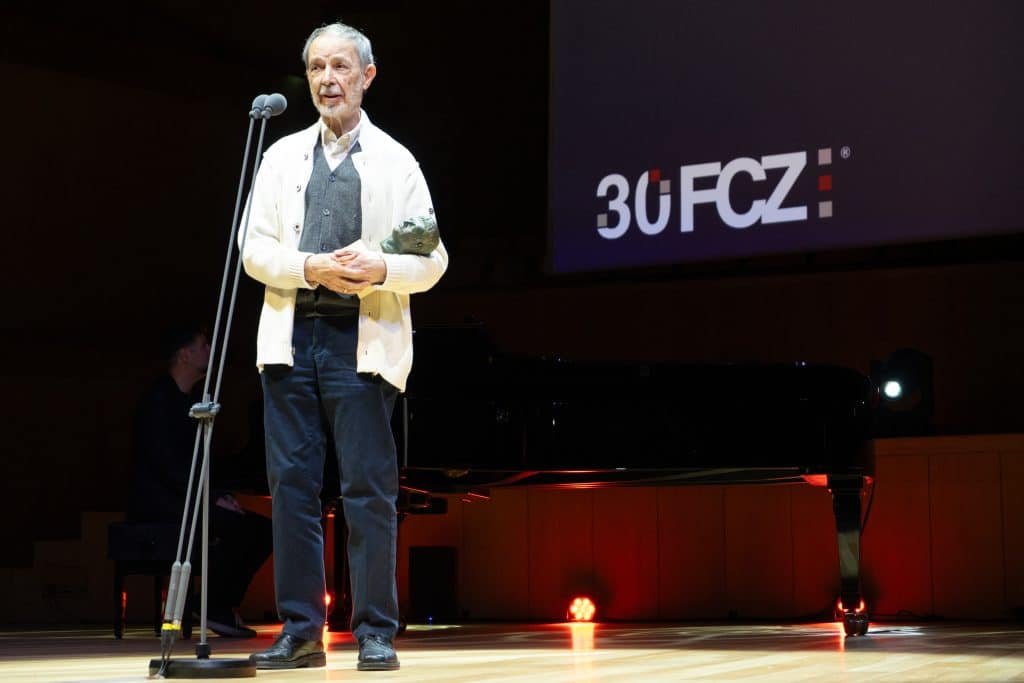
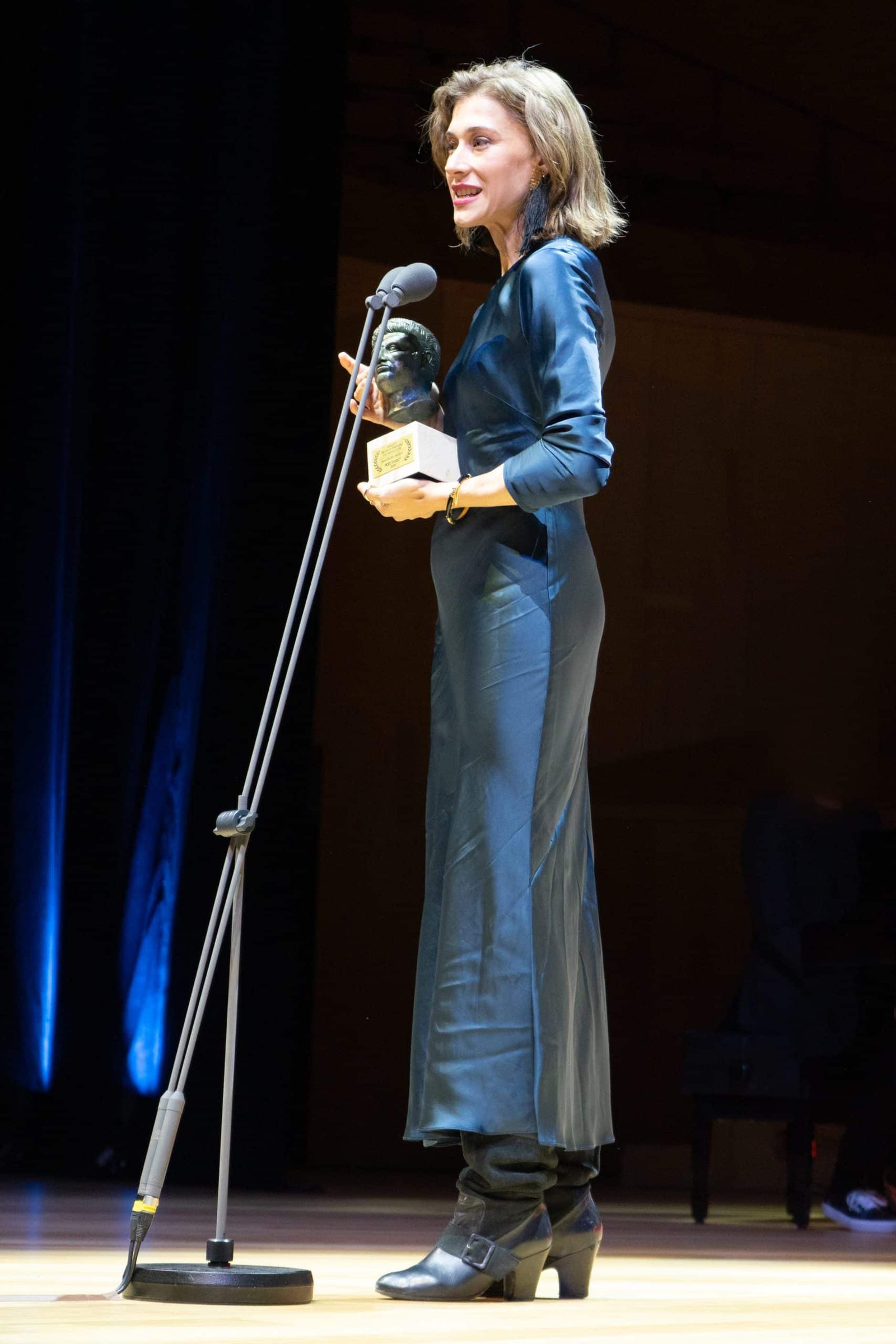
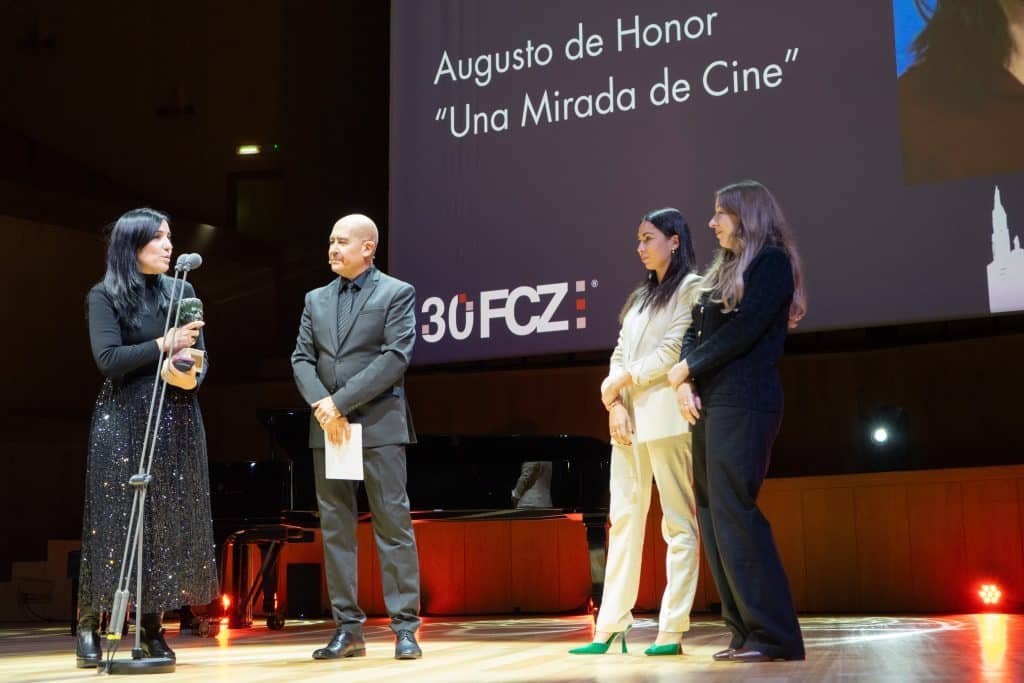
The festival’s awards and recognition programme also provides opportunities to celebrate established figures in Spanish cinema while continuing to highlight new talent.
Previous festival honours have recognised professionals from different areas of filmmaking, including acting, directing, production, poster design and other specialist crafts. This reflects the festival’s broader approach to recognising cinema as a collaborative art form.
Professional guests are also connected with Zaragoza Industry Film, which provides a more industry-focused environment for companies, institutions and audiovisual professionals to meet and discuss current developments in cinema and cultural production.
The final 2026 guest list should be confirmed through the festival’s official communications as announcements are made.
Screening schedule
The FCZ screening programme is divided between competitive short-film sessions, special screenings and complementary festival sections. Because the festival operates across several venues, visitors should check the official programme carefully before planning a full day of screenings.
Official competition sessions can include blocks of several short films rather than individual feature-length screenings. This format allows audiences to discover multiple directors and styles during a single cinema session.
A typical itinerary can include:
- National fiction short-film blocks
- International animation sessions
- Aragonese short-film sessions
- Training-centre selections
- Latin American new-talent programmes
- Micro-short competitions
- Special feature screenings
- Industry-related screenings
- Filmmaker encounters
- Award-related sessions
The official rules state that the organisation determines the locations and screening times for selected works. Finalists are informed about the projection format and subsequent screening arrangements by the festival.
Visitors should therefore use the official programme as the definitive source for screening times, cinema rooms, film order and any special introduction or Q&A.
Ticket types & accreditation
Festival de Cine de Zaragoza has historically maintained a strongly accessible public programme, with many official competition screenings offered without an admission charge. Recent official festival communications specifically promoted several special screenings as free entry until capacity was reached.
The exact admission policy can differ between festival activities, partner venues and professional events.
General screenings: Many FCZ public screenings have been offered free of charge, subject to available seating.
Special screenings: Selected special sessions can also operate with free admission until capacity is reached.
Industry access: Professional activities can have separate registration or participation requirements.
Filmmaker accreditation: Selected filmmakers and participating professionals may receive specific instructions from the festival regarding attendance and accreditation.
Competition submission: The current rules state that some competitions may have a small submission fee through the festival’s online submission platform, but the official rules do not establish one universal fee for every category.
Because no universal 2026 public ticket price is currently published, visitors should check the official festival programme before attending. Previous public screenings have frequently been free.
Industry & professional access
Zaragoza Industry Film, commonly known as ZIF, is the festival’s dedicated industry platform. It brings together institutions and companies connected with the cultural and audiovisual sectors for presentations, discussions and professional meetings.
The section is designed to move beyond film exhibition and focus on the business and professional infrastructure surrounding cinema.
Professional activities can cover:
- Audiovisual production
- Financing
- Distribution
- Exhibition
- Cultural policy
- New production models
- Industry trends
- Professional networking
- Institutional collaboration
- Emerging audiovisual opportunities
ZIF is particularly useful for filmmakers and companies that want to understand how projects move through the audiovisual industry.
The festival’s current competition structure also provides professional opportunities for selected filmmakers. Winning the national fiction short-film competition can provide access to the relevant Goya candidate process, while the festival’s qualifying role can also support progression toward other Spanish short-film awards.
The festival therefore provides both creative exposure and professional recognition, particularly for short-film creators.
Red carpet & special events
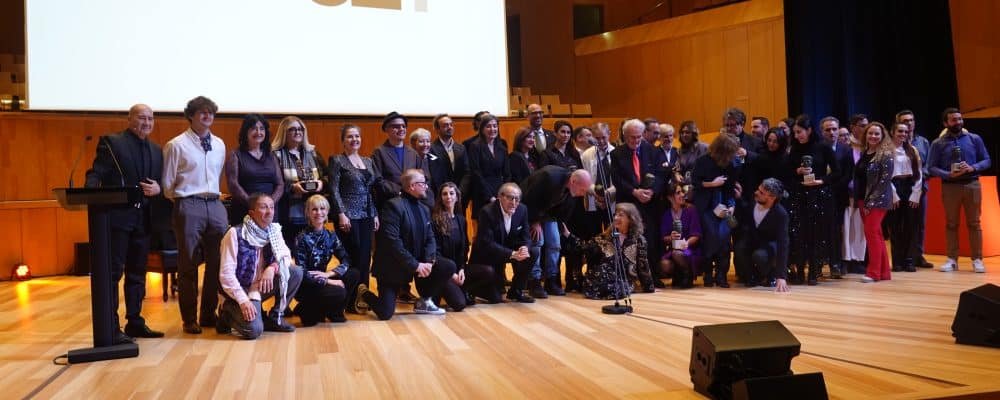
FCZ combines cinema screenings with opening and closing ceremonies, award presentations, special screenings and recognition events.
The closing gala is particularly important because official awards are presented there. The competition structure includes jury prizes for national fiction, international animation, Aragonese short films and audiovisual training-centre productions, as well as recognition for Latin American new talent.
The festival also presents non-official awards supported by sponsors and collaborators. These additional recognitions complement the main competitive awards and can highlight specific creative achievements or contributions to cinema.
Special screenings and filmmaker encounters add another dimension to the festival. Selected directors may personally present their films before a public screening, creating a more direct relationship between creators and audiences.
For visitors, the strongest special-event experiences are likely to be the opening activities, filmmaker encounters, industry presentations and closing awards programme.
Festival rules
The FCZ competition regulations establish different eligibility conditions for each official category.
National fiction: Open to Spanish nationals or residents of Spain with audiovisual works within the creative field.
International animation: Open to filmmakers regardless of nationality, provided the submitted work meets the competition requirements.
Training-centre competition: Intended for works supported by audiovisual schools, training centres or related educational entities.
Aragonese competition: Open to filmmakers born in or resident in Aragon, with fiction, animation, documentary and experimental works eligible.
Latin American new talent: Open to productions from Latin American countries and accepts fiction, animation, documentary and experimental short films.
The current rules specify that qualifying works must satisfy the festival’s production and running-time requirements. Selected works must also meet the technical requirements necessary for public projection.
Subtitles: Films in languages other than Spanish must be subtitled in Spanish.
Technical quality: The organisation can reject works that do not meet the technical standards necessary for public exhibition.
Number of submissions: A filmmaker can submit up to three works under the applicable rules.
Selection: A selection committee reviews the submitted works, and its decisions are final.
Jury: The jury consists of professionals from audiovisual, educational, media and cultural fields.
Projection: Selected works must be supplied in an accepted digital projection format such as DCP or another format approved by the festival.
The official competition rules should always be checked before submitting because the festival states that regulations can be modified due to circumstances outside the organisation’s control.
The published official awards include approximately $1,678 for the national fiction short-film jury prize, approximately $1,119 for the international animation prize and approximately $559 for the Aragonese short-film prize, based on the ECB reference exchange rate of €1 = $1.1186. The training-centre competition awards a trophy rather than a stated cash amount.
How to get there
Zaragoza is one of Spain’s principal cities and is well connected with Madrid, Barcelona and other major destinations by high-speed rail and road.
For international visitors, Zaragoza can also be reached through nearby airports, with Madrid-Barajas and Barcelona-El Prat providing extensive international connections followed by rail or road travel.
Zaragoza-Delicias railway station is the city’s main long-distance rail hub and provides high-speed services. From the station, visitors can continue into the centre using local buses, taxis or other urban transport.
The city’s central districts are relatively easy to navigate, and visitors attending several festival venues can often combine public transport with walking.
For filmmakers carrying equipment, luggage or exhibition materials, taxis can be particularly convenient when moving between accommodation and festival venues.
Public transport & parking
Zaragoza has an integrated urban transport network that includes buses and tram services. Public transport is generally a practical option for visitors staying outside the immediate city centre.
The tram provides an efficient connection through several central areas, while buses offer broader coverage to residential districts and cultural venues.
Tram: Useful for major central corridors and connections across the city.
Bus: A practical option for reaching venues outside the tram corridor.
Taxi: Convenient for late-night journeys, luggage or travelling between multiple festival locations.
Walking: Suitable for many central cultural attractions and nearby venues.
Parking: Visitors travelling by car should consider public parking facilities near their accommodation or festival venue rather than depending on street parking during busy festival periods.
Because FCZ can operate across several locations, checking the exact venue before each screening is advisable.
Accommodation areas
Zaragoza offers accommodation across the city, but staying close to the centre is generally the most convenient choice for festival visitors.
Casco Histórico: Best for visitors who want to combine cinema with historic attractions, restaurants and nightlife.
Centro: Convenient for public transport and access to major cultural venues.
Delicias: Particularly useful for visitors arriving by high-speed train and looking for easy access to Zaragoza-Delicias station.
Universidad: A good option for visitors who prefer a lively neighbourhood with restaurants and cafés.
La Magdalena: A central historic district with a more local atmosphere and access to the old city.
Near Plaza del Pilar: Convenient for sightseeing and central cultural activities.
For a multi-venue festival, accommodation close to a tram or major bus route can be more useful than choosing a hotel solely because it is near one cinema.
Food & dining
Zaragoza offers a strong regional food culture that makes it easy to combine festival visits with local dining.
Traditional Aragonese cuisine includes hearty meat dishes, vegetables, local cheeses and seasonal ingredients. Visitors should also try the city’s tapas culture, particularly around the historic centre.
Popular local choices can include:
- Ternasco de Aragón
- Borrajas
- Migas
- Longaniza
- Local cheeses
- Aragonese wines
- Traditional tapas
- Regional pastries
The areas around El Tubo and the historic centre are particularly useful for visitors who want to sample several small dishes rather than commit to one long restaurant meal.
For festival visitors with short breaks between screenings, tapas bars and cafés can be more practical than full-service restaurants. Those with more time can explore traditional Aragonese restaurants for a longer meal.
Vegetarian, vegan and international dining options are also available across central Zaragoza, making the city suitable for visitors with different dietary preferences.
Accessibility
Accessibility should be considered individually for each festival venue because FCZ operates across cinemas, cultural centres, educational buildings and other spaces.
The festival’s commitment to broad participation is reflected in its educational and youth-oriented competitions. Its programme also includes work created through audiovisual training centres, giving students and emerging creators a dedicated platform.
Visitors with mobility requirements should confirm accessibility directly with the specific venue before attending. Important points to check include step-free access, wheelchair seating, accessible toilets and the route from the venue entrance to the screening room.
Wheelchair access: Confirm the accessible entrance and seating arrangements with the individual venue.
Hearing accessibility: Ask the venue whether subtitles, captions or other assistance are available for the particular screening.
Visual accessibility: Check individual film and venue information for audio-description or other accessibility services.
Family access: Educational and youth-focused sections can be particularly suitable for families.
Since the festival uses multiple locations, facilities should not be assumed to be identical at every venue.
Best screenings to attend
The National Fiction Short Film Competition is one of the strongest choices for visitors wanting to understand the festival’s central identity. It showcases Spanish filmmaking talent and provides a concentrated way to discover directors and stories that may not receive extensive commercial distribution.
The International Animation Competition is another highlight. It offers a completely different visual language and brings together animation creators from different countries and creative traditions.
Best for Spanish cinema: National Fiction Short Film Competition.
Best for animation: International Animation Short Film Competition.
Best for regional filmmaking: Aragonese Short Film Competition.
Best for students: International Short Films from Audiovisual Training Centres.
Best for Latin American cinema: New Talent Latin American Short Film Competition.
Best for younger audiences: International Micro-Short Film and youth-oriented programming.
Best for industry professionals: Zaragoza Industry Film.
Best for filmmaker interaction: Sessions where selected directors personally introduce their films.
Visitors with limited time should prioritise the Official Section because it provides the clearest introduction to FCZ’s competitive identity. Those with more time should add an industry event or special screening to experience the festival beyond the competition.
Previous year’s highlights
The previous edition was a major milestone for Festival de Cine de Zaragoza and included a wide-ranging programme of competitive short films, special screenings, professional activities and anniversary-related events.
The Official Section received an unusually strong international response, with 1,669 short films submitted from 53 countries across the festival’s official competitions. The submissions included 995 national fiction works, 86 international animation entries, 190 works from audiovisual training centres and additional projects in the other competition categories.
The festival’s awards recognised a diverse selection of filmmakers and creative achievements. Among the official prizes were awards for national fiction, international animation, Aragonese cinema, micro-shorts and Latin American new talent.
The previous programme also included special screenings at Filmoteca de Zaragoza with free admission until capacity was reached. These sessions were accompanied by filmmaker encounters and special presentations, giving audiences opportunities to engage directly with creators.
Zaragoza Industry Film was another important feature. The industry programme brought companies, institutions and audiovisual professionals together for lectures, debates and meetings focused on the development of the film industry in Aragon and Spain.
The festival also continued its tradition of recognising established cinema professionals alongside emerging filmmakers. Its honours have included awards for creative talent, film professions, educational contributions and support for the audiovisual sector.
Official tickets & accreditation
The official Festival de Cine de Zaragoza website should be used for the final programme, screening information, competition regulations, accreditation instructions and any ticket announcements.
Official Festival de Cine de Zaragoza website (https://festivalcinezaragoza.com/)
The official contact address is info@festivalcinezaragoza.com.
The festival’s current competition documentation confirms that selected filmmakers are contacted directly about participation and projection arrangements. Selected authors can also present their films personally before screenings if they wish.
General public admission has frequently been free for official and special screenings, subject to venue capacity. Professional activities can have different participation requirements, especially for industry sessions.
Filmmakers should use the official competition rules and submission platform for film participation rather than relying on general festival ticket information. The organisation states that the final programme is communicated sufficiently in advance and that selected works are subsequently announced through official channels.
Tickets Sell Out
in Minutes
Maps
Contact
Video
FAQ's
What is Festival de Cine de Zaragoza?
Festival de Cine de Zaragoza is a major Spanish film festival focused especially on short films, emerging filmmakers and independent audiovisual creation. Its programme combines national, international, Aragonese and Latin American competitions with special screenings, educational activities and professional industry events.
Which film competitions are part of the festival?
The Official Section includes national fiction shorts, international animation, audiovisual training-centre productions, Aragonese shorts, Latin American new talent and international micro-shorts. This structure gives the festival a broad range of cinematic styles while providing different entry points for professional, student and emerging filmmakers.
Is Festival de Cine de Zaragoza important for filmmakers?
Yes. The festival offers competition exposure, filmmaker presentations, professional networking and industry activities through Zaragoza Industry Film. Its qualifying status for relevant Spanish film awards can also provide important professional opportunities for selected short-film creators.
Are FCZ screenings free to attend?
Many public screenings and special sessions have historically been offered free of charge until venue capacity is reached. However, admission arrangements can vary by venue and activity, so visitors should check the official programme for the specific screening they want to attend.
Can filmmakers attend and present their films?
Yes. The official regulations state that authors of selected competition works may personally present their films before their screenings. Selected participants receive instructions from the organisation concerning attendance, projection materials and festival participation, while the final programme and venue arrangements are communicated through official festival channels.