L’Alternativa, Barcelona Independent Film Festival 2026 – Spain
What to expect
L’Alternativa, Barcelona Independent Film Festival is one of Spain’s established independent cinema festivals, dedicated to creative freedom, artistic experimentation, diversity and alternative approaches to filmmaking. The festival brings together international and Spanish films with a programme designed for audiences interested in cinema that challenges conventional formats, subjects and production methods.
The festival is particularly valuable for discovering filmmakers and films that may not receive wide commercial distribution. Its programme includes fiction, documentary, essay films, animation and experimental cinema, with both feature-length and short-form work represented.
The main competition programme is divided into three sections: International Feature Films, International Short Films and Spanish Films. These sections form the competitive core of l’Alternativa Official, while the Parallel programme adds retrospectives, tributes, premieres, lesser-known films, new directors and family cinema.
Enjoy Your Event Stress-Free with Spain Travelo
Planning a trip around a festival, concert, cultural celebration, or business event in Spain can be time-consuming—finding tickets, accommodation, transportation, and local information takes effort. Spain Travelo makes it easier by bringing essential event information, travel planning, and support together in one place.
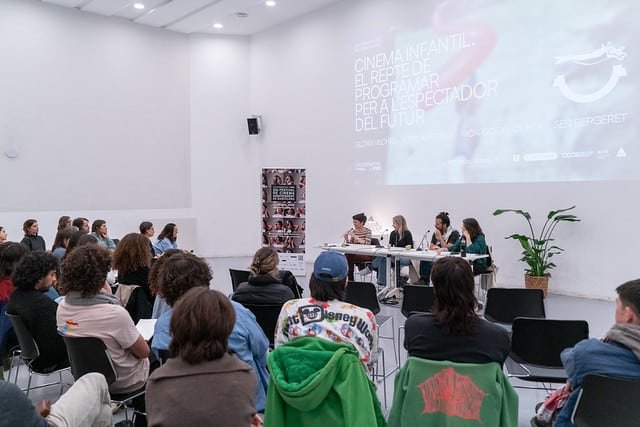
Beyond screenings, the festival offers talks, masterclasses, workshops, film-school activities, family programmes and a broad professional programme. L’Alternativa Hall adds another dimension with free screenings, performances, debates and audiovisual activities in the CCCB’s public spaces.
The festival also operates as a meeting point for the independent film community. Through l’Alternativa PRO and Cinema Pendent, filmmakers, producers, screenwriters and other professionals can participate in project development, networking, mentoring and industry activities.
The overall atmosphere is more focused on discovery, discussion and experimentation than on mainstream entertainment. Visitors can therefore expect a programme that encourages them to encounter unfamiliar filmmaking languages and engage with filmmakers and contemporary cultural questions.
Festival dates
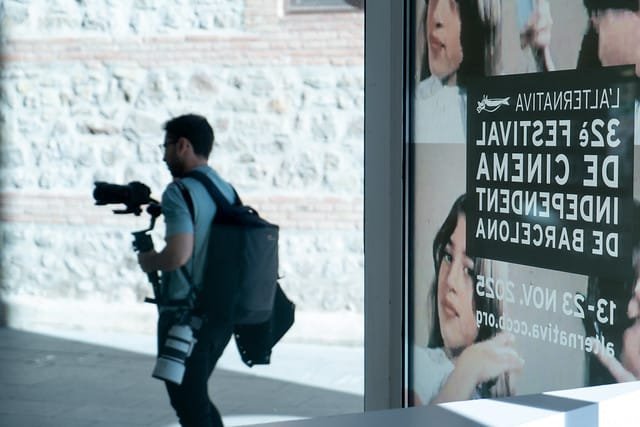
L’Alternativa, Barcelona Independent Film Festival 2026 will take place from November 12 to November 22, 2026, in Barcelona, Spain. The festival is the 33rd edition of l’Alternativa and will operate as a hybrid event, with its principal physical programme taking place in Barcelona and selected festival films subsequently available online through Filmin.
The main onsite programme is centred on the CCCB, while additional screenings and activities take place at several independent cinemas and cultural institutions around Barcelona.
The online component provides another way to experience selected films after the physical festival programme, giving audiences in Spain access to a selection of works through Filmin.
Visiting this event? Don’t miss out on these amazing activities and local experiences while you’re here.
Venues & festival locations
The festival uses a network of cinemas and cultural institutions across central Barcelona. The CCCB is the main physical venue and hosts a particularly large portion of the programme.
CCCB – Centre de Cultura Contemporània de Barcelona
The CCCB at Montalegre, 5 is the principal festival venue. It hosts l’Alternativa Official, l’Alternativa Parallel, l’Alternativa Hall, masterclasses, talks, workshops, film-school activities, family workshops and professional events. The venue is close to Universitat and Plaça de Catalunya metro stations.
Zumzeig
Zumzeig at Carrer de Béjar, 53 is an independent cinema used for official competition screenings and Parallel programmes. It is accessible by Metro L3 at Tarragona.
Cinema Maldà
Cinema Maldà at Carrer del Pi, 5 is another central cinema venue used for Official and Parallel sections. The nearest metro connections include Liceu and Jaume I.
Filmoteca de Catalunya
Filmoteca de Catalunya at Plaça Salvador Seguí, 1–9 hosts selected Parallel activities and retrospectives. It is accessible by Metro L3 at Liceu or L2 at Paral·lel.
Institut français de Barcelona
The Institut français at Carrer de Moià, 8 is used for selected special screenings and cultural activities. It is near Diagonal and Provença transport connections.
La Caldera
La Caldera at Carrer d’Eugeni d’Ors, 12 hosts selected special activities connected with the festival’s broader performance and audiovisual programme.
Because the festival is spread across multiple venues, visitors should check the individual film or activity listing before travelling to a session.
Full programme
The full festival programme combines competitive cinema with parallel screenings, artistic activities, professional development and public events.
The principal programme areas include:
- l’Alternativa Official
- International Feature Films
- International Short Films
- Spanish Films
- l’Alternativa Parallel
- Retrospectives
- Tributes
- Sneak Previews
- New directors
- Family screenings
- l’Alternativa Hall
- Hall Live + Expanded
- Hall Invites
- Hall Projects
- Hall Calls
- Talks and masterclasses
- Workshops
- Film-school activities
- l’Alternativa PRO
- Cinema Pendent
The Official programme is particularly important because it presents new international and Spanish cinema in competitive sections. The festival’s regulations allow feature films in fiction, nonfiction, essay, animation and experimental forms, while short-film categories similarly cover a broad range of cinematic approaches.
Parallel programming provides greater freedom to explore film history, established filmmakers, unusual works and films that may not fit into a conventional competition structure. The festival specifically describes Parallel as a space for tributes, premieres, little-known films, new directors and family cinema.
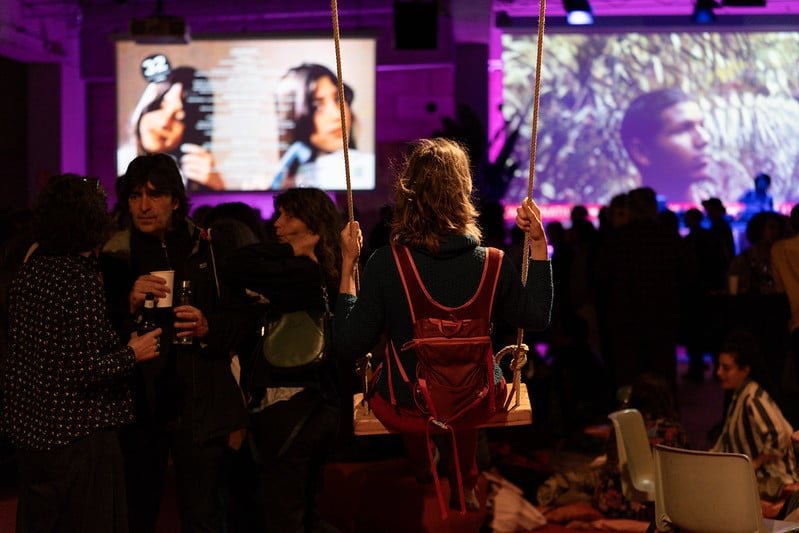
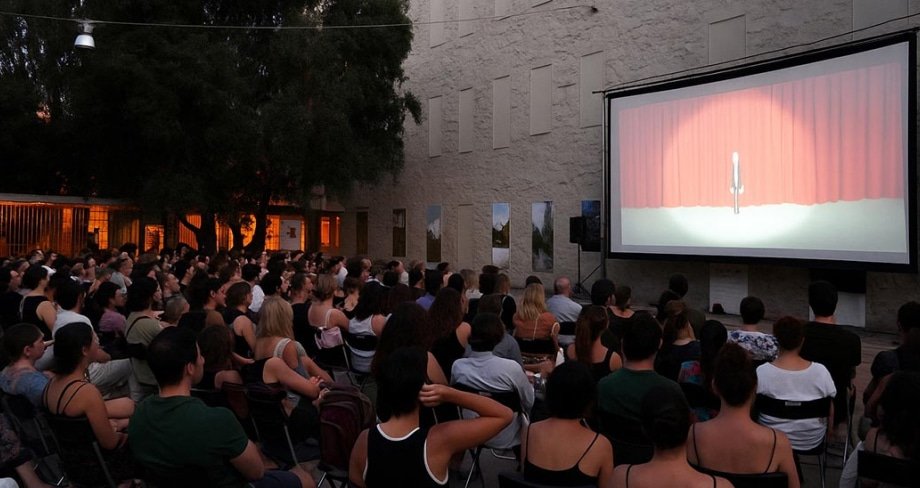
L’Alternativa Hall provides free public programming that can include screenings, debates, live audiovisual work, performances and experimental presentations.
Featured films & premieres
The official 2026 selection includes a mixture of competition films, premieres, retrospectives and special presentations. The festival prioritizes independent filmmaking and gives preference to films that have not previously been screened in Catalonia.
The programme includes films from filmmakers working across fiction, nonfiction, animation, essay and experimental cinema.
Among the prominent Parallel programmes are retrospectives and filmmaker-focused sections dedicated to Alice Diop, Sergio Oksman, Meritxell Colell and Pedro Pinho.
Alice Diop receives a substantial retrospective exploring her documentary and fiction work, including films such as Saint Omer, Nous, Vers la tendresse and La Permanence. Her programme also connects with the Cinémathèque idéale des banlieues du monde, an initiative she launched to preserve and promote images and voices from marginalized communities.
Pedro Pinho presents several of his earlier films alongside Alain Tanner’s La Salamandre and participates in a talk examining filmmaking around ideas of flow, uncertainty and becoming.
The programme also includes films such as Jaleos by Isaki Lacuesta, which explores flamenco through history, cinema, politics and contemporary culture, and Rose by Markus Schleinzer, starring Sandra Hüller.
Directors, actors & guests
L’Alternativa has a strong tradition of bringing filmmakers into direct contact with audiences. Directors and other creative professionals can accompany screenings, participate in Q&A sessions, give masterclasses or curate programmes around their work.
The current programme places particular emphasis on filmmakers including Alice Diop, Pedro Pinho, Sergio Oksman and Meritxell Colell.
Alice Diop
Alice Diop is one of the festival’s major retrospective subjects. Her work moves between documentary and fiction while examining migration, identity, class, race, gender, institutional violence and collective memory. Her feature Saint Omer received international recognition and was selected as France’s submission for the Academy Awards.
Pedro Pinho
Pedro Pinho returns to the festival with a programme covering several stages of his filmmaking career. His film A Fábrica de Nada won Best Feature at l’Alternativa after premiering in Directors’ Fortnight at Cannes.
Sergio Oksman
Sergio Oksman appears as a Satellite filmmaker and presents his own films alongside selected work by his students at ECAM. His programme emphasizes memory, nonfiction and alternative approaches to cinema.
Meritxell Colell
Meritxell Colell is another returning filmmaker whose programme combines screenings and direct creative exchange. Her latest work is presented alongside activities examining her filmmaking practice.
The final attendance arrangements for individual guests should be checked in the official programme because filmmaker participation can depend on travel and scheduling.
Screening schedule
The festival schedule is distributed across multiple venues, with competition screenings, Parallel programmes, special presentations and Hall activities running throughout the programme.
Visitors can build an itinerary around several types of sessions:
- International feature-film competition
- International short-film competition
- Spanish competition
- Parallel retrospectives
- Sneak previews
- New-director screenings
- Family sessions
- Special screenings
- Hall screenings
- Film-school sessions
- Accessible or relaxed family activities
The online festival programme provides individual film pages with information such as running time, language, subtitles, country, format and screening location.
The schedule is particularly important because different sections operate simultaneously at different venues. A visitor planning several screenings should allow sufficient travel time between CCCB, Zumzeig, Cinema Maldà and Filmoteca de Catalunya.
Some activities are free, while others require advance registration or a ticket. Hall activities are especially useful for visitors looking for free public programming.
Ticket types & accreditation
The official ticket structure provides several options for general audiences, students, older visitors, people with disabilities and frequent festivalgoers.
The current published standard ticket price is approximately $7 USD per screening. The concessionary ticket is approximately $6 USD, while screenings at Filmoteca de Catalunya are approximately $4 USD, or $3 USD for concessions. The opening or closing film is approximately $8 USD.
Other published options include:
- $4 USD for Carnet Jove holders
- $4 USD for students, unemployed visitors and people over 65
- $4 USD for people with disabilities
- Free admission for a required companion accompanying a person with a disability
- $4 USD for short-film sessions
- $8 USD for Little Experiments family sessions
- $6 USD for concessionary Little Experiments admission
- $10 USD for the family workshop
- Approximately $14 USD for standard masterclasses and talks
- Approximately $12 USD for concessionary professional or press admission to applicable masterclasses
- Approximately $6 USD for professional activities when not covered by accreditation
The multiticket is approximately $17 USD at the early rate and $22 USD at the regular rate. It provides four tickets and can be shared, making it useful for visitors attending several standard screenings.
Free programming includes many L’Alternativa Hall screenings and film-school activities.
Industry & professional access
L’Alternativa has a substantial professional programme through l’Alternativa PRO. The PRO Pass is aimed at people working in film and the wider screen sector.
The pass provides access to most festival screenings, professional activities, Cinema Pendent project presentations, networking gatherings and social activities. It also provides access to the Agora PRO platform, where accredited professionals can connect with other industry participants and manage their professional agenda.
The published PRO Pass prices are approximately:
- $28 USD early rate
- $45 USD standard rate
- $34 USD concessionary rate
The pass does not automatically include every screening. A separate screening ticket is required, and places reserved for PRO Pass holders are limited at certain venues.
Cinema Pendent is another major professional strand. It supports independent projects through development labs, project presentations, mentoring and networking.
The Development Lab selects fiction, documentary or hybrid feature-film projects at development stage and works with their directors, screenwriters and producers on concept, structure, narrative development and cinematic style.
The programme also explores innovative filmmaking practices such as machinima, desktop cinema, software film, artificial intelligence and mixed-media storytelling.
Red carpet & special events
L’Alternativa is less focused on conventional celebrity red-carpet culture and more interested in creating spaces where cinema, performance, discussion and experimentation meet.
Opening and closing screenings are among the festival’s principal special events. Alongside them, the programme includes retrospectives, filmmaker talks, live audiovisual performances, workshops, exhibitions and Hall activities.
The Hall Live + Expanded programme can transform film screenings into hybrid audiovisual experiences. One example is the Fantasma Sur concert, combining live music by Alondra Bentley and Ylia with cinematic projections created by Isaki Lacuesta and Albert Coma.
Other Hall activities include live video work, DJ sets with visuals and experimental audiovisual performances. Many of these events are free and open to the public, although places can be limited.
For visitors who want something beyond traditional cinema, these events are among the festival’s most distinctive experiences.
Festival rules
L’Alternativa’s official regulations establish eligibility and participation conditions for filmmakers and screening rights holders.
The Official programme accepts feature films across fiction, nonfiction, essay, animation and experimental cinema. International short films can also be fiction, nonfiction, essay, animation or experimental works. The festival gives preference to films that have not already been screened in Catalonia.
Selected filmmakers are encouraged to attend screenings in person, and screenings may be followed by Q&A sessions.
For audiences, the most important practical rules concern ticket validity, venue capacity, registration requirements and age recommendations.
Ticket requirement
A PRO Pass does not itself guarantee entry to a screening. Accredited professionals must obtain the required screening ticket and comply with venue capacity restrictions.
Capacity
Some free activities operate on a first-come, first-served basis, so arriving early is advisable for popular Hall events.
Filmmaker submissions
Selected films cannot be withdrawn after rights authorization has been given under the festival’s published regulations, and selected films are screened only with the rights holder’s authorization.
How to get there
Barcelona is one of Spain’s best-connected cities and can be reached by international flights, high-speed trains, regional rail, long-distance buses and road connections.
Barcelona-El Prat Airport is the main international gateway. From the airport, visitors can reach the city centre using metro, train, Aerobús, bus or taxi services.
Barcelona Sants is the principal long-distance railway station and connects the city with major Spanish and European destinations. Plaça de Catalunya and other central railway stations are particularly useful for visitors staying near the festival venues.
The CCCB is centrally located at Montalegre, 5, close to Plaça de Catalunya and Universitat. Official CCCB information lists metro, bus, train, bicycle and car-access options for reaching the centre.
Public transport & parking
Public transport is the easiest way to move between l’Alternativa venues.
The CCCB can be reached from Universitat by Metro L1 and L2 or from Catalunya by L3. Several city bus routes also serve the area.
Zumzeig is near Tarragona Metro station on L3, while Cinema Maldà is close to Liceu and Jaume I. Filmoteca de Catalunya can be reached from Liceu on L3 or Paral·lel on L2.
Barcelona’s integrated transport network includes metro, buses, trams, suburban rail and other services. Visitors planning several journeys can consider a tourist transport pass or integrated travel card.
The official Barcelona tourism service offers unlimited travel passes covering metro, buses, trams and airport transport for different durations.
Parking
Central Barcelona is not particularly convenient for festival visitors travelling by car. Parking garages are available around the city, but spaces near popular central venues can be limited and expensive.
For the CCCB, official information identifies car parks around Plaça dels Àngels, Plaça de Castella and Plaça de Catalunya.
Accommodation areas
Barcelona offers a very large selection of hotels, hostels, apartments and guesthouses, making it possible to choose accommodation based on budget and proximity to the festival venues.
Raval
The Raval is one of the most convenient areas for the CCCB and Filmoteca de Catalunya. It also has a large selection of restaurants, cafés and cultural venues.
Plaça de Catalunya and Universitat
This central area is particularly convenient for festival visitors who want quick access to CCCB, public transportation and Barcelona’s major shopping streets.
Gothic Quarter
The Gothic Quarter provides historic surroundings, restaurants and nightlife while remaining close to Cinema Maldà and several central festival locations.
Eixample
Eixample is a good choice for visitors wanting a broad selection of hotels and restaurants with excellent metro connections.
Poble-sec and Sant Antoni
These neighbourhoods provide additional accommodation choices and convenient connections toward Filmoteca de Catalunya and other central venues.
Because l’Alternativa is spread across several parts of central Barcelona, staying near a metro station is often more useful than choosing accommodation solely based on walking distance to one venue.
Food & dining
Barcelona offers an enormous range of dining options, from traditional Catalan cuisine and tapas to international restaurants, vegetarian food and contemporary gastronomy.
The areas surrounding the CCCB, Raval, Gothic Quarter and Sant Antoni are particularly convenient for festival visitors because they offer cafés, bakeries, casual restaurants and bars within walking distance.
Visitors can try traditional Catalan dishes, tapas, pa amb tomàquet, escalivada, seafood and seasonal specialities. Barcelona’s multicultural population also means that visitors can find cuisines from across Europe, Asia, Latin America and the Middle East.
For quick meals between screenings, cafés and casual restaurants around Raval and Universitat are practical choices. For a longer evening meal, the Gothic Quarter, Eixample and Sant Antoni provide a wider selection.
The CCCB itself also has a bar-restaurant area, which can be useful when visitors need refreshments without leaving the festival environment.
Accessibility
Accessibility is an important part of the CCCB’s cultural programme, particularly because it is the principal festival venue.
The CCCB provides ramps and lifts connecting different floors, accessible toilets, wheelchair availability and reserved wheelchair spaces in the auditorium. Visitors can request wheelchairs at the ticket desk or reception, and advance notice is recommended.
For visitors with hearing loss, the CCCB provides hearing loops and can offer Catalan Sign Language interpretation for selected activities. Some screenings and debates also offer accessible or multilingual subtitles.
Visual accessibility resources include guide-dog access, large-print and Braille materials, audio-described resources and adapted visits.
The centre also works on cognitive accessibility through easy-read exhibition texts and visual guides.
L’Alternativa’s ticket policy also provides reduced admission for people with disabilities and free admission for a companion where required. Accessible subtitled sessions can also offer a two-for-one ticket arrangement at the box office.
Because accessibility services can differ between venues, visitors should check the individual screening location before booking.
Best screenings to attend
The best screenings depend on your interests, but several parts of l’Alternativa are particularly valuable.
For discovering new independent cinema: Start with l’Alternativa Official. The three competition sections provide the clearest overview of contemporary international and Spanish independent filmmaking.
For documentary and nonfiction: Explore the International Feature Films and International Short Films sections, where nonfiction, essay and experimental approaches are included alongside fiction.
For experimental cinema: Look for Hall Live + Expanded, Hall Invites and experimental selections within the Official programme. These activities often blur the boundaries between cinema, performance, visual art and live audiovisual work.
For filmmaker retrospectives: Alice Diop’s retrospective is particularly important for audiences interested in documentary, social issues, migration, memory and the relationship between fiction and reality.
For emerging directors: Sergio Oksman’s Satellite programme is useful because it connects an established filmmaker with work by his students and emerging creators.
For family audiences: Little Experiments offers specially curated animated programmes for children, including relaxed sessions where audiences can move around, experience lower sound levels and use a dedicated space outside the screening room when needed.
For film professionals: Prioritize Cinema Pendent, PRO activities, project presentations, networking and masterclasses.
Previous year’s highlights
The previous edition reinforced l’Alternativa’s identity as a festival centred on independent filmmaking, creative freedom and alternative cinematic practices.
The official prize programme recognized a wide range of filmmakers and approaches. Nicolás Pereda’s Cobre received the International Feature Film Prize, while the International Short Film Prize was shared by Bamssi by Mourad Ben Amor and Fairuz Ghammam and La balandra by Matías Lima.
The Spanish Film Prize went to Volver a casa tan tarde by Celia Viada Caso, while Geometria bàsica de la muntanya del Montsianell by Antoni Grañana received a Special Mention.
The AMMAC Spanish Film Prize recognized As Estações by Maureen Fazendeiro, while Monikondee by Lonnie van Brummelen, Siebren de Haan and Tolin Alexander received the DOCMA Feature Film Prize.
The professional programme also produced several Cinema Pendent awards. Projects received support covering areas such as production design, cinematography, sound, trailer creation, digital cinema packages, music and post-production.
Another major feature of the previous edition was the continuation of l’Alternativa PRO, which provided professional accreditation, industry meetings, project development and networking opportunities.
The festival also continued its commitment to free public programming through l’Alternativa Hall, where screenings, debates, performances and short-film initiatives helped bring experimental cinema to a wider audience.
Official tickets & accreditation
The official l’Alternativa website is the main source for ticket sales, the festival programme, venue information, professional accreditation and activity registration.
The current ticket structure includes standard screenings, concessionary tickets, Filmoteca sessions, short-film sessions, special screenings, family activities, workshops, masterclasses and professional events.
For general visitors, the multiticket is particularly useful when attending several standard screenings. It provides four tickets and can be shared with other people, while selected Hall and film-school activities remain free.
The PRO Pass is intended for professionals working in film and the wider screen sector. It provides access to professional activities, Cinema Pendent presentations, networking and most festival screenings, subject to the pass conditions and screening capacity.
The festival’s professional platform also provides a directory and communication tools that allow accredited participants to connect with other industry professionals.
Official event information
Event: L’Alternativa, Barcelona Independent Film Festival 2026 – Spain
City: Barcelona, Spain
Main venue: CCCB, Montalegre, 5, Barcelona
Official website: alternativa.cccb.org/2026/en
Tickets Sell Out
in Minutes
Maps
Contact
Video
FAQ's
What is L'Alternativa, Barcelona Independent Film Festival?
L'Alternativa is an independent cinema festival focused on creative freedom, experimentation, diversity and alternative approaches to filmmaking. Its programme includes international and Spanish feature films, short films, documentaries, animation, experimental cinema and parallel programmes. It also combines screenings with talks, workshops, masterclasses, professional activities and free public events.
Where is L'Alternativa held?
The main festival venue is the Centre de Cultura Contemporània de Barcelona, while screenings and activities are also held at Zumzeig, Cinema Maldà, Filmoteca de Catalunya, Institut français de Barcelona and La Caldera. This multi-venue structure allows the festival to combine independent cinemas, cultural institutions and experimental spaces. Visitors should check the individual programme listing because each film or activity can have a different location.
What kind of films are shown at L'Alternativa?
The festival presents fiction, documentary, essay, animation and experimental films from Spain and around the world. Its Official programme includes International Feature Films, International Short Films and Spanish Films, while Parallel adds retrospectives, tributes, premieres, lesser-known films and family cinema. The festival particularly values independent work and films that challenge conventional cinematic forms.
Is L'Alternativa suitable for film professionals?
Yes. L'Alternativa PRO is specifically designed for filmmakers and professionals working across the film and screen sectors. It includes industry activities, Cinema Pendent project presentations, development labs, networking events, masterclasses and professional meetings, providing opportunities to develop projects and connect with other industry participants.
Is L'Alternativa accessible for visitors with disabilities?
The festival's main venue, the CCCB, provides a broad range of accessibility services including lifts, ramps, accessible toilets, wheelchair spaces, hearing loops and selected sign-language and accessible-subtitle services. The festival also offers disability concessions and companion access where required. Visitors should check the accessibility facilities of the specific venue hosting their chosen screening or activity before attending.