
Bolantes of Luzaide-Valcarlos 2027 – Spain
Overview
Bolantes of Luzaide-Valcarlos is one of the most distinctive traditional dance celebrations in Navarra, bringing together historic costumes, bells, colourful ribbons, traditional music, procession, and community dancing in the Pyrenean village of Luzaide/Valcarlos. Spain’s official tourism portal describes the Bolantes as one of the most striking and ancient dances in Navarra and identifies the celebration as a Festivity of Tourist Interest.
The celebration is closely connected with the cultural identity of Luzaide/Valcarlos, a small mountain municipality on the French border and an important point on the Camino de Santiago. The village is known locally as a community of dantzaris, with the Bolantes regarded as one of its most representative cultural traditions.
The event is not simply a performance staged for visitors. It is a living community tradition in which dancers, musicians, traditional characters, local families, pilgrims, and visitors share the streets and public spaces of the village. The dances express the character and heritage of Luzaide/Valcarlos and have been passed from generation to generation.
Enjoy Your Event Stress-Free with Spain Travelo
Planning a trip around a festival, concert, cultural celebration, or business event in Spain can be time-consuming—finding tickets, accommodation, transportation, and local information takes effort. Spain Travelo makes it easier by bringing essential event information, travel planning, and support together in one place.
For visitors, the appeal lies in seeing the dancers moving through the village in elaborate costumes, hearing the distinctive sound of their bells, and experiencing traditional dances in an authentic Pyrenean setting. The surrounding mountains, historic Camino de Santiago route, and compact village centre make the celebration especially atmospheric.
Cultural Significance & Origins
The Bolantes tradition has deep roots in the traditional carnival culture of the western Pyrenees. The Spanish Ministry of Culture explains that the Bolantes originally formed part of a carnival procession known as a kabalkada, alongside other traditional characters. Elements of the present celebration preserve connections with that older carnival structure.
Although the celebration is now strongly associated with Easter, its cultural background is broader than a single religious occasion. Over time, the dance tradition developed into a distinctive local celebration centred on the Bolantes, their costumes, music, characters, and choreography. The Luzaide/Valcarlos exhibition centre describes the modern tradition as having evolved from carnival practices while retaining important elements of the original character of the festival.
The Ministry of Culture also records the oldest documentary evidence of these dancers in the Navarrese archives as dating back to the nineteenth century. This makes the Bolantes an important example of the continuity of traditional dance and community customs in northern Spain.
The tradition is recognised as intangible cultural heritage in Navarra. Its importance is not only based on the age of the dances but also on the way the tradition continues to involve the local community.
Luzaide/Valcarlos occupies a particularly significant cultural position because it lies on the French route of the Camino de Santiago. The municipality describes itself as the first high-Navarrese municipality encountered by pilgrims after crossing from France, making the village a natural meeting point between pilgrimage culture and local traditions.
The Bolantes therefore serve both as a celebration of local identity and as a welcoming tradition for pilgrims and visitors travelling through the Pyrenees.
Traditions, Rituals & Customs
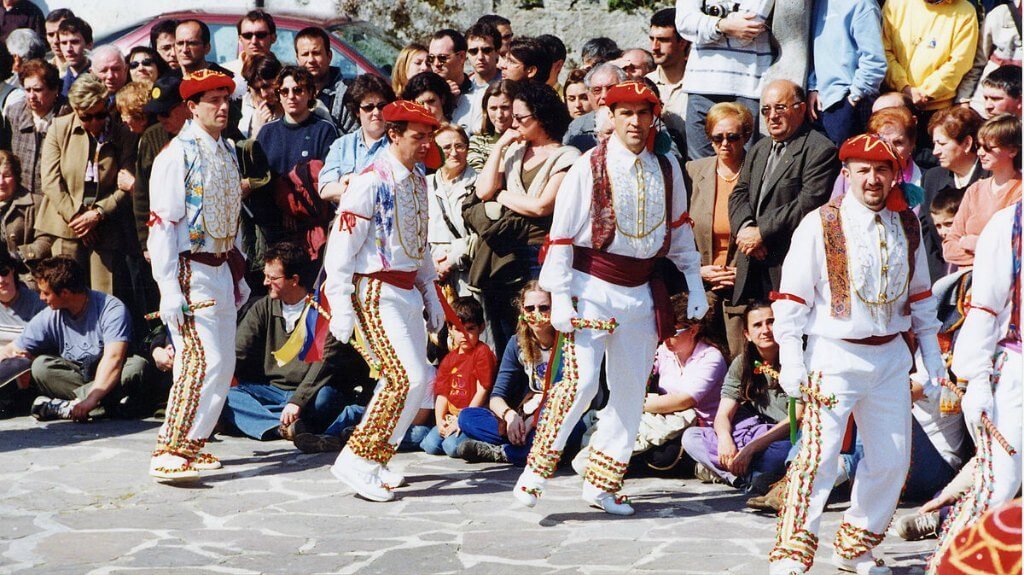
The central tradition is the performance of the Bolantes by local dantzaris. Their dancing combines coordinated movements, jumps, traditional steps, music, bells, and colourful ribbons that create a highly visual performance.
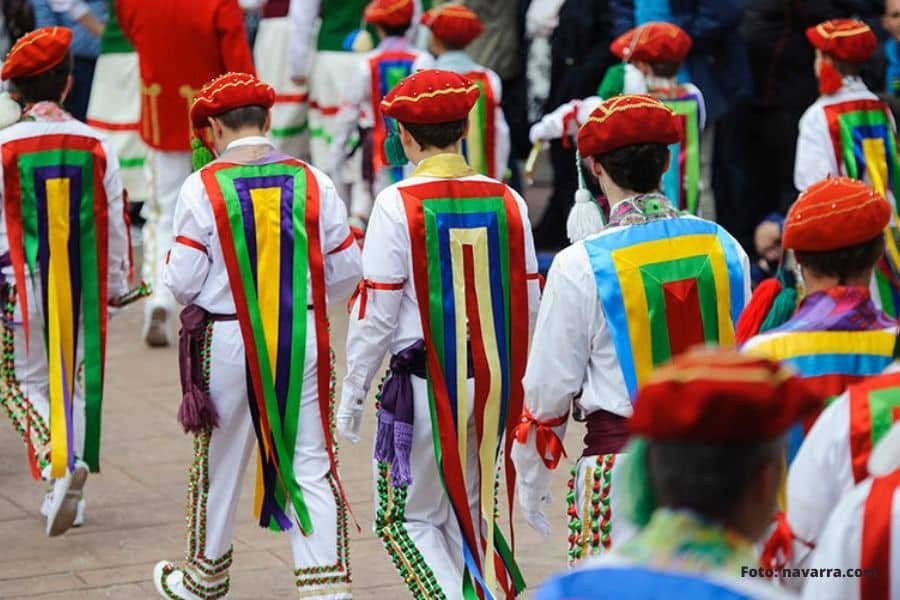
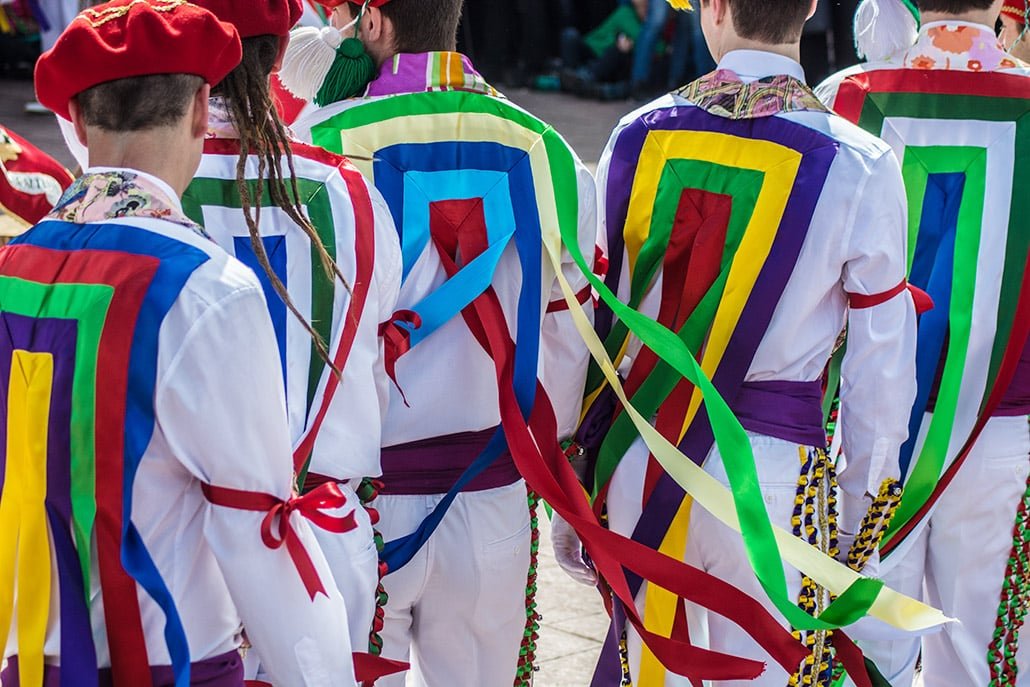
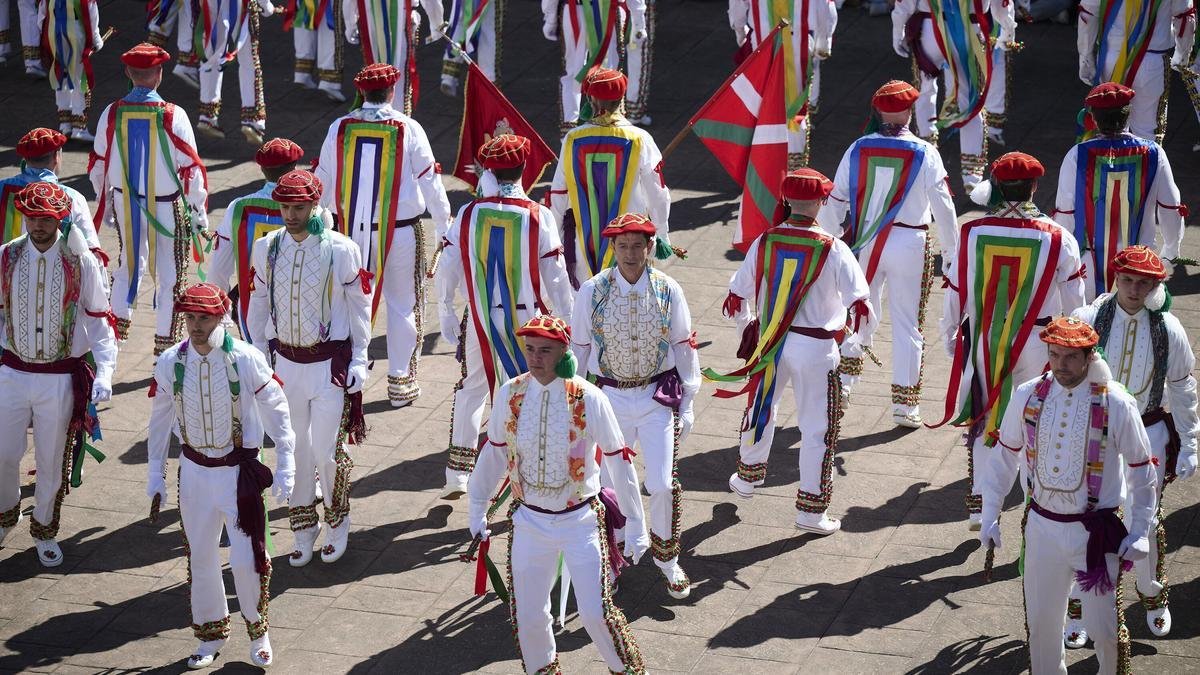
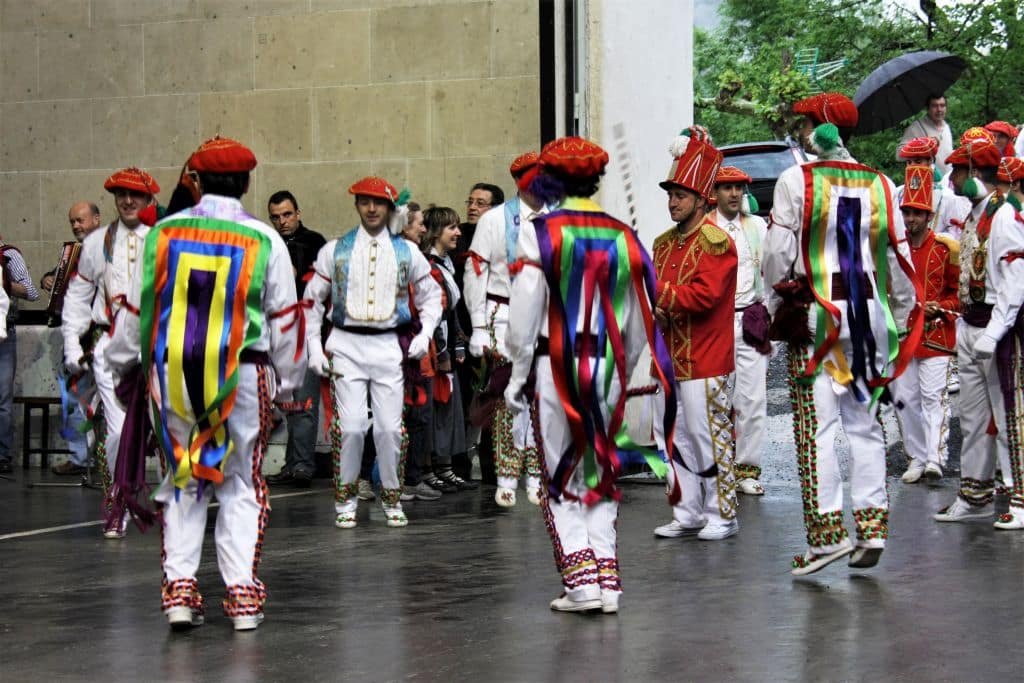
The dancers traditionally wear distinctive clothing including red berets, white shirts, cotton trousers decorated with golden braid, red and yellow ribbons, costume jewellery, and espadrilles made with esparto. The movement of the ribbons and the sound of the bells are among the most recognisable features of the celebration.
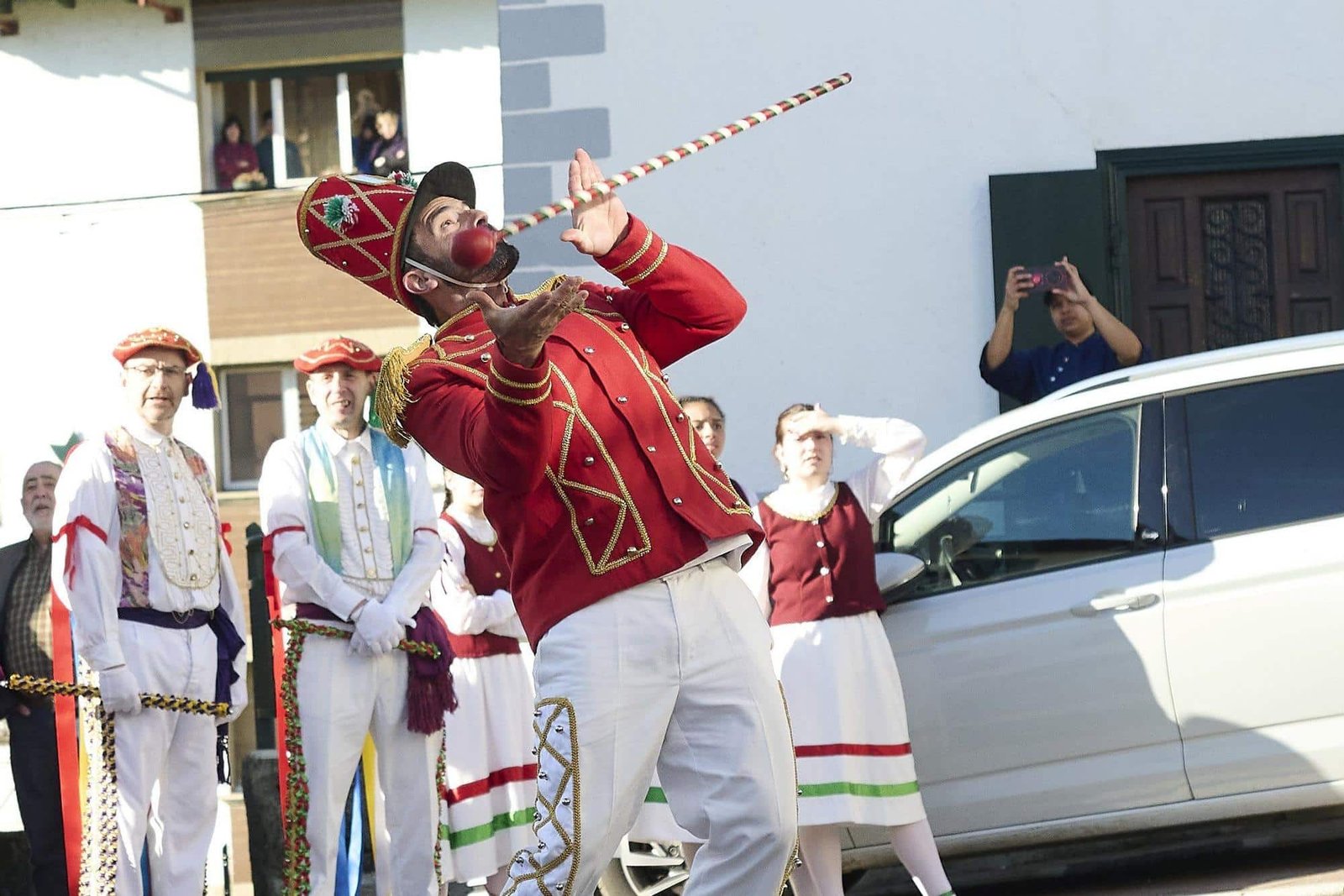
The celebration also incorporates different traditional characters associated with the wider dance tradition. The municipality describes the various characters, elegant costumes, and dances as an icon of Luzaide/Valcarlos and its cultural identity.
The event has a strong relationship with public space. Rather than being restricted to a theatre, the dancers traditionally move through the streets and village areas. This allows visitors to experience the celebration as part of everyday village life.
The tradition also demonstrates how cultural practices can evolve without losing their central identity. Women have become an established part of the Bolantes tradition, and the local exhibition centre explains that their participation has become integrated into the celebration through different dances and costume variations.
What to Expect at the Festival
Visitors should expect an intimate but highly energetic traditional celebration rather than a large commercial festival. Luzaide/Valcarlos is a small Pyrenean community, so the event has a strong local character.
The most noticeable element is the visual spectacle of the dancers. White costumes, red berets, colourful ribbons and traditional accessories create a striking contrast with the mountain surroundings.
Music and movement are equally important. The sound of bells accompanies the dancers, while traditional musicians provide the rhythm for the performances. The result is a lively combination of dance, sound and movement that can be watched from public spaces around the village.
Visitors may see dancers moving through the streets before gathering for more concentrated performances in the village’s principal public spaces. Traditional information from Navarra Tourism places performances in the Plaza de Santiago and at the local frontón.
The atmosphere is particularly suitable for visitors interested in folklore, traditional dance, cultural heritage, photography, the Camino de Santiago, and rural northern Spain.
Because the celebration takes place outdoors, visitors should be prepared for changing mountain weather. Comfortable footwear is useful because much of the experience involves standing or walking around the village.
Event Dates
2027 Event Date: March 28, 2027
Spain’s official tourism portal lists the 2027 Bolantes of Luzaide-Valcarlos for March 28, 2027, in Luzaide-Valcarlos, Navarra.
The tradition is connected with Easter Sunday, while the broader description of the celebration also refers to its traditional relationship with Carnival Sunday. Spain.info states that the festivity takes place on two traditional days associated with these celebrations.
For the main 2027 visitor date, the official Spain.info calendar currently provides March 28, 2027. Detailed programme times and any additional activities should be checked with the municipality as the event approaches.
Visiting this event? Don’t miss out on these amazing activities and local experiences while you’re here.
Main Events & Programme
The exact 2027 programme has not yet been published in full, but the traditional structure of the celebration is well established.
Street procession and dancing
The Bolantes traditionally move through the village in a colourful procession accompanied by music and bells. This is an important part of the experience because visitors can see the dancers outside a formal performance setting.
Morning dancing
Navarra Tourism identifies the Plaza de Santiago as an important performance location, with the dancers traditionally appearing there during the morning.
Afternoon performance
Traditional performances also take place at the local frontón. Previous municipal arrangements have specifically authorised Bolantes dances in the Plaza de Santiago and at the Arretxe frontón, with the frontón also serving as an alternative in poor weather.
Traditional dance repertoire
The programme can include several forms of traditional dance. Previous descriptions of the Bolantes tradition identify dances involving ribbons, sticks and other characteristic movements, performed alongside traditional characters and musicians.
Community atmosphere
The event is also about the interaction between residents, dancers, musicians, pilgrims and visitors. It is common for visitors to combine watching the dances with exploring the village and its Camino de Santiago heritage.
The detailed 2027 timetable should be checked before travelling because performance times and arrangements can be affected by weather and local organisational decisions.
Traditional Costumes & Dance
Costume is one of the most important visual elements of the Bolantes tradition.
The principal dancers are recognised by their red berets, white shirts and decorated trousers. Golden braid, colourful red and yellow ribbons, jewellery, bells and traditional footwear complete the distinctive appearance.
The ribbons attached to the dancers’ costumes move dramatically as they jump and turn, creating an important visual component of the choreography. The bells add another sensory element, producing a characteristic sound as the dancers move.
The costumes are not simply decorative. They help distinguish the different characters within the traditional performance and reinforce the identity of the Bolantes as representatives of Luzaide/Valcarlos.
The local exhibition centre dedicated to the village’s heritage also features traditional Bolantes costumes and explains their role in the history of the celebration.
Traditional Food & Local Specialties
Food is an important part of the wider cultural experience of visiting Luzaide/Valcarlos. Local gastronomy reflects the mountain environment and the cultural traditions of the Pyrenean area.
The municipal cultural information highlights several traditional preparations associated with Luzaide/Valcarlos.
Marrakuku
Marrakuku is made using talo, a traditional corn-flour flatbread, combined with fresh cheese and formed into a distinctive preparation. It is one of the local foods associated specifically with the village’s culinary heritage.
Katalabrox
Katalabrox is a traditional cone-shaped cake that was historically prepared slowly over the embers of a hearth. The municipality notes that it was associated with special occasions and is now rarely prepared.
Talo and local cheese
Talo has historically been an important staple food in the area. Local cheese is another significant product, reflecting the pastoral traditions of the Pyrenean valleys.
Visitors should also look for regional Navarrese and Basque-Pyrenean dishes in local restaurants rather than expecting the festival to operate as a large food market.
Location & Festival Areas
The festival takes place in Luzaide/Valcarlos, a mountain municipality in Navarra close to the French border.
The principal public area associated with the celebration is the Plaza de Santiago. Navarra Tourism specifically identifies the square as one of the locations where the Bolantes perform.
The local frontón is another important performance area. Previous municipal arrangements have used the Arretxe frontón for afternoon dancing and as an alternative venue when weather conditions make outdoor performances difficult.
The village itself is an attraction. Luzaide/Valcarlos lies in a narrow, wooded Pyrenean valley and contains historic buildings and Camino de Santiago heritage. Spain.info describes the settlement as a mountain village surrounded by forests and crossed by the historic pilgrimage route.
Getting to the Festival
Luzaide/Valcarlos is reached by road through the Pyrenees. The municipality states that the principal access is via the N-135, which connects Roncesvalles with Saint-Jean-Pied-de-Port in France.
From Pamplona
Pamplona is the most practical major Spanish city for visitors travelling to Luzaide/Valcarlos. The municipality places the village roughly 65 kilometres from Pamplona.
By car
Driving is generally the most convenient option for visitors because Luzaide/Valcarlos is a small mountain community and public transport options are limited.
From France
The village is particularly accessible from Saint-Jean-Pied-de-Port, which lies on the French side of the Pyrenees. The road connection through the mountain border area is also closely associated with the Camino de Santiago.
By Camino de Santiago
Luzaide/Valcarlos forms part of the French Way of the Camino de Santiago. The municipality identifies the route through the village as a significant pilgrimage route and explains that two Camino variants pass through its territory.
Visitors should allow extra time for parking and local traffic management during the celebration because the village normally receives increased visitor activity.
Where to Stay Nearby
Accommodation in Luzaide/Valcarlos is focused on rural properties, apartments and pilgrim accommodation rather than large hotels.
The municipal tourism service lists several rural houses, including Etxezuria, Navarlaz, Toki-Ona and Erlanio, together with Mendiola apartments.
Pilgrim accommodation
The municipal hostel is located at Plaza Santiago and has capacity for 24 people. It is particularly useful for visitors travelling along the Camino de Santiago.
Rural accommodation
Rural houses provide a more traditional experience and can be particularly appropriate for visitors who want to stay within the mountain environment.
Nearby bases
Visitors who cannot find accommodation in the village can also consider Roncesvalles, Saint-Jean-Pied-de-Port or other nearby Pyrenean communities. Booking early is sensible because accommodation in small rural destinations is limited.
What Visitors Can Participate In
The Bolantes celebration is primarily a performance tradition, so visitors should respect the dancers and avoid treating the procession as an interactive attraction.
Visitors can participate in the wider experience by:
- Watching the dancers in the Plaza de Santiago.
- Following the traditional street activity through the village.
- Observing the costumes, bells and choreography.
- Exploring the Camino de Santiago heritage of Luzaide/Valcarlos.
- Visiting the local exhibition centre.
- Sampling traditional local food.
- Photographing the public performances respectfully.
- Combining the festival visit with walks and sightseeing in the surrounding Pyrenees.
The Centro Expositivo Luzaide/Valcarlos provides information about the village, the Bolantes, traditional cooking and local history. The tourism office is also located within the exhibition centre and can provide information about accommodation, restaurants, transport and cultural attractions.
Things to Do Before or After the Festival
A visit to the Bolantes can easily be combined with a broader trip through the western Pyrenees.
Explore the Camino de Santiago
The Camino is one of the most important features of the area. Visitors can walk sections of the route around Luzaide/Valcarlos and enjoy the forested mountain scenery.
Visit Roncesvalles
Orreaga/Roncesvalles is a major historical and religious landmark nearby. The municipality recommends it as one of the principal excursions from Luzaide/Valcarlos.
Visit Saint-Jean-Pied-de-Port
Across the French border, Saint-Jean-Pied-de-Port offers a historic old town and another major connection with the Camino de Santiago. It is one of the recommended excursions from Luzaide/Valcarlos.
Explore the Irati Forest
The municipality also recommends the Selva de Irati, one of the major natural attractions of the wider Navarrese Pyrenees, for visitors interested in hiking and nature.
Local Food & Restaurants
Luzaide/Valcarlos has a small but useful selection of restaurants and bars serving traditional food.
The municipal tourism service lists Bar Restaurante Ardandegia, Bar Restaurante Benta Azkena, Bar Restaurante Casa Xaindu, Venta Peio and Venta Xabi among the local food establishments.
Visitors looking for an authentic local meal can ask restaurants about seasonal mountain dishes, local cheeses, talo and traditional Navarrese preparations.
Benta Azkena is also listed by the municipality as a bar-restaurant offering traditional cuisine and a daily menu.
Because Luzaide/Valcarlos is a small community, visitors should not expect the range of restaurants available in a large Spanish city. During busy festival periods, checking opening arrangements and arriving early for meals can make the visit easier.
Ticket Information & Access
The Bolantes celebration is fundamentally a public street and community tradition rather than a ticketed concert or commercial festival.
The 2026 edition was listed with free admission and open access, with no numbered seating.
For the 2027 edition, no separate paid ticket system has been announced by the official tourism information currently available. Based on the established format and previous edition, visitors should expect general festival access to be $0.
Food, drinks, accommodation and other personal purchases are separate expenses and are not included simply because the cultural performances are free.
Visitors should also remember that the most popular viewing areas can become busy. Arriving early is advisable if you want a clear view of the dancers, particularly around the main performance areas.
Official Event Information
Official event: Bolantes of Luzaide-Valcarlos
Location: Luzaide/Valcarlos, Navarra, Spain
Event classification: Festivity of Tourist Interest
Official event information: https://www.spain.info/en/calendar/bolantes-luzaide-valcarlos/
For practical visitor information, the Luzaide/Valcarlos Tourist Office is located at Centro Expositivo, Elizaldea Kalea 20, 31660 Luzaide/Valcarlos. The official municipal tourism service provides information about accommodation, restaurants, transport and cultural attractions.
Tickets Sell Out
in Minutes
Maps
Video
FAQ's
What are the Bolantes of Luzaide-Valcarlos?
The Bolantes are traditional dancers from Luzaide/Valcarlos who perform one of Navarra's most distinctive ancestral dance traditions. Their performances combine traditional choreography, music, bells, colourful ribbons and elaborate costumes. The tradition has strong connections with the area's former carnival customs and the cultural identity of the Pyrenean community.
Where does the Bolantes celebration take place?
The celebration takes place throughout Luzaide/Valcarlos, with the Plaza de Santiago serving as one of the principal performance locations. The local frontón is also traditionally used for dancing, particularly for later performances or when weather affects outdoor arrangements.
What do the Bolantes dancers wear?
The traditional costume includes a red beret, white shirt, decorated cotton trousers, golden braid, red and yellow ribbons, jewellery, bells and esparto espadrilles. The colourful ribbons attached to the dancers' backs are especially striking as they move during the jumps and choreographed dances.
Is the Bolantes celebration suitable for visitors interested in the Camino de Santiago?
Yes. Luzaide/Valcarlos is directly connected with the Camino de Santiago and is an important entry point into Navarra for pilgrims arriving from France. Combining the Bolantes with a visit to the village, Roncesvalles or nearby Camino routes provides a strong introduction to the cultural and historical character of the western Pyrenees.
What else can visitors see around Luzaide-Valcarlos?
The area offers much more than the dance celebration, including the Camino de Santiago, Roncesvalles, Saint-Jean-Pied-de-Port and the Irati Forest. The village itself has a historic church, cultural exhibition centre, mountain scenery and traditional rural services, making it suitable for a broader cultural and nature-focused trip.