


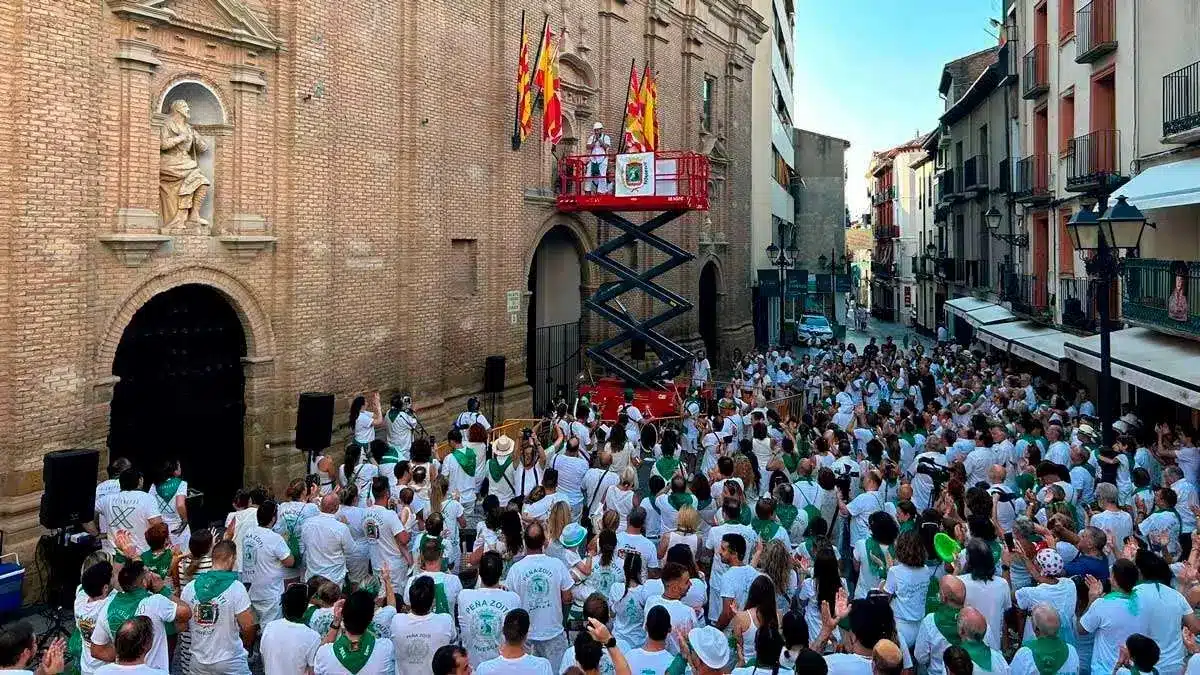


Fiestas de San Lorenzo 2027 – Huesca, Spain
Overview
Fiestas de San Lorenzo is the principal annual celebration of Huesca, Aragón, held in honour of the city’s patron saint, San Lorenzo. Recognized as a Festival of National Tourist Interest, it is one of the most important traditional celebrations in Aragón and brings together religious heritage, folk culture, music, street entertainment, gastronomy, sports and community traditions.
The festival transforms Huesca into a lively cultural meeting place. Streets, squares, parks and public venues host activities ranging from traditional dances and processions to concerts, children’s entertainment, sporting events and performances organized by the city’s Peñas Recreativas.
Green is strongly associated with the festivities, with residents and visitors commonly wearing green clothing or accessories as a visible expression of participation. The atmosphere is particularly communal, with local associations, musical groups and neighbourhood organizations playing an important role.
Enjoy Your Event Stress-Free with Spain Travelo
Planning a trip around a festival, concert, cultural celebration, or business event in Spain can be time-consuming—finding tickets, accommodation, transportation, and local information takes effort. Spain Travelo makes it easier by bringing essential event information, travel planning, and support together in one place.
Religious traditions remain at the heart of the celebration, particularly the procession dedicated to San Lorenzo. At the same time, the festival has developed into a broad citywide programme that appeals to families, young people, cultural travelers and visitors interested in Aragón’s traditional heritage.
Spain’s official tourism portal describes the celebration as featuring music, folk groups and dances, concerts, peñas, religious events, sport, vaquillas and activities for children and adults.
Cultural Significance & Origins
San Lorenzo is the patron saint of Huesca, and the festival has a strong connection with the city’s religious and historical identity. The celebration brings together Catholic tradition, Aragonese folklore and modern civic festivities.
Saint Lawrence, known in Spanish as San Lorenzo, is particularly important to Huesca. Local traditions connect the saint with the city and its historical religious heritage, while the cathedral dedicated to San Lorenzo is one of the most prominent landmarks in the historic centre.
The festival’s importance extends beyond its religious dimension. It has become a major expression of Huescan identity, providing an annual opportunity for residents to celebrate local customs, music, dance and community organizations.
The Peñas Recreativas Oscenses are especially important. These festive associations organize activities, participate in parades and provide charangas and other musical entertainment. Their involvement gives the celebration a strong community-based character rather than making it simply a programme of performances arranged for tourists.
Folk culture is another central element. Traditional dances, jota performances, gaiters, giants, big-head figures and other elements of Aragonese popular culture appear within the wider programme.
The festival is officially classified as a Fiesta de Interés Turístico Nacional, demonstrating its importance within Spain’s cultural tourism calendar.
Traditions, Rituals & Customs
The opening of the festivities is traditionally marked by a rocket launched from the balcony of Huesca’s Town Hall. This ceremonial signal announces the beginning of the celebrations and is one of the most recognizable moments of the festival.
Religious ceremonies are another essential component. The celebrations honour San Lorenzo through church services, processions and other acts of devotion, connecting the contemporary street festival with the city’s religious heritage.
The procession of San Lorenzo is among the most significant traditional events. Participants, religious groups, local authorities and cultural organizations contribute to the solemn public celebration.
Folk traditions provide a contrasting atmosphere. Traditional music and dance groups perform throughout the city, while gaiters and other instrumental groups bring Aragonese sounds to public spaces.
The Comparsa de Gigantes, Cabezudos y Caballicos de Huesca is another distinctive tradition. Giants, big-head figures and small horse figures appear in street activities and family-oriented events, creating a colourful connection with local popular culture.
Vaquillas are also included in the festival programme. These traditional bull-related activities form part of the established festivities, although visitors should always remain in designated viewing areas and follow official safety instructions.
Other recurring customs include:
- Charanga performances by the Peñas
- Traditional Aragonese dances
- Jota performances
- Street parades
- Religious ceremonies
- Public concerts
- Evening verbenas
- Fireworks and festive spectacles
- Children’s activities
- Sporting competitions
- Community meals and gastronomic activities
What to Expect at the Festival
Visitors can expect Huesca to become exceptionally lively, with music and public activities extending across different parts of the city.
The festival is not concentrated in one venue. Instead, different plazas, parks, streets, cultural spaces and public buildings host separate parts of the programme.
Music is one of the most noticeable features. Charangas accompany Peñas through the streets, while concerts, orchestras, DJs and traditional musicians provide entertainment throughout the celebrations. Official programming has included performances ranging from Aragonese folk groups to contemporary bands and large outdoor concerts.
Visitors can also encounter:
- Traditional parades
- Folk music and dance
- Concerts and orchestras
- Children’s entertainment
- Sporting activities
- Vaquillas
- Religious ceremonies
- Gaiter gatherings
- Street theatre and circus
- Food and social gatherings
- Public dances
- Festival activities organized by Peñas
Families are well catered for. Previous official programmes have included inflatable parks, children’s activities, traditional figures and entertainment in parks and neighbourhoods.
The overall atmosphere moves between solemn religious observances, traditional cultural performances and energetic street celebrations. This variety makes San Lorenzo suitable for visitors looking for a broad introduction to Huescan culture.
Date & Schedule
Fiestas de San Lorenzo 2027 will take place:
August 9 to August 15, 2027
Spain’s official tourism portal lists the festival in Huesca as a National Tourist Interest celebration and confirms the published 2027 festival period.
The detailed 2027 programme should be consulted through the Ayuntamiento de Huesca and official tourism resources as individual event times, performers and locations are announced.
Visiting this event? Don’t miss out on these amazing activities and local experiences while you’re here.
Main Events & Programme
The precise programme for the 2027 edition will be confirmed by the organizers, but the established structure of Fiestas de San Lorenzo provides a clear picture of the principal activities.
Opening Rocket
The rocket fired from the Town Hall traditionally marks the beginning of the celebrations. It is a symbolic civic moment that signals the transition of Huesca into festival mode.
San Lorenzo Religious Procession
The procession dedicated to the city’s patron saint is one of the most important ceremonial events. It brings religious devotion and civic tradition together in the streets of central Huesca.
Folk Music and Dance
Traditional Aragonese music is a major part of the festival. Folk groups, gaiters and dance organizations perform in different public spaces, allowing visitors to experience regional musical traditions.
Peñas and Charangas
The Peñas Recreativas Oscenses are central to the festive atmosphere. Their charangas provide live street music and participate in parades and activities throughout the city. Official programmes regularly include performances organized by individual Peñas.
Gigantes, Cabezudos and Caballicos
The traditional giants, big-head figures and caballicos provide colourful street entertainment, particularly suitable for families and younger visitors. Official programming has included routes through neighbourhoods and public spaces accompanied by gaiters.
Vaquillas
Vaquillas are among the festival’s most traditional and recognizable activities. They form part of the bull-related programme and are presented within designated areas under official organization.
Traditional Jota
Aragonese jota is an important expression of regional cultural heritage. Performances provide visitors with an opportunity to experience traditional singing, music and dance associated with Aragón.
Concerts and Verbenas
Evening entertainment can include concerts, orchestras, DJ sessions and public dances. Official programmes have used venues such as Plaza Luis López Allué, Plaza General Alsina and the outdoor space around the Palacio de Congresos.
Children’s Programme
Family activities can include inflatable parks, children’s performances, traditional figures, games and entertainment in parks and neighbourhoods.
Gaiter Gatherings
The festival programme has included gatherings of gaiter groups from Aragón, with participants from Huesca and other towns performing through different parts of the city.
Traditional Dress, Arts & Crafts
Traditional clothing is an important visual feature of the celebration, particularly during religious ceremonies, folk performances and cultural events.
Green is strongly associated with San Lorenzo, and visitors will commonly see green shirts, scarves and accessories throughout the city. Wearing green is a simple way for visitors to participate in the visual identity of the festivities.
Traditional Aragonese clothing may also appear during folk performances and ceremonial events. These costumes provide an important connection with regional cultural heritage.
Music and performance traditions are equally significant. Gaiters, folk musicians, jota performers and traditional dance groups help preserve forms of Aragonese popular culture.
The Giants, Cabezudos and Caballicos also function as a form of traditional public art. Their colourful figures are incorporated into parades and children’s events, creating a recognizable part of Huesca’s festive identity.
The festival therefore offers more than visual entertainment. Visitors can see living traditions being performed by local cultural groups rather than simply displayed as museum exhibits.
Traditional Food & Local Specialties
Food is an important social part of San Lorenzo, with local restaurants, bars, temporary festival areas and community gatherings contributing to the overall experience.
Visitors can use the festival as an opportunity to discover traditional cuisine from Aragón. Local specialties commonly associated with the region include hearty meat dishes, lamb, cured products, cheeses, vegetables and traditional sweets.
Huesca’s gastronomy is influenced by the surrounding Pyrenean and Aragonese landscape. Seasonal ingredients and traditional rural cooking remain important characteristics of local cuisine.
Festival activities can also include communal food gatherings and gastronomic events organized by local associations.
Visitors should consider trying:
- Aragonese lamb dishes
- Local cured meats
- Regional cheeses
- Traditional stews
- Seasonal vegetables
- Migas
- Jota-style regional sweets and pastries
- Local wines from Aragón
Food and drink are particularly important around the Peñas, where socializing and communal celebration form a major part of the festival culture.
Location & Festival Areas
Fiestas de San Lorenzo takes place throughout Huesca rather than at one enclosed festival venue.
The historic centre is particularly important because it contains the Town Hall, Cathedral of Huesca and many of the city’s traditional public spaces.
Different activities are distributed among plazas, parks, neighbourhoods and performance venues.
Important festival areas can include:
- Plaza de Navarra
- Plaza Luis López Allué
- Plaza General Alsina
- Plaza de la Catedral
- Plaza de San Lorenzo
- Plaza de los Fueros de Aragón
- Parque Miguel Servet
- Palacio de Congresos
- Plaza de Toros
- Huesca historic centre
- Various neighbourhood streets
Recent official programmes demonstrate how widely the celebrations are distributed, with activities taking place from the historic centre to residential neighbourhoods and major public parks.
Because the programme is spread throughout Huesca, visitors should check the official daily schedule before heading to an activity.
Getting to the Festival
Huesca is the capital of the province of Huesca in Aragón and provides convenient access to the wider Pyrenean region.
By train
Huesca has rail connections with Zaragoza and other destinations. Rail travel is a practical option for visitors arriving from larger Spanish cities.
By road
The city is connected to Zaragoza and other parts of Aragón by major roads. Driving can be useful for visitors combining San Lorenzo with excursions around the province.
By bus
Long-distance and regional bus services connect Huesca with surrounding towns and cities. Bus travel can be particularly useful for visitors staying outside the immediate city centre.
Around the city
Many festival areas are accessible on foot. During major celebrations, walking can be preferable to driving because temporary closures and crowds may affect vehicle access in central streets.
Visitors should allow additional time for journeys when attending major public events.
Where to Stay Nearby
Staying in central Huesca is the most convenient option for visitors who want to experience a large portion of the festival programme.
Accommodation around the historic centre provides convenient access to plazas, restaurants, cultural attractions and many public festival areas.
Hotels and guesthouses can also be found farther from the centre, often providing quieter surroundings and easier access for visitors traveling by car.
For families, accommodation with air conditioning and easy access to public transport can be especially useful during the summer festival period.
Visitors planning to attend the full celebration should consider booking accommodation early because demand can increase around major city festivities.
Huesca can also work as a base for travelers interested in exploring the surrounding Aragón countryside and Pyrenean destinations.
What Visitors Can Participate In
San Lorenzo is designed around community participation, so visitors have numerous opportunities to become part of the public atmosphere.
Visitors can:
- Watch and join public street celebrations
- Attend folk performances
- Listen to traditional Aragonese music
- Watch jota performances
- Follow public parades
- Enjoy concerts and outdoor performances
- Participate in family activities
- Visit food and social areas
- Watch the Peñas and charangas
- Explore the historic centre
- Attend religious ceremonies respectfully
Wearing green is also an easy way to connect with the festival’s visual culture.
Visitors should remember that some activities, especially vaquillas and certain processions, have designated areas and safety restrictions. These rules should be followed at all times.
Families can choose children’s activities and daytime cultural programming, while visitors looking for nightlife can explore concerts, public dances and late-evening entertainment.
Things to Do Before or After the Festival
Huesca offers a number of cultural attractions that make it worthwhile to extend a festival trip.
Huesca Cathedral
The Cathedral of San Pedro is one of the city’s most important historic monuments and is closely connected with Huesca’s religious heritage.
San Pedro el Viejo
The Church of San Pedro el Viejo is one of the city’s major Romanesque monuments and provides an excellent introduction to Huesca’s medieval history.
Huesca Museum
The museum provides opportunities to explore archaeology, history and art connected with Huesca and Aragón.
Parque Miguel Servet
This central green space is one of Huesca’s important recreational areas and is also used for festival programming. Previous official festival programmes have included performances and family activities here.
Aragón and the Pyrenees
Huesca is an excellent starting point for exploring the wider province. The region offers mountain landscapes, historic towns, natural parks and access toward the Pyrenees. Spain’s official tourism information highlights destinations such as the Posets-Maladeta area, Aneto and several Pyrenean resorts within the wider province.
Local Food & Restaurants
Huesca has a strong local restaurant culture, with options ranging from traditional Aragonese cuisine to contemporary Spanish dining.
Visitors interested in local food should look for restaurants serving regional meat dishes, lamb, cured products, cheeses, vegetables and traditional desserts.
The historic centre is particularly convenient for visitors because restaurants, cafés and bars are located close to many cultural attractions and festival areas.
During San Lorenzo, restaurants and bars can become busy, particularly around the main public squares and central streets. Booking ahead can be useful for larger groups.
Visitors should also explore casual local establishments for tapas and regional snacks. The combination of food, outdoor socializing and live music contributes strongly to the overall festival atmosphere.
Ticket Information & Access
Fiestas de San Lorenzo is primarily a public city festival rather than a single ticketed event.
Many of the traditional celebrations, street performances, processions, folk activities and public entertainment take place in open public spaces and can generally be enjoyed without purchasing a festival admission ticket.
General public festival access: $0
Some individual activities can have separate access arrangements. These may include specific performances, bull-related events, special shows or activities operated by external organizers.
Visitors should therefore check the official programme for any event that specifically requires a ticket or reservation.
The festival’s citywide nature means that simply walking through Huesca can provide access to a large part of the atmosphere without needing a general festival pass.
Official Event Information
Fiestas de San Lorenzo is listed by Spain’s official tourism portal as a Festival of National Tourist Interest. The official listing identifies Huesca as the host city and describes the celebration as a combination of music, traditional dance, concerts, Peñas, religious events, sport, vaquillas and activities for different age groups.
Official tourism listing: Spain.info – Fiestas de San Lorenzo (https://www.spain.info/es/agenda/fiestas-san-lorenzo/)
The Ayuntamiento de Huesca publishes the official programme and individual activity information. Recent municipal programme pages demonstrate the breadth of activities, including concerts, traditional music, children’s entertainment, parades, Peñas activities and sporting events.
Visitors should consult the official sources before traveling for the final programme, exact locations, individual access arrangements and any changes.
Tickets Sell Out
in Minutes
Maps
Video
FAQ's
What is Fiestas de San Lorenzo in Huesca?
Fiestas de San Lorenzo is Huesca's main annual celebration in honour of its patron saint, San Lorenzo. It combines religious ceremonies with Aragonese folk traditions, music, concerts, Peñas, sports and street entertainment. The celebration is officially recognized as a Festival of National Tourist Interest.
Why is green associated with San Lorenzo in Huesca?
Green is strongly connected with the identity of the festival and is widely worn by residents and participants. Green clothing and accessories create a distinctive visual atmosphere throughout the city. Visitors can also wear green to participate in the local festive tradition.
What are the Peñas Recreativas Oscenses?
The Peñas Recreativas Oscenses are local festive associations that play a major role in organizing and participating in San Lorenzo activities. They provide charangas, organize entertainment and take part in public celebrations. Their involvement gives the festival its strong community and social character.
Are there activities for children at San Lorenzo?
Yes, the festival includes numerous activities designed for children and families. Programmes have included inflatable parks, children's entertainment, Giants and Big-head figures, traditional activities and performances in public parks and neighbourhoods. Families can therefore experience the cultural celebration without focusing only on the adult-oriented nightlife.
What traditional culture can visitors experience at San Lorenzo?
Visitors can experience Aragonese folk music, jota dancing, gaiter performances, traditional parades, Giants and Big-head figures, religious ceremonies and the activities of local Peñas. The festival also incorporates regional food and community traditions. Together, these elements make San Lorenzo an important showcase of Huesca's living cultural heritage.