

Moros y Cristianos de Crevillent Festival 2027 – Spain
Overview
Moros y Cristianos de Crevillent is one of the major traditional celebrations of Crevillent, a town in Alicante province in the Valencian Community. Dedicated to San Francisco de Asís, the festival combines historical theatre, spectacular parades, traditional music, elaborate costumes, gunpowder, community participation and religious devotion. It has been officially recognized as a Festivity of International Tourist Interest, reflecting its cultural importance, continuity and distinctive character.
The celebration belongs to the wider Valencian tradition of Moros y Cristianos festivals, but Crevillent has developed its own interpretation based on the local history and identity of the town. The official tourism portal particularly highlights its theatrical representation, in which the historical encounter between Muslim and Christian communities is presented through a story of capitulation rather than a simple military victory.
One of the festival’s most distinctive characteristics is the emphasis on coexistence and fraternity. Rather than ending its central historical representation with a conventional winner and loser, the local interpretation presents an agreement in which the Moorish side submits to the Crown of Aragon through capitulation and hands over the town’s castles. This gives the festival a different symbolic meaning from many other celebrations in the Moros y Cristianos tradition.
Enjoy Your Event Stress-Free with Spain Travelo
Planning a trip around a festival, concert, cultural celebration, or business event in Spain can be time-consuming—finding tickets, accommodation, transportation, and local information takes effort. Spain Travelo makes it easier by bringing essential event information, travel planning, and support together in one place.
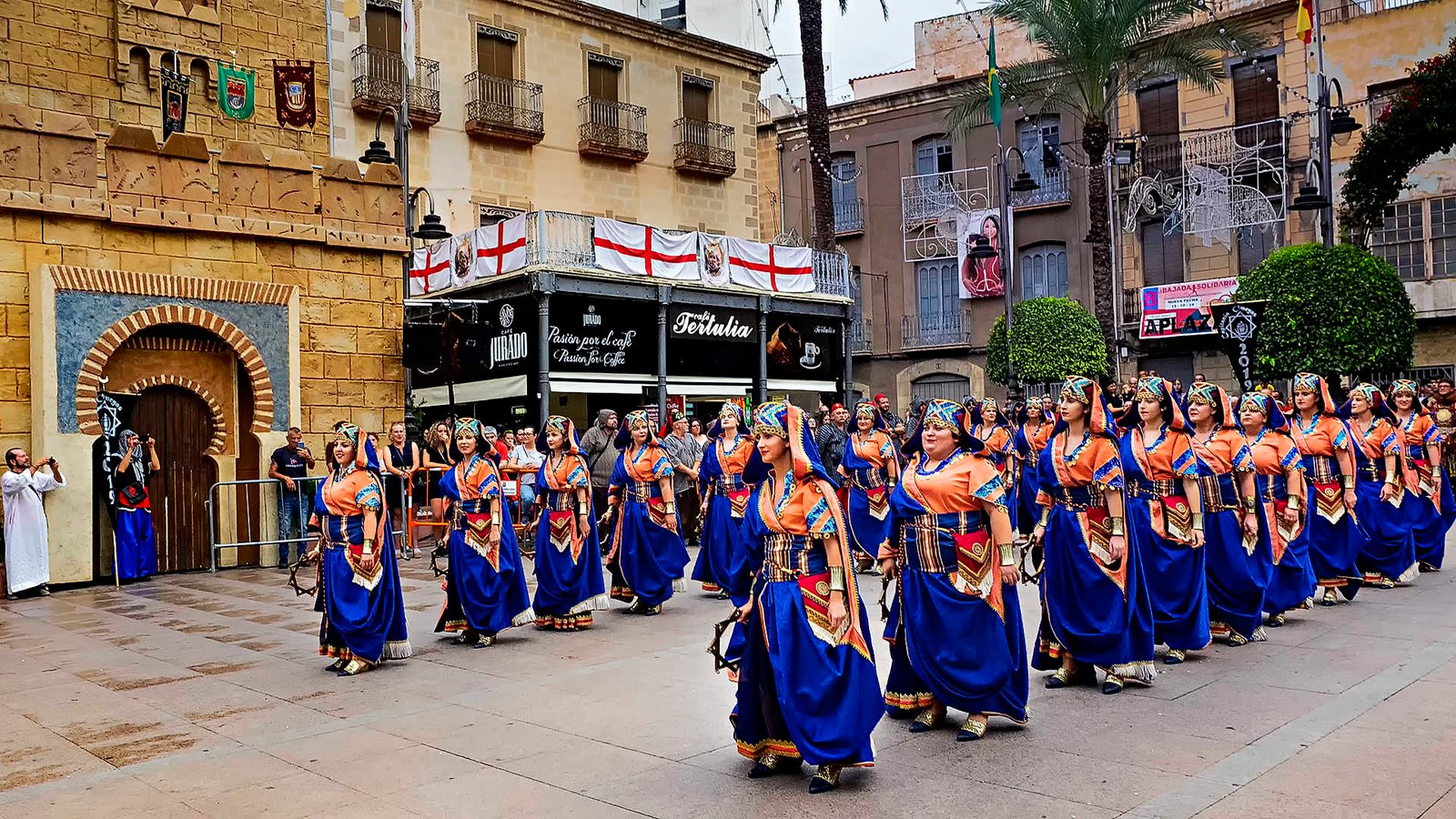
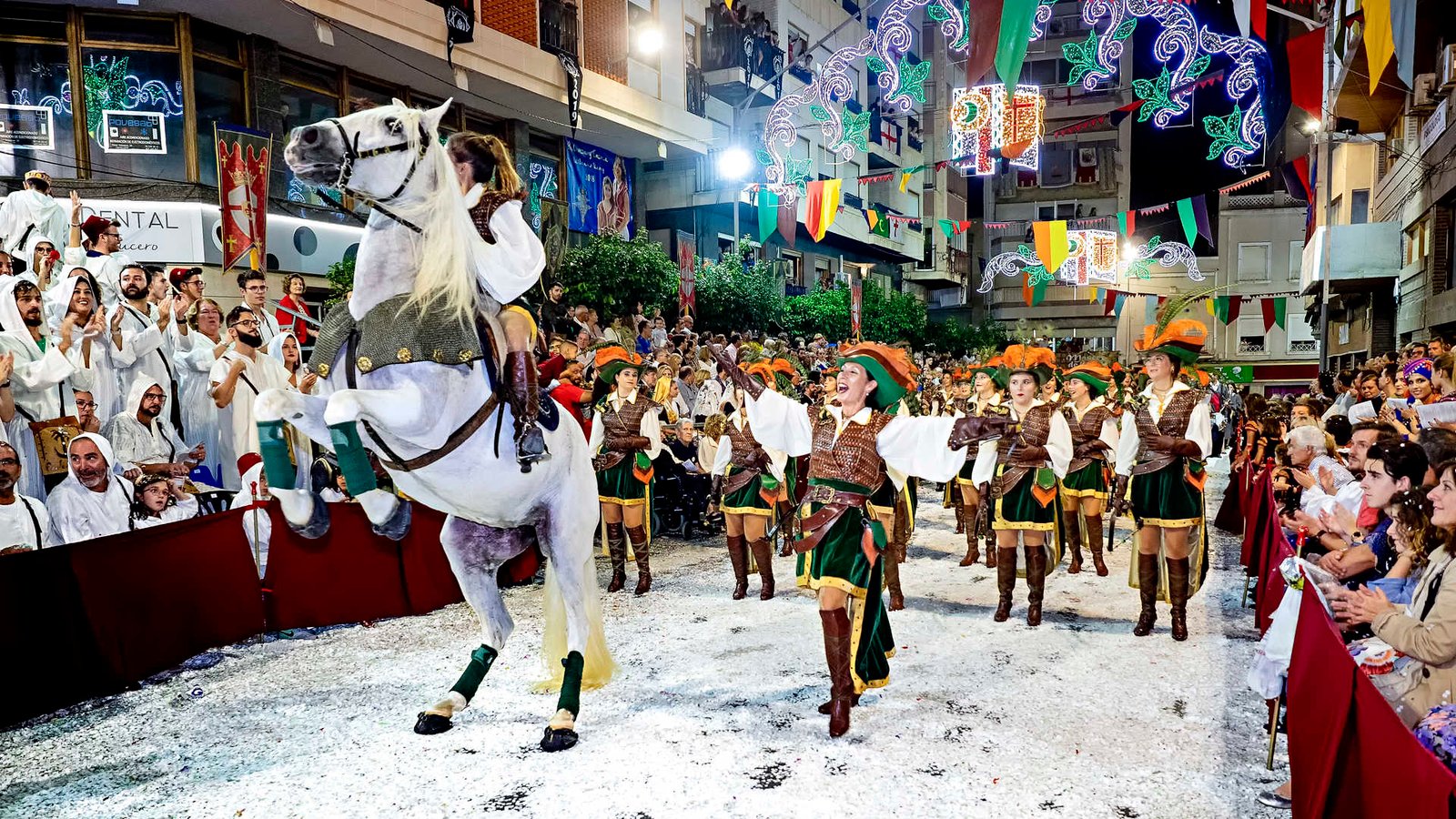
The streets of Crevillent become the principal stage for the celebration. Music from marching bands, colorful costumes, festero groups, historical characters and ceremonial processions create a highly visual atmosphere. The municipality describes the festival as an important expression of local culture and one of the town’s major festive references.
Cultural Significance & Origins
The cultural importance of the Crevillent festival comes from its connection with local history, religious tradition and community participation. The celebration is held in honor of San Francisco de Asís, the town’s patron saint, while its historical narrative recalls the medieval Muslim and Christian history of the area.
According to the official Crevillent tourism portal, the festival as it is known today began through the initiative of local residents who wanted to establish a Moros y Cristianos celebration in their part of Alicante. It subsequently developed into one of the best-known festive traditions in the southern part of the province.
The festival is also connected with several historical themes associated with the region, including the Christian reconquest, Muslim rule, conflicts involving North African forces and the later expulsion of the Moriscos. Rather than presenting these subjects solely as historical facts, the festival transforms them into public theatre and ceremonial performance.
Its most important cultural distinction is the local interpretation of the medieval encounter. The official tourism material explains that the central theatrical representation takes place before a castle setting in Plaza de la Constitución. The story concludes through capitulation and an agreement between the two sides, emphasizing coexistence and tolerance rather than a straightforward victory.
This representation has been recognized as Intangible Local Cultural Heritage, demonstrating the importance placed on preserving the performance as part of Crevillent’s cultural identity.
The festival’s international tourism recognition also reflects its continuity, originality, public participation and cultural value. Crevillent currently promotes both its Moros y Cristianos festivities and Holy Week as major international-interest celebrations.
Traditions, Rituals & Customs
The festival is built around the interaction of Moorish and Christian comparsas, or organized festero groups. Each group has its own identity, costumes, traditions and place within the festival structure.
Moorish and Christian sides
The celebration is divided into two symbolic sides. Official tourism information identifies six Moorish comparsas and six Christian comparsas, giving the festival a total of twelve principal groups.
Embassies
The Embajadas are among the most important traditions. They use historical theatre and dialogue to recreate the relationship between the local Muslim authorities and Christian forces. The official festival association describes the performances as a distinctive local tradition built around the history of Crevillent.
Festive captains and beauties
Festero positions such as captains and Bellezas are important to the organization and visual identity of the celebration. The festival association regularly organizes ceremonial events connected with these positions, highlighting their importance within the comparsas and wider festive community.
Music
Music is fundamental to the festival. Marching bands accompany the principal parades and help create the distinctive sound of the celebration. Moorish and Christian marches provide a ceremonial rhythm for the movement of the comparsas through the streets.
Gunpowder
Gunpowder is another traditional element of Valencian Moros y Cristianos celebrations and forms part of the visual and theatrical character of Crevillent’s festivities.
Community participation
The festival is strongly based on local participation. Comparsas, families, musicians, children and organizers all contribute to maintaining the traditions and passing them between generations.
What to Expect at the Festival
Visitors can expect Crevillent to become a lively festive environment filled with music, costumes, historical characters and public performances.
The major attraction is the combination of large-scale parades and theatrical storytelling. Rather than simply watching a procession, visitors can experience a celebration in which the historical narrative is repeatedly brought into public view through costumes, characters, music and ceremonial events.
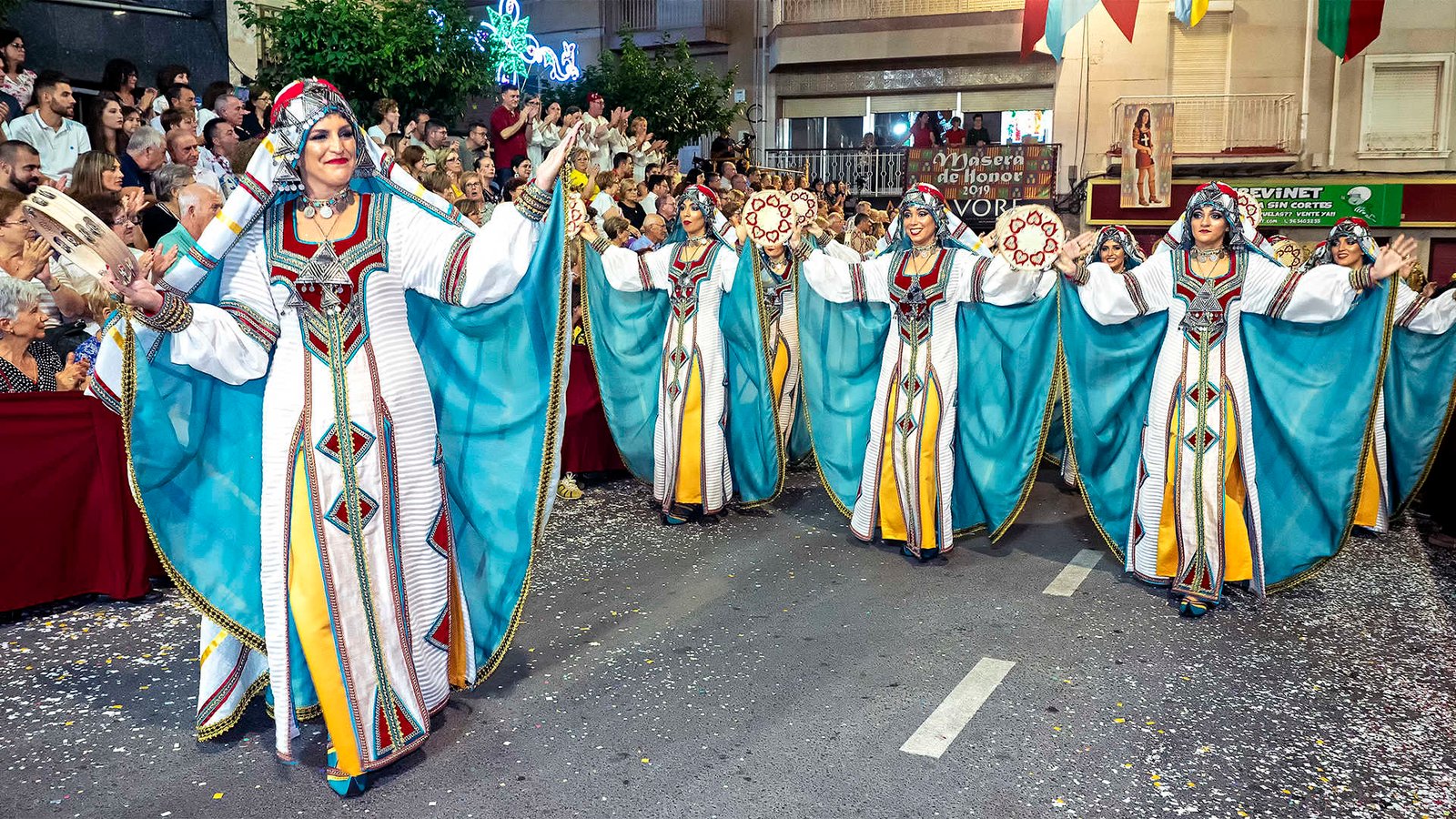
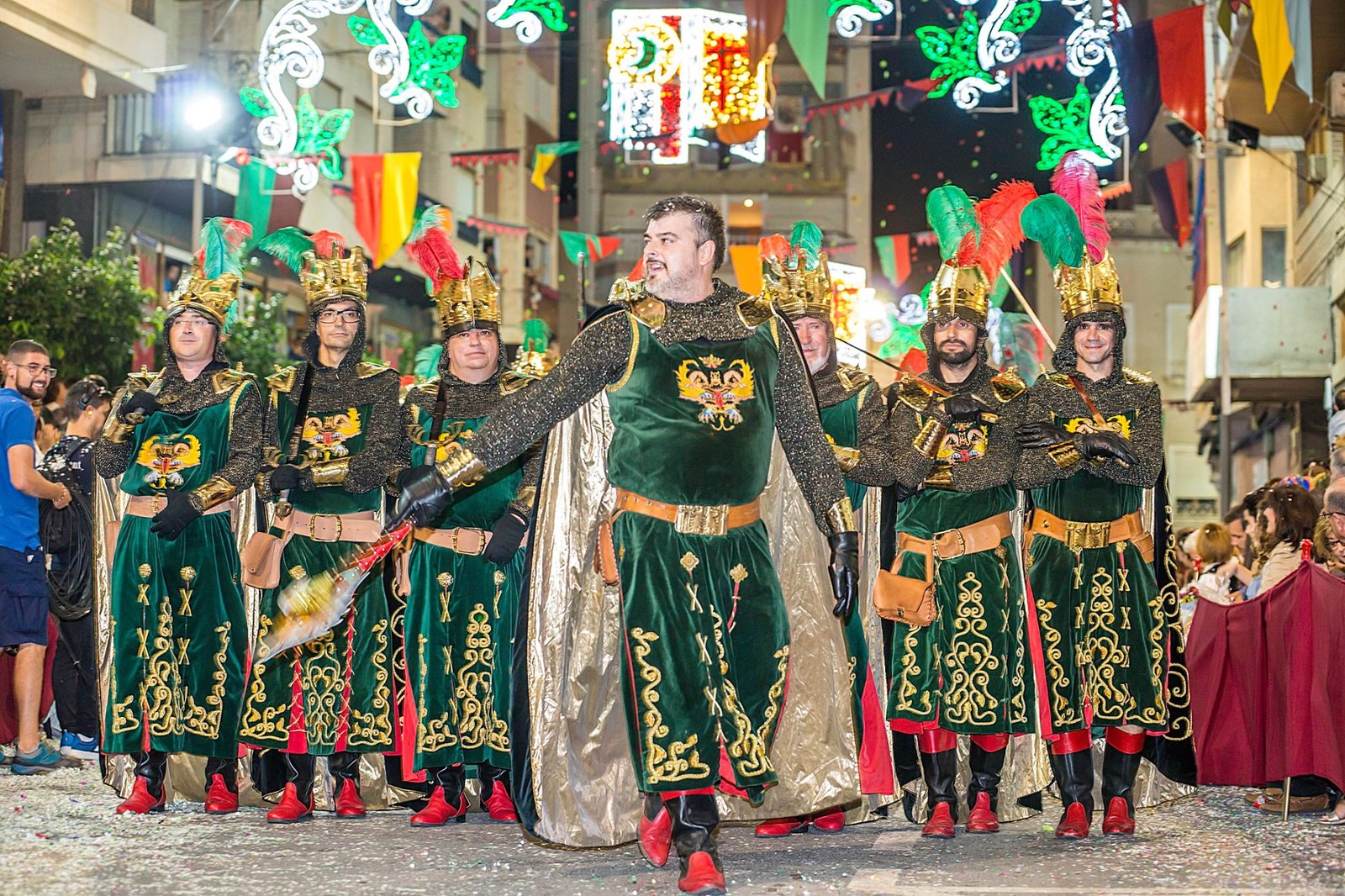
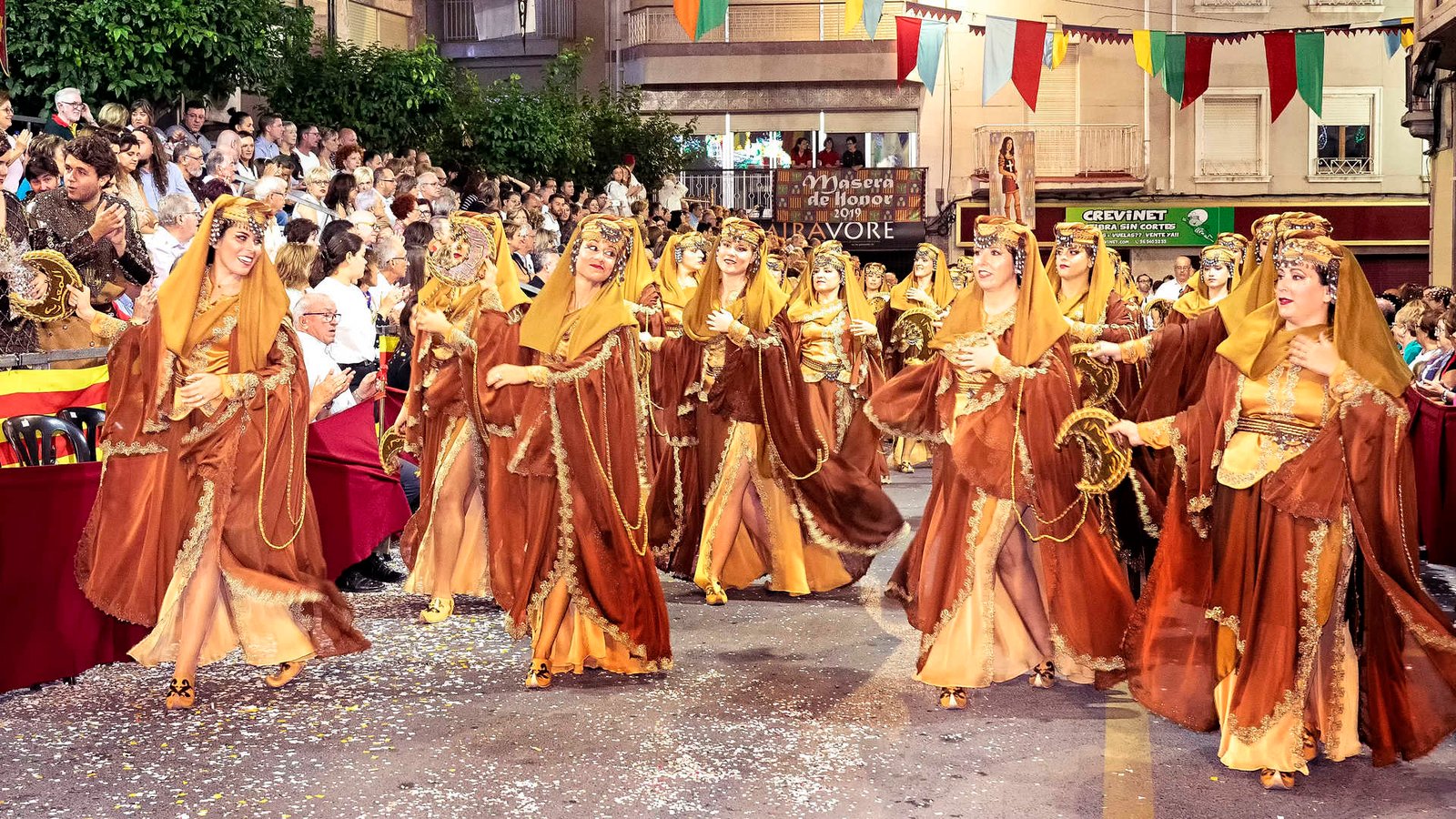
The parades are particularly colorful. Moorish and Christian groups appear in distinctive costumes accompanied by marching bands. The official Spain tourism portal specifically identifies the color of the parades and the music as major features of the celebration.
Visitors should also expect considerable local participation. The municipality describes the comparsas and festero positions as fundamental to a celebration that fills the streets with music, color and tradition.
The atmosphere changes throughout the programme. Some events have a strongly theatrical character, while religious activities dedicated to the patron saint provide a more solemn dimension. Public parades are energetic and musical, while the Embassies focus more closely on historical storytelling.
Families can also find activities connected with younger participants. The festival association operates an Escola de la Festa, designed to introduce children to the history of the patron saint, the comparsas, festive music, the Embassies and the Museum of the Fiesta.
Date & Schedule
Moros y Cristianos de Crevillent 2027 is scheduled for October 2027 (Dates TBD).
The exact 2027 programme and individual event times should be confirmed through the official festival association and Crevillent tourism channels when the programme is published.
The traditional structure generally includes several interconnected elements:
Opening and preparatory activities
Festive activities build toward the principal celebrations, with events involving the comparsas, musical performances, presentations and community gatherings.
Moorish and Christian parades
The main parades bring the twelve principal comparsas into the streets, presenting their costumes, music and festive formations.
Embassies
The theatrical Embassies form the historical centrepiece of the celebration, using the castle setting and historical characters to present the local interpretation of the medieval encounter.
Religious celebrations
Events dedicated to San Francisco de Asís connect the festive programme with the religious identity of the town.
Closing celebrations
The programme concludes with final festive activities organized by the association and participating comparsas.
Visiting this event? Don’t miss out on these amazing activities and local experiences while you’re here.
Main Events & Programme
The programme is designed around several major elements that together create the identity of the festival.
Grand parades
The principal processions are among the best opportunities to see the comparsas in full costume. Participants march through the town accompanied by festive music, creating long sequences of Moorish and Christian groups.
Embassy performances
The Embassies are particularly important because they distinguish Crevillent’s celebration from many other Moros y Cristianos festivals. The official association explains that the local Embassies developed specifically for Crevillent and became a permanent part of the celebration.
Castle setting
A temporary castle provides the backdrop for the central theatrical representation in Plaza de la Constitución. This setting helps transform the town square into a historical stage and gives the performance a strong visual identity.
Festero ceremonies
Presentations and ceremonies involving captains, Bellezas and other festive representatives form an important part of the wider programme. These events showcase the organization and hierarchy of the comparsas.
Festive music
Concerts, marching bands and traditional festive compositions are woven into the programme. Music is not simply background entertainment; it accompanies the movement and presentation of the comparsas.
Religious events
Celebrations connected with San Francisco de Asís provide an important spiritual element and connect the festivities with the patron saint of Crevillent.
Traditional Dress, Arts & Crafts
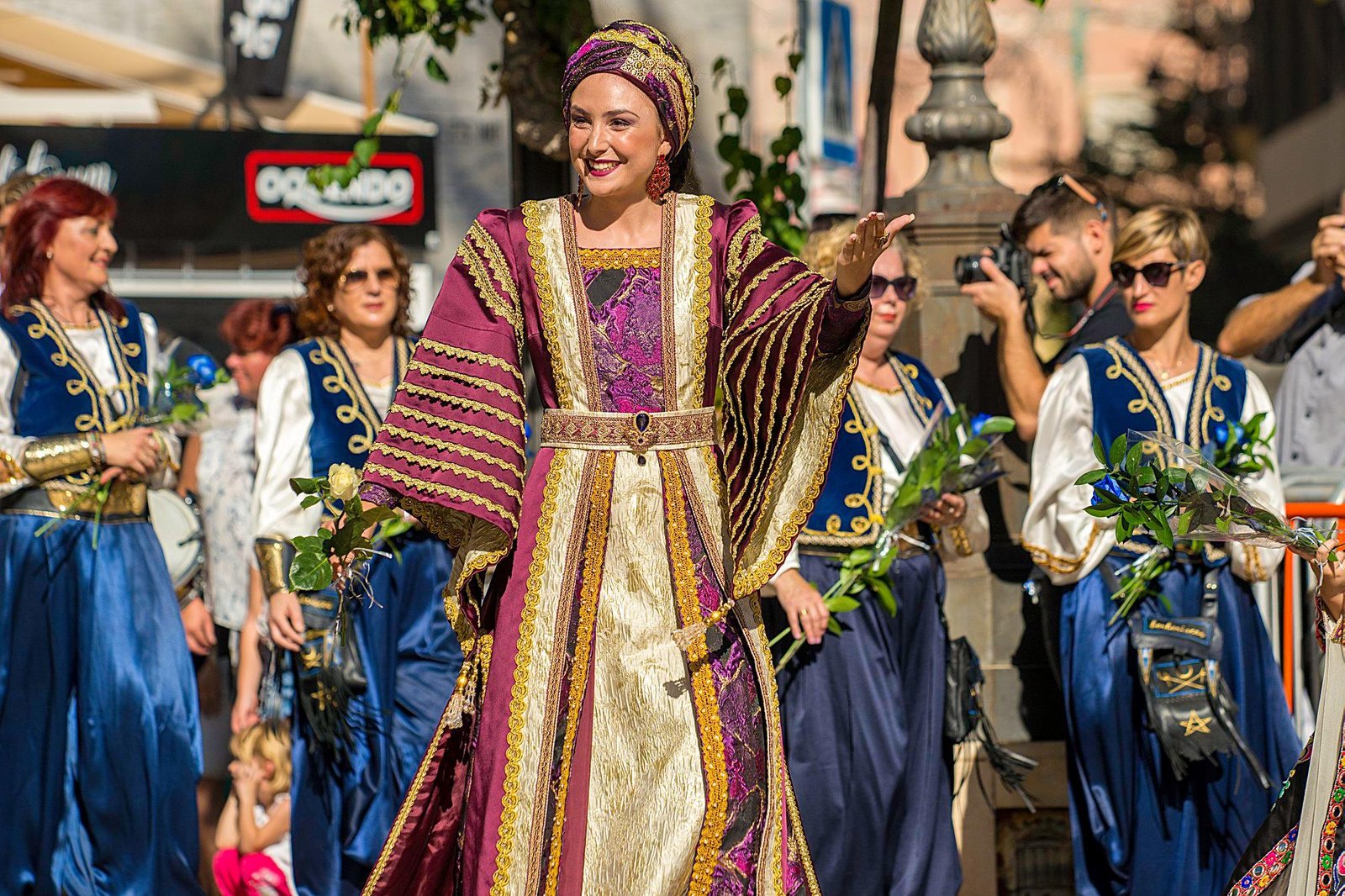
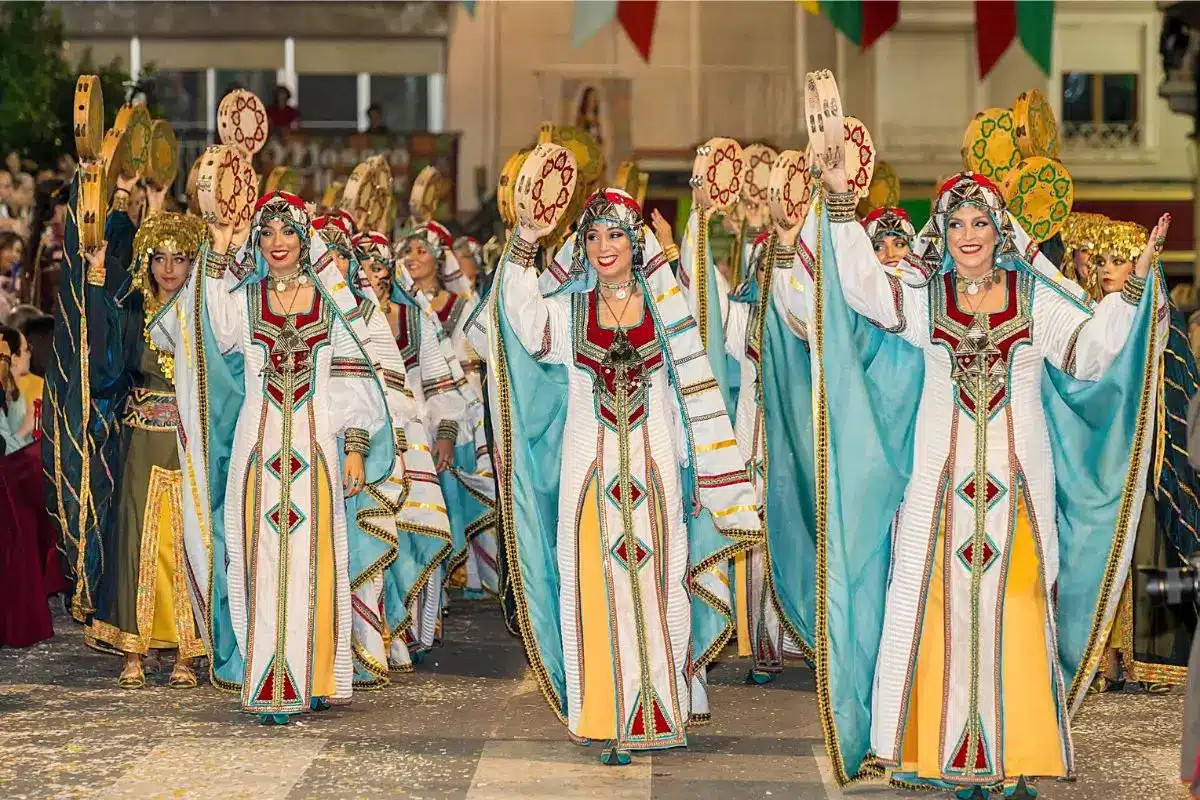
Costumes are one of the most visually important aspects of Moros y Cristianos de Crevillent. Each comparsa has its own identity, and the distinction between Moorish and Christian groups is expressed through clothing, accessories, colors, headwear and ceremonial presentation.
The official association maintains separate comparsa identities including Almogávares, Maseros, Dragones de San Jorge, Guerreros Astures, Caballeros del Cid and Castellano Leonesa on the Christian side, together with Beduinos, Marroquíes, Moros Viejos Tuareg, Berberiscos, Omeyas and Benimerines on the Moorish side.
The costumes are part of the heritage of the comparsas rather than simple theatrical clothing. Participants often have a strong personal and family connection with their group.
Music is another important cultural art. Festive marches accompany the processions and create a distinctive atmosphere throughout the streets.
Visitors may also encounter traditional crafts and artisan products during related public activities. Crevillent tourism and municipal programming can include markets and cultural activities connected with the wider festive environment, providing opportunities to see local crafts and food products.
Traditional Food & Local Specialties
Crevillent has a strong traditional food culture based on rice dishes, homemade cooking, bakery products and regional ingredients.
Rice dishes
Rice is central to local cuisine. The official tourism portal highlights arroz con conejo y caracoles, arroz y mondongo, vegetable rice and arròs caldós among the town’s traditional preparations.
Gachamiga
Gachamiga is another traditional local preparation made from simple ingredients including flour, oil, garlic and water. It reflects the character of traditional rural cooking and is associated with communal preparation and local food culture.
Cocido con pelotas
Cocido con pelotas is another traditional dish associated with Crevillent. It represents the substantial home cooking found in the region and is particularly connected with family and festive meals.
Cocas
Traditional Crevillent cocas are an important local bakery specialty. They come in several varieties, including versions prepared with vegetables, sardines, tuna and egg, anchovies and other ingredients. The official tourism guide describes coca as one of the town’s signature traditional bakery products.
Toña and traditional sweets
Toña is a traditional sweet bread or cake that is commonly enjoyed with hot chocolate. Pan de higo and arrop i tallaet are other traditional preparations highlighted by Crevillent tourism.
Location & Festival Areas
Moros y Cristianos de Crevillent takes place in Crevillent, a municipality in Alicante province in the Valencian Community.
The town is located in the Bajo Vinalopó area and combines cultural heritage with a distinctive natural setting. The official tourism portal highlights the Sierra de Crevillent as well as the nearby El Hondo natural area as important features of the wider destination.
Plaza de la Constitución
This is one of the most important festival locations because the central historical theatrical representation uses a castle setting installed in the square.
Historic town center
The central streets provide the setting for the main processions, music and public celebrations.
Festero areas
The comparsas and their associated social spaces form an important part of the local festive landscape. These areas provide insight into the community organization behind the celebration.
Crevillent’s compact central area makes it possible to experience much of the festival atmosphere on foot, although visitors should expect temporary restrictions and crowded streets during major public events.
Getting to the Festival
Crevillent is well connected with other destinations in southeastern Spain.
By road
The town can be reached from the wider Alicante and Murcia areas by road. The official tourism portal places Crevillent around 25 kilometers from Alicante International Airport by road via the N-340.
By train
The nearest railway connection is associated with the Alicante–Elche–Orihuela–Murcia corridor. Official Crevillent tourism information provides railway access details for visitors arriving from Alicante and Murcia.
By bus
Bus services connect Crevillent with nearby cities including Alicante and Elche. The official tourism portal provides information for visitors using bus connections from these destinations.
By air
Alicante-Elche Miguel Hernández Airport is the closest major international airport and provides the most practical entry point for international visitors.
During the main celebrations, visitors should allow extra time for road congestion, temporary street closures and parking restrictions. Public transport or accommodation within the town can be more convenient than driving directly into the central festival area.
Where to Stay Nearby
Visitors can stay in Crevillent or use larger nearby destinations as a base.
Crevillent
Staying within the town provides the easiest access to processions, public performances, restaurants and other local activities. It is particularly convenient for visitors who want to experience the festival beyond the main parade periods.
Elche
Elche is a practical nearby base with a larger selection of hotels and transport connections. It can suit travelers who want to combine the festival with visits to a larger urban destination.
Alicante
Alicante offers the widest range of accommodation and international transport connections in the surrounding area. It is useful for visitors who prefer a city base and plan to travel to Crevillent for the celebrations.
Murcia area
Visitors arriving from the southeast can also consider accommodation around Murcia and travel toward Crevillent for selected festival activities.
Because the celebration attracts visitors interested in one of the Valencian Community’s major traditional festivals, accommodation should be reserved early when possible.
What Visitors Can Participate In
Visitors can experience many aspects of the celebration without belonging to a comparsa.
Watch the parades
The public processions are the easiest way to experience the costumes, music and scale of the festival.
See the Embassies
The theatrical Embassies provide a deeper understanding of the local historical narrative and are especially important for visitors interested in traditional culture.
Explore the town
Walking around the central streets between programme activities allows visitors to see the festive decorations, listen to music and observe local participation.
Taste local food
Restaurants, bakeries and food businesses provide opportunities to try Crevillent specialties, particularly traditional rice dishes and bakery products.
Experience festive music
Visitors can hear the traditional marches performed by bands accompanying the comparsas.
Learn about the festival
The festival association’s educational initiatives demonstrate the importance of teaching younger generations about the patron saint, comparsas, Embassies and festive traditions.
Things to Do Before or After the Festival
Crevillent is worth exploring beyond the festival itself.
The town is particularly associated with its carpet industry and has a strong history of traditional manufacturing. The official tourism portal describes Crevillent as a place strongly connected with carpet production and local craftsmanship.
The Sierra de Crevillent provides opportunities for visitors interested in landscapes, walking and outdoor activities. Its combination of natural and cultural importance makes it one of the main attractions outside the urban center.
El Hondo Natural Park is another significant nearby attraction. The official tourism portal describes it as an important wetland with high ecological value and rich biodiversity.
Visitors interested in culture can also explore Crevillent’s museums, historic buildings and religious heritage.
A food-focused visit is another option. Local bakeries, restaurants and traditional food businesses provide opportunities to experience the town’s culinary identity.
For a wider regional trip, visitors can combine Crevillent with Elche, Alicante and other destinations across the Costa Blanca and southern Valencian Community.
Local Food & Restaurants
Crevillent’s restaurant scene reflects its traditional Mediterranean and Valencian culinary background.
The official tourism portal maintains dedicated information about restaurants, bakeries, ovens and ice-cream shops, making it useful for visitors looking for local food rather than international chains.
Traditional restaurants
Look for restaurants serving local rice dishes, meat preparations, seasonal vegetables and traditional home-style cooking.
Bakeries and ovens
Traditional bakeries are particularly important because Crevillent’s cocas are among its best-known food specialties. The official tourism material provides a dedicated guide to local ovens and bakeries.
Local sweets
Visitors can look for toña, pan de higo and other traditional sweet preparations.
Horchata and ice cream
Crevillent also has a long tradition of horchata and locally produced ice cream. The official tourism portal notes the local horchata tradition and its long-standing presence in the town.
During the festival, restaurants and food businesses around the central areas can become busy, so visitors traveling in groups should consider making reservations.
Ticket Information & Access
The main outdoor celebrations of Moros y Cristianos de Crevillent take place in public streets and town squares, so visitors can experience the general festival atmosphere without purchasing a standard all-event admission ticket.
The festival association does, however, organize seating and tribune arrangements for major parade events. Its official website publishes information about the sale of festive grandstand spaces when these become available.
No general 2027 admission price has been published at the time of writing, and no reliable official previous-edition price was found that could be presented as a confirmed standard admission price. Visitors should therefore check the official festival association before the event if they specifically want reserved seating.
Public viewing
Street-level viewing of the principal public celebrations is generally the most accessible option.
Festive grandstands
Reserved tribune seating may be available for major parades, subject to the festival association’s arrangements.
Private activities
Individual meals, hospitality events, organized activities and other private experiences may have separate charges.
Visitors should use the official association’s announcements for confirmed access arrangements rather than relying on unofficial ticket information.
Official Event Information
The festival is organized by the Asociación de Fiestas de Moros y Cristianos “San Francisco de Asís” de Crevillent, with support from the Ayuntamiento de Crevillent and the local tourism authorities.
Official festival website: https://www.morosicristianscrevillent.com/es/index.html
Official Crevillent tourism website: https://visita.crevillent.es/
Official Crevillent tourism information identifies the Moros y Cristianos festivities as a Festivity of International Tourist Interest and explains their historical, cultural and community significance.
The official festival association website is the best source for programme announcements, comparsa information, festive positions, tickets or tribune arrangements and other organizational updates.
Tickets Sell Out
in Minutes
Maps
Contact
Video
FAQ's
What is Moros y Cristianos de Crevillent?
Moros y Cristianos de Crevillent is a major traditional festival dedicated to San Francisco de Asís that combines historical theatre, parades, music, costumes, gunpowder and religious traditions. It is officially recognized as a Festivity of International Tourist Interest and features twelve principal comparsas divided between Moorish and Christian sides.
What is special about the Embassies in Crevillent?
The Embassies present a local historical story through theatrical dialogue and performance, using a castle setting in Plaza de la Constitución. Their distinctive conclusion emphasizes capitulation, coexistence and fraternity rather than a conventional victory by one side.
Is Moros y Cristianos de Crevillent a religious festival?
The celebration has an important religious dimension because it is held in honor of San Francisco de Asís, the patron saint of Crevillent. At the same time, it is a broader cultural celebration incorporating historical theatre, music, costumes, public parades and community traditions.
Can visitors watch the Moros y Cristianos parades?
Yes, visitors can experience the public parades and many outdoor activities as spectators. The processions are among the principal attractions of the celebration, while reserved grandstand spaces may be offered separately by the festival association for people seeking a designated viewing position.
What food should visitors try in Crevillent?
Visitors should look for local rice dishes such as arroz con conejo y caracoles and arròs caldós, as well as gachamiga and cocido con pelotas. Crevillent is also known for traditional cocas, toña, pan de higo, arrop i tallaet and locally produced horchata.