
Holy Week in Malaga 2027 – Spain
Overview
Holy Week in Malaga 2027 – Spain, known locally as Semana Santa de Málaga, is one of the most spectacular religious and cultural celebrations in Andalusia. The city becomes the setting for solemn processions featuring enormous religious thrones, penitents, musicians, incense, candles, flowers and thousands of spectators lining the streets.
The celebration commemorates the Passion, death and Resurrection of Jesus Christ, but its importance extends beyond religious observance. Malaga’s Holy Week is deeply connected with the city’s history, artistic heritage, music, craftsmanship, brotherhoods and community traditions.
Spain’s official tourism authority recognizes Malaga’s Holy Week as a Festivity of International Tourist Interest. The event is particularly famous for its large processional thrones, known locally as tronos, which carry religious sculptures through the historic centre.
Enjoy Your Event Stress-Free with Spain Travelo
Planning a trip around a festival, concert, cultural celebration, or business event in Spain can be time-consuming—finding tickets, accommodation, transportation, and local information takes effort. Spain Travelo makes it easier by bringing essential event information, travel planning, and support together in one place.
Unlike a festival contained within one venue, Semana Santa transforms the streets of central Malaga into a moving ceremonial space. Each brotherhood has its own procession, imagery, music, traditions and route.
The atmosphere changes considerably from one procession to another. Some moments are intensely solemn, while others are characterized by powerful marching bands, saetas, applause and the emotional response of spectators.
The event also provides an opportunity to discover Malaga’s historic centre, churches, squares and streets from a different perspective. Visitors can combine processions with museums, historic monuments, traditional restaurants and other attractions around the city.
Cultural Significance & Origins
Holy Week in Malaga has a history extending back more than five centuries. The Agrupación de Cofradías de Semana Santa de Málaga traces the origins of Malaga’s cofrade tradition to 1505, when the Archconfraternity of Santa Vera Cruz y Sangre de Nuestro Señor Jesucristo was established.
The modern organization of Malaga’s Holy Week was significantly shaped by the creation of the Agrupación de Cofradías in 1921. The organization was founded to coordinate the brotherhoods, strengthen the religious character and organization of the processions, and support their public presentation. It was the first association of its type established in Spain.
The brotherhoods, known as cofradías or hermandades, play a central role in maintaining the tradition. Members participate in religious services, prepare the processional images and thrones, organize processions and preserve artistic and devotional heritage.
Malaga’s Holy Week is also significant because of its artistic dimension. Religious sculptures, embroidered mantles, silverwork, flowers and enormous processional structures form an important part of the city’s cultural heritage.
The event combines religious devotion with public participation. Residents, brotherhood members, musicians, artisans and visitors all contribute to the atmosphere surrounding the processions.
Traditions, Rituals & Customs
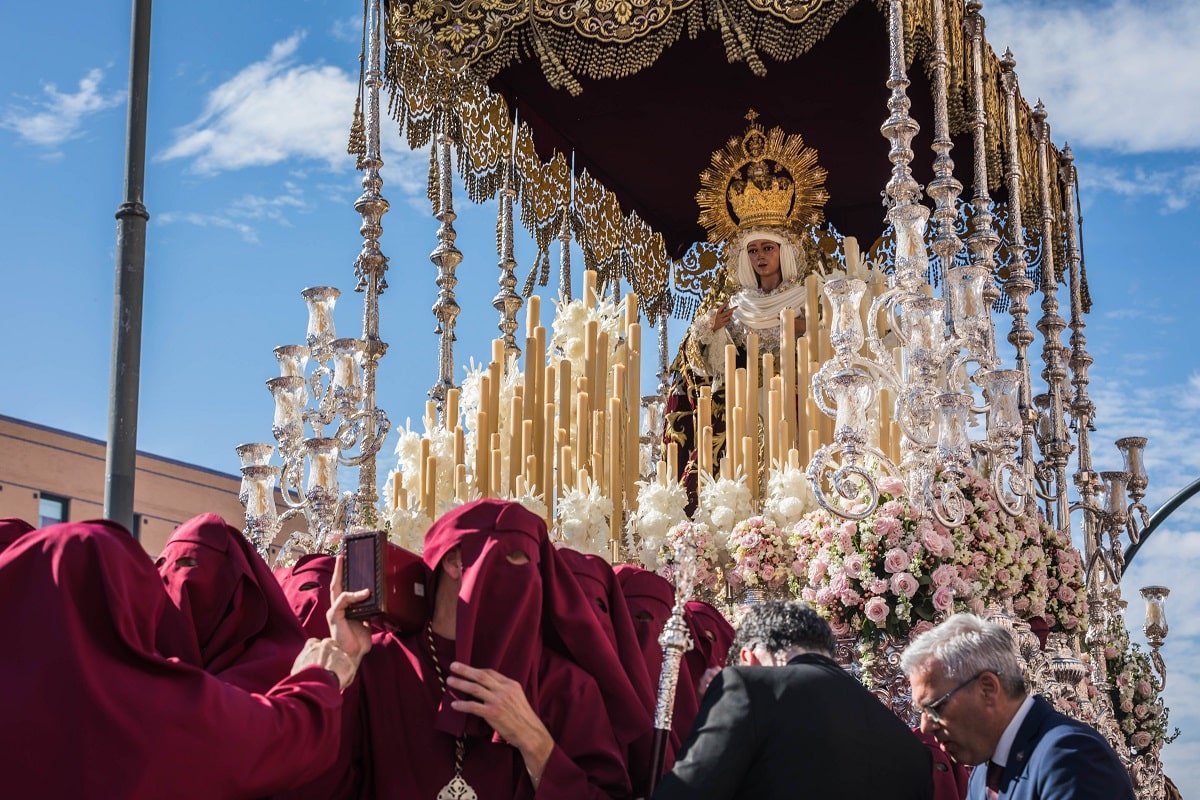
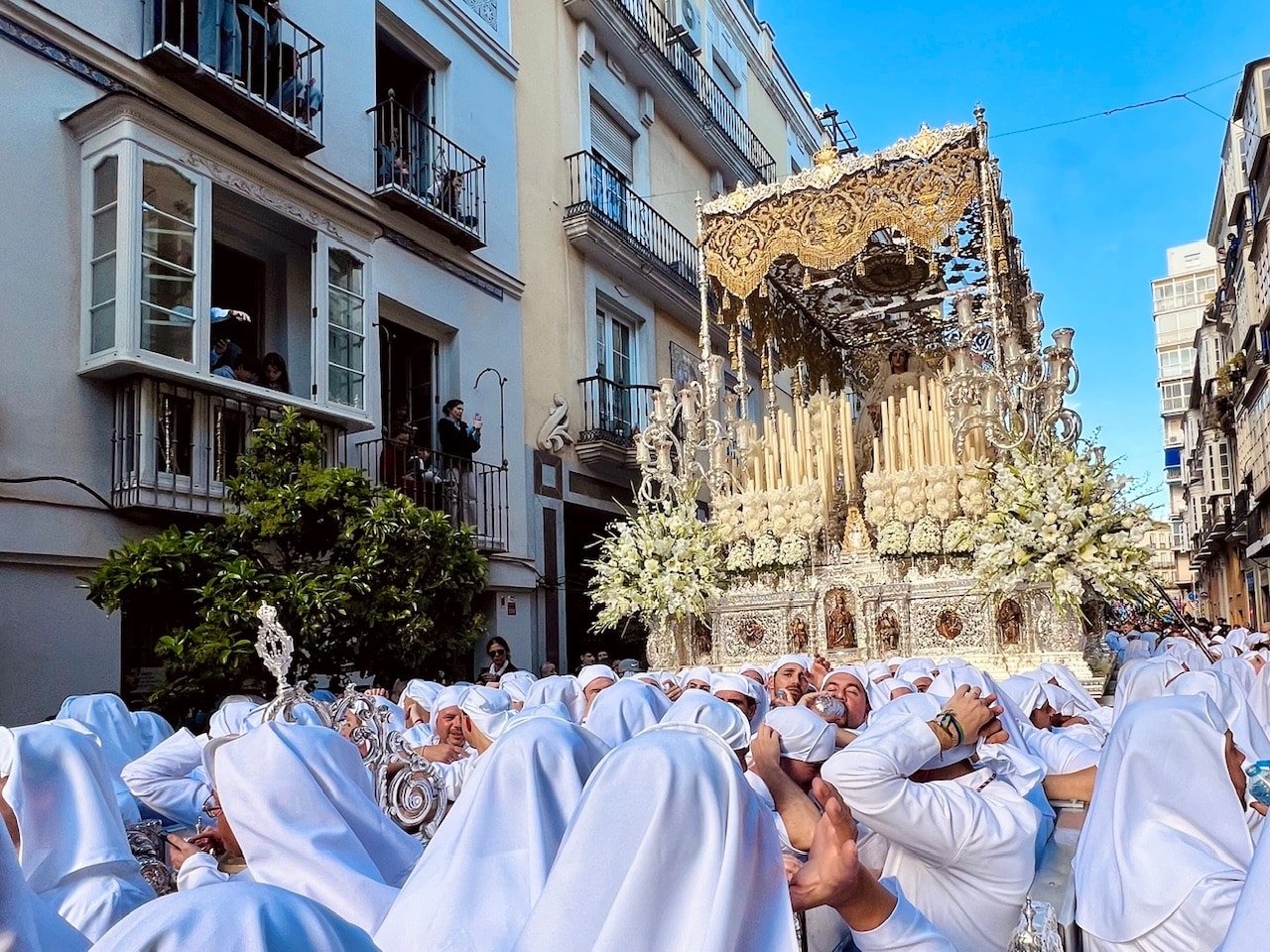
One of the most recognizable traditions is the procession of the tronos. These large structures carry sculptures depicting scenes or figures connected with the Passion of Christ and the Virgin Mary.
Brotherhood members accompany the tronos in distinctive robes. Nazarenos, carrying candles or other ceremonial objects, form part of the procession, while other participants have specific roles within each brotherhood.
Music is another essential element. Processional bands accompany many of the brotherhoods, creating a distinctive soundscape throughout the historic centre.
The saeta is one of the most emotionally powerful customs. A saeta is a traditional religious song performed from a balcony or another elevated position as a procession passes below. Spain’s official tourism information highlights the emotional and musical character of Malaga’s processions.
Candles, incense, flowers and ceremonial standards add further visual and sensory elements. The combination of darkness, candlelight, music and the slow movement of the tronos creates some of the most memorable scenes of the celebration.
Another distinctive tradition is the annual release of a prisoner associated with the image of Jesús el Rico. Spain’s official tourism authority traces this custom to the reign of Charles III and explains that the privilege was granted to the image following an historic incident involving prisoners and a suspended procession. The traditional act takes place during Holy Week and the released person then accompanies the procession.
What to Expect at the Festival
Visitors should expect a city-wide celebration rather than a conventional festival venue.
The most important experience is watching the processions pass through central Malaga. Large crowds gather along major streets and squares, with spectators waiting for particular brotherhoods and religious images.
The atmosphere can range from quiet contemplation to highly emotional public reactions. Music, applause, religious singing and the movement of the tronos can make certain moments particularly intense.
The processional thrones are among the most impressive features. Their size, decoration and craftsmanship distinguish Malaga’s celebrations from many other Holy Week traditions in Spain.
Visitors should also expect significant pedestrian congestion in the centre. Streets can become extremely busy around popular procession routes, and temporary road closures and transport changes are introduced for public safety.
The official city information provides daily procession information, mobility guidance and visitor resources.
Date & Schedule
Holy Week in Malaga 2027 is scheduled for 21 March 2027 – 28 March 2027. Spain’s official tourism portal lists these dates for the Malaga celebration.
The main ceremonial period follows the traditional Holy Week calendar, beginning with Palm Sunday and continuing through the principal days of Holy Week before concluding with Easter Sunday.
The key days are:
- Palm Sunday
- Holy Monday
- Holy Tuesday
- Holy Wednesday
- Holy Thursday
- Good Friday
- Holy Saturday
- Easter Sunday
The exact procession times and routes for 2027 should be checked when the official itinerary is published by the Agrupación de Cofradías and the City of Malaga.
The municipality maintains a dedicated Semana Santa information section containing procession information, mobility details and daily materials.
Visiting this event? Don’t miss out on these amazing activities and local experiences while you’re here.
Main Events & Programme
The programme consists primarily of processions organized by Malaga’s religious brotherhoods.
Palm Sunday
Palm Sunday traditionally opens the main procession period. Several brotherhoods participate, creating an energetic introduction to the week with religious imagery, music and large crowds.
Holy Monday
Processions continue through the centre, with different brotherhoods presenting their own artistic traditions, imagery and musical accompaniment.
Holy Tuesday
Holy Tuesday brings another extensive programme of processions and is an important opportunity to see some of Malaga’s historic brotherhoods and devotional images.
Holy Wednesday
Holy Wednesday includes some of the most distinctive traditions associated with Malaga’s Semana Santa. The traditional liberation of a prisoner connected with Jesús el Rico is one of the best-known ceremonies associated with this day. Spain’s official tourism portal identifies this as one of the unusual traditions of the celebration.
Holy Thursday
Holy Thursday is one of the most significant nights of the week, with major processions and an especially intense atmosphere in the historic centre.
Good Friday
Good Friday is characterized by solemn processions and powerful religious imagery. Spain’s tourism authority specifically highlights the singing of nuns from the Convent of La Cruz to the Brotherhood of Los Dolores de San Juan in Plaza de Arriola as a particularly moving moment.
Easter Sunday
The celebration concludes with the Resurrection processions, representing the transition from the mourning of Good Friday toward the celebration of the Resurrection.
Traditional Dress, Arts & Crafts
Traditional dress is an important visual feature of Malaga’s Holy Week.
Nazarenos wear distinctive robes and hoods as they accompany their brotherhoods. The exact colors and designs vary between organizations and can help spectators identify different cofradías.
The tronos themselves represent major works of religious craftsmanship. They can incorporate carved wood, metalwork, silver elements, flowers, candles and elaborate decorative details.
Embroidery
Brotherhood mantles, banners and other ceremonial textiles can contain highly detailed embroidery and religious symbolism.
Gold and silver work
Metalwork is used extensively in processional objects, standards, crowns, candles and other ceremonial pieces.
Religious sculpture
The sculptures carried through the streets are central works of devotional art and form a major part of Malaga’s artistic heritage.
Floral decoration
Flowers are carefully arranged around many processional images and contribute strongly to the visual appearance of the tronos.
The annual official poster is also part of the cultural tradition. The Agrupación de Cofradías maintains an archive of Holy Week posters going back decades, illustrating the importance of visual art in promoting and documenting the celebration.
Traditional Food & Local Specialties
Holy Week is also associated with seasonal Andalusian food traditions.
Traditional dishes eaten during this period often reflect religious customs surrounding Lent and Holy Week. Fish, vegetables, pulses and sweets have an important place in seasonal cooking.
Torrijas
Torrijas are one of Spain’s best-known Easter-period sweets. They are made from slices of bread soaked in a sweetened mixture before being cooked and finished with sugar, cinnamon or other ingredients.
Pestiños
Pestiños are traditional Andalusian pastries associated with festive and religious periods. They are commonly flavored with ingredients such as anise or honey.
Potaje de vigilia
This traditional Lenten stew commonly combines chickpeas, spinach and cod and is associated with meat-free religious observance.
Buñuelos
Sweet fritters and similar pastries can also appear in bakeries and traditional food establishments during the season.
Visitors can experience these foods at traditional bakeries, restaurants and cafes throughout Malaga rather than relying only on dedicated festival stalls.
Location & Festival Areas
Holy Week takes place throughout Malaga, but the historic centre is the principal area for visitors.
The processions move through a network of central streets and major public spaces, with routes varying according to the brotherhood.
Calle Larios
Calle Marqués de Larios is one of the most important central streets and a major viewing area during processional activity.
Plaza de la Constitución
This central square provides an important gathering point and is located close to major pedestrian routes.
Plaza de la Marina
The area around Plaza de la Marina and the Alameda is also incorporated into major movement and procession arrangements.
Malaga Cathedral
The Cathedral is one of the city’s most important religious landmarks and an important reference point for understanding Malaga’s Holy Week heritage.
Alameda Principal
The Alameda forms part of the major central urban area used by processions and associated pedestrian movements.
The exact 2027 procession routes should be checked through the official itinerary published by the Agrupación de Cofradías.
Getting to the Festival
Malaga is one of the easiest Andalusian cities to reach by air, train and road.
By air
Malaga-Costa del Sol Airport is the city’s principal international airport. It has extensive connections with Spanish and European destinations.
By train
Malaga María Zambrano railway station provides high-speed and conventional rail connections with Madrid, Cordoba, Seville and other Spanish cities.
By bus
Long-distance and regional buses connect Malaga with destinations throughout Andalusia and Spain.
By car
Malaga is connected with the wider Andalusian road network, but driving into the historic centre during Holy Week can be inconvenient because of temporary road closures and heavy pedestrian activity.
The municipality regularly implements a special mobility plan during Holy Week, including traffic diversions and changes affecting public transport.
Where to Stay Nearby
Staying close to central Malaga is the most convenient choice for visitors who want to watch several processions without depending heavily on transport.
Historic centre
The historic centre offers the closest access to many procession routes. It also places visitors near museums, restaurants, historic buildings and major attractions.
Soho
Soho is located just south of the historic centre and provides convenient access while offering a slightly different atmosphere from the main tourist core.
La Malagueta
This area can be useful for visitors who want to combine Holy Week with access to the waterfront and the city’s eastern side.
Málaga María Zambrano area
Accommodation near the main railway station is practical for visitors arriving by train or planning excursions to other Andalusian destinations.
Pedregalejo
Visitors who prefer a quieter coastal atmosphere can consider Pedregalejo, although reaching the central procession areas requires additional travel planning.
Accommodation demand can be particularly strong during major religious and cultural celebrations, so visitors should reserve early.
What Visitors Can Participate In
Visitors do not need to be members of a brotherhood to experience Malaga’s Holy Week.
The principal public activity is watching the processions from the streets. Spectators can choose a location along a procession route and observe the tronos, nazarenos, musicians and other participants.
Visitors can also attend religious services in churches and explore the religious heritage associated with the brotherhoods.
Watch the processions
This is the simplest and most accessible way to participate.
Listen to saetas
Visitors may encounter spontaneous religious singing from balconies and other locations as processions pass.
Visit churches
Churches associated with participating brotherhoods can provide additional context about the religious images and traditions.
Explore Holy Week exhibitions
Cultural spaces and institutions may organize exhibitions or activities connected with religious art, brotherhood heritage and local traditions.
Experience local cuisine
Trying seasonal Andalusian dishes and Easter sweets is another way to experience the cultural side of the celebration.
Visitors should remain respectful because the event is fundamentally a religious celebration rather than solely a tourist spectacle.
Things to Do Before or After the Festival
Malaga has enough attractions to make Holy Week part of a wider Andalusian city break.
Malaga Cathedral
The Cathedral is one of the city’s most recognizable landmarks and provides useful historical and religious context.
Alcazaba
The Alcazaba is a major historic monument overlooking the city and offers views across Malaga.
Roman Theatre
Located near the Alcazaba, the Roman Theatre is one of the city’s most important surviving Roman archaeological sites.
Picasso Museum
Malaga is the birthplace of Pablo Picasso, and the city’s museum collections provide an important cultural attraction.
Muelle Uno
The waterfront shopping and dining area offers a modern contrast to the historic centre.
Malagueta Beach
Visitors can combine cultural sightseeing with time beside the Mediterranean.
Gibralfaro Castle
The castle provides panoramic views over Malaga and the surrounding coastline.
These attractions make it possible to experience both the religious heritage of Holy Week and the broader cultural identity of the city.
Local Food & Restaurants
Malaga has a strong food culture ranging from traditional Andalusian cooking to contemporary restaurants.
The historic centre is the most convenient area for visitors attending processions because many restaurants, tapas bars and cafes are within walking distance of the main routes.
Traditional tapas
Visitors can sample Andalusian tapas featuring seafood, cured meats, vegetables, cheeses and regional specialties.
Espetos
Espetos are sardines traditionally grilled over an open fire and are strongly associated with Malaga’s coastal food culture.
Ajoblanco
This cold almond and garlic soup is a traditional Andalusian specialty and is particularly associated with Malaga province.
Fried fish
Malaga’s coastal location makes fried fish a popular local choice, with different varieties commonly served in restaurants and chiringuitos.
Easter sweets
Visitors should look for torrijas, pestiños and other seasonal pastries in bakeries and traditional cafes.
During Holy Week, restaurant demand can increase considerably, particularly around the busiest central procession areas. Booking ahead is advisable for popular establishments.
Ticket Information & Access
The public processions are generally experienced from the streets, so visitors do not need a general festival admission ticket to watch them.
The city provides public viewing areas and manages pedestrian access around major procession routes.
Street viewing
Watching a procession from the public streets is the most common way to experience Holy Week and does not require a standard festival admission ticket.
Official viewing areas
The municipality and the Agrupación de Cofradías can provide information about organized viewing arrangements and seating when applicable.
Accessibility seating
The City of Malaga has previously provided designated spaces for older people and people with disabilities. During the recent celebration, the municipality reported that approximately 1,200 older people and people with disabilities were able to use viewing facilities in Plaza de la Marina.
Crowd access
Visitors should expect temporary pedestrian restrictions and crowded streets. Large bags, bicycles and bulky objects can make movement difficult and may be inappropriate in densely packed areas.
There is no need to invent a general ticket price because the public street processions are not operated as a conventional paid festival.
Official Event Information
The official event information is published through the City of Malaga, the Agrupación de Cofradías de Semana Santa de Málaga and Spain’s official tourism portal.
Official municipal website: https://www.malaga.eu/semana-santa/
The City of Malaga provides information about procession activity, mobility, public services, daily information and visitor arrangements.
Official brotherhood organization website: https://agrupaciondecofradias.com/
The Agrupación de Cofradías publishes procession itineraries, religious activities, institutional information and other official material. Its current published material demonstrates that detailed procession routes and schedules are released separately from general festival information.
Official Spain tourism website: https://www.spain.info/en/calendar/easter-week-malaga/
Spain’s official tourism portal confirms the Malaga Holy Week event and its international tourism designation.
Visitors should rely on these official sources for the final 2027 procession routes, times, mobility arrangements, accessibility information and any changes to the programme.
Tickets Sell Out
in Minutes
Maps
Contact
Video
FAQ's
Is Holy Week in Malaga free to attend?
Most visitors experience Malaga's Holy Week by standing along the public streets and watching the processions, so there is no general festival admission ticket required for ordinary street viewing. Some organized viewing facilities or individual cultural activities may have separate arrangements, so visitors should check official municipal information before making plans.
Where is Holy Week celebrated in Malaga?
The celebrations take place throughout Malaga, with the historic centre serving as the main focus for the major processions and public viewing. Important areas include Calle Larios, Plaza de la Constitución, Alameda Principal, Plaza de la Marina and streets surrounding Malaga Cathedral, although each brotherhood follows its own official route.
What are the main attractions of Malaga's Holy Week?
The enormous tronos, religious sculptures, nazarenos, processional music, candles, flowers and traditional saetas are among the most distinctive features. The celebration is also known for the historic Jesús el Rico prisoner-release tradition and for the combination of religious devotion, sculpture, embroidery, music and public participation.
Can tourists watch the processions without joining a brotherhood?
Yes, visitors can watch the processions from public streets without belonging to a cofradía. The most important consideration is respectful behavior, particularly when processions are passing, and visitors should follow instructions from police, organizers and municipal personnel because central streets can become extremely crowded.
What traditional food should visitors try during Holy Week in Malaga?
Visitors can look for seasonal sweets such as torrijas and pestiños as well as traditional Andalusian dishes associated with Lent. Malaga also has a broader local food culture featuring espetos, fried fish, ajoblanco, tapas and seafood, making the celebration a good opportunity to combine religious traditions with regional gastronomy.