
Batalla del Vino de Haro 2027 – Spain
Overview
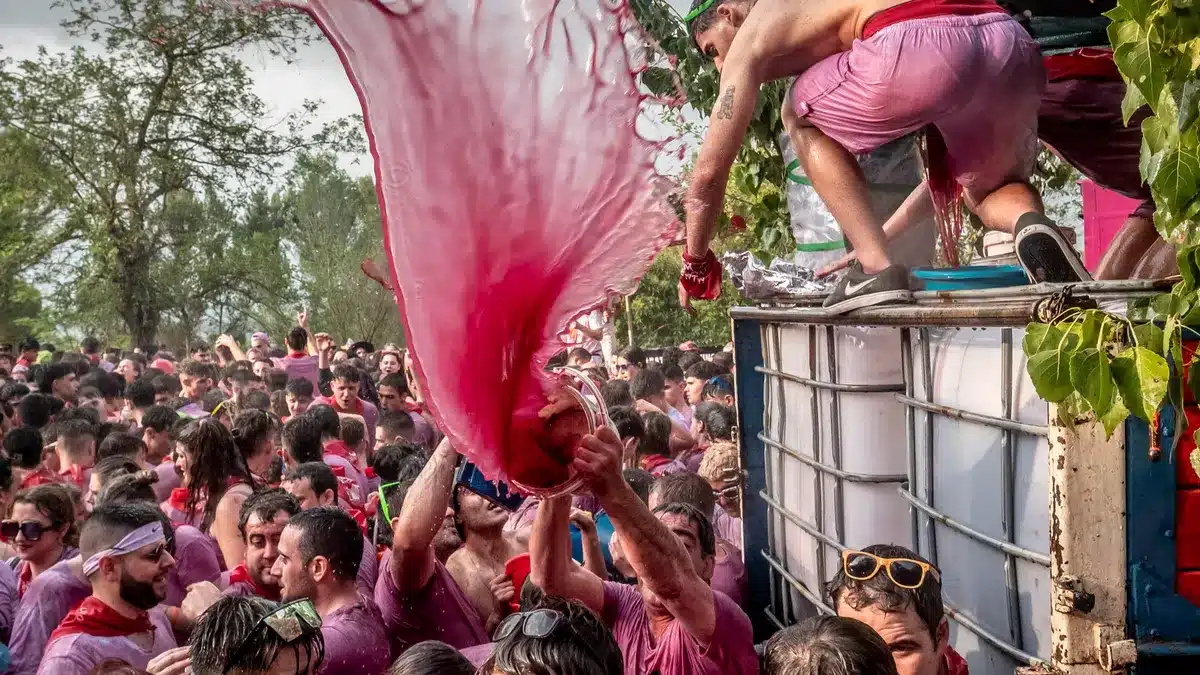
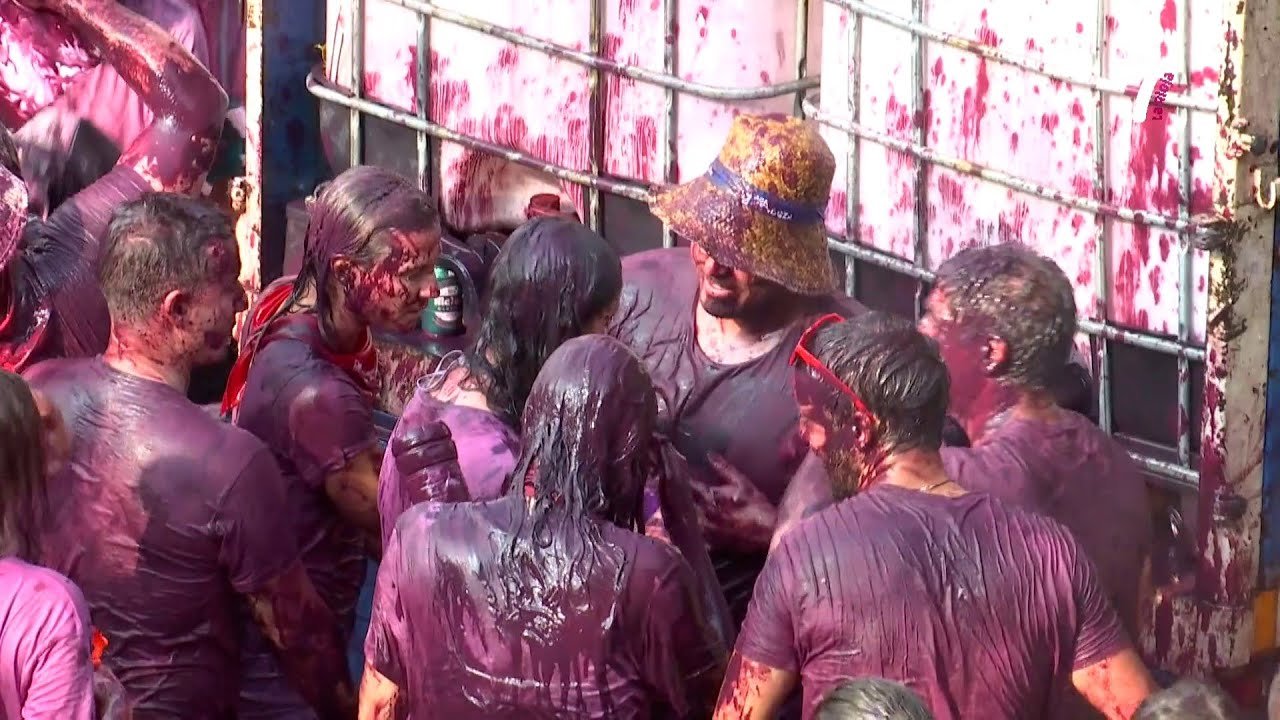
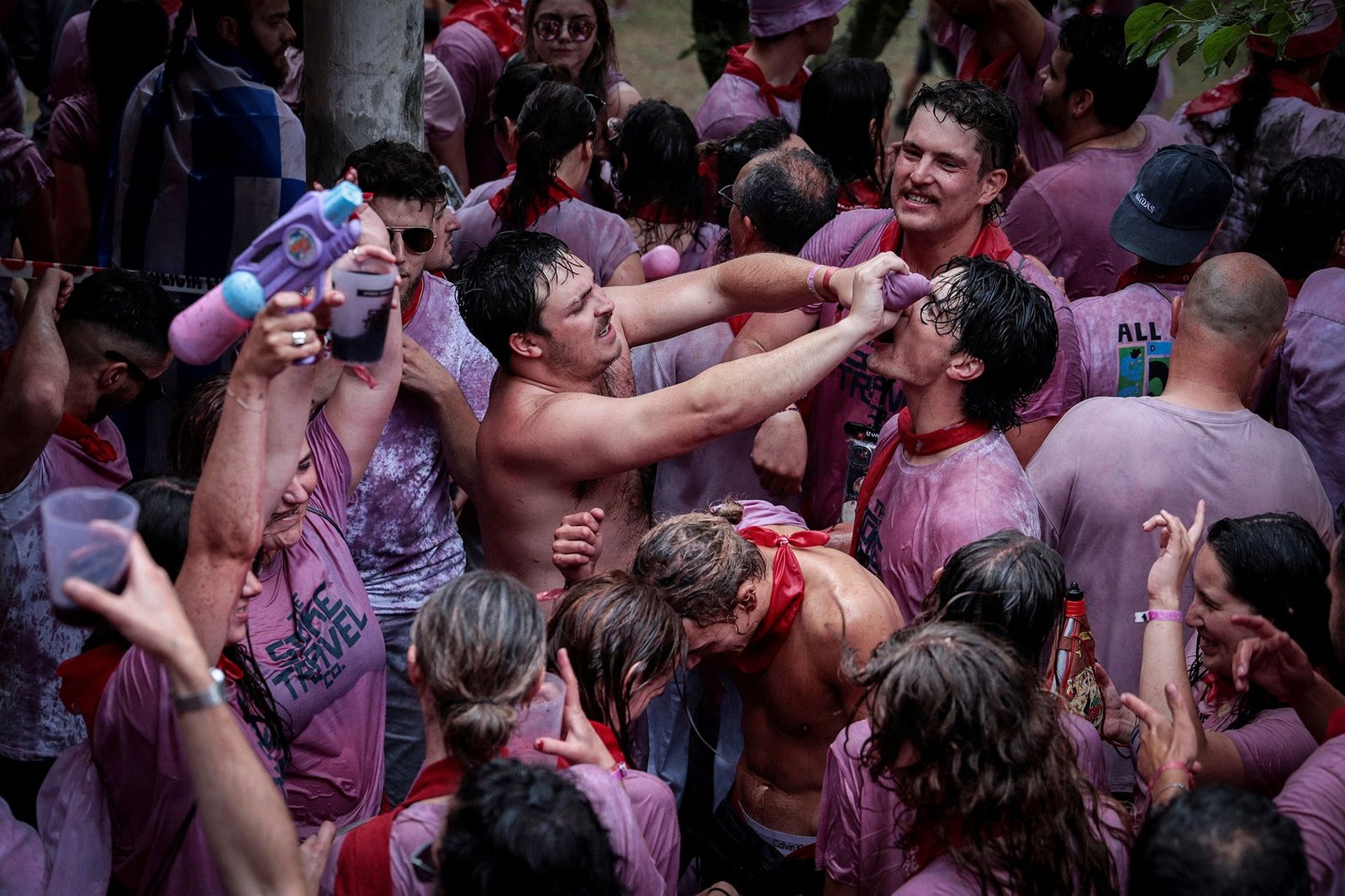
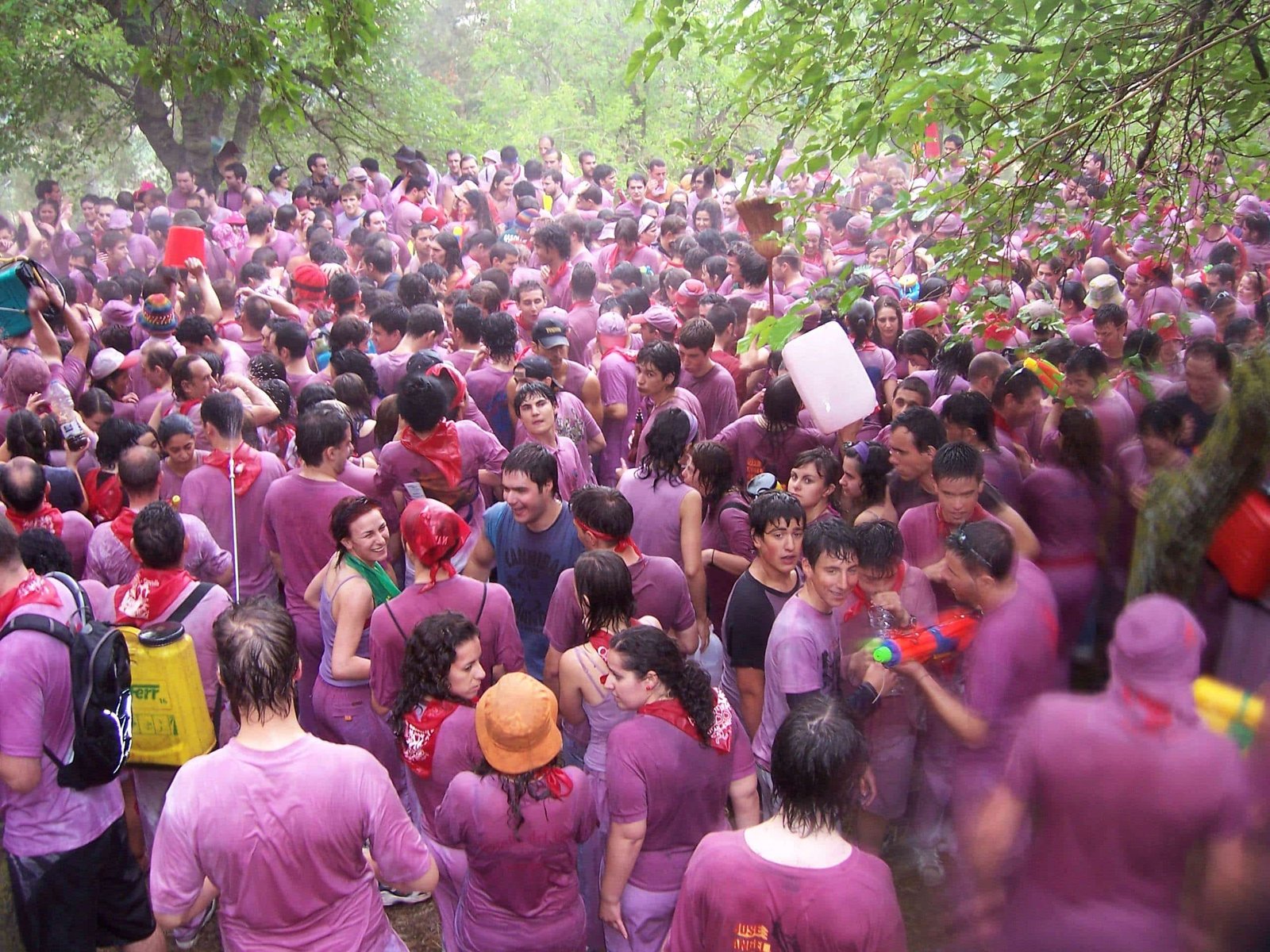
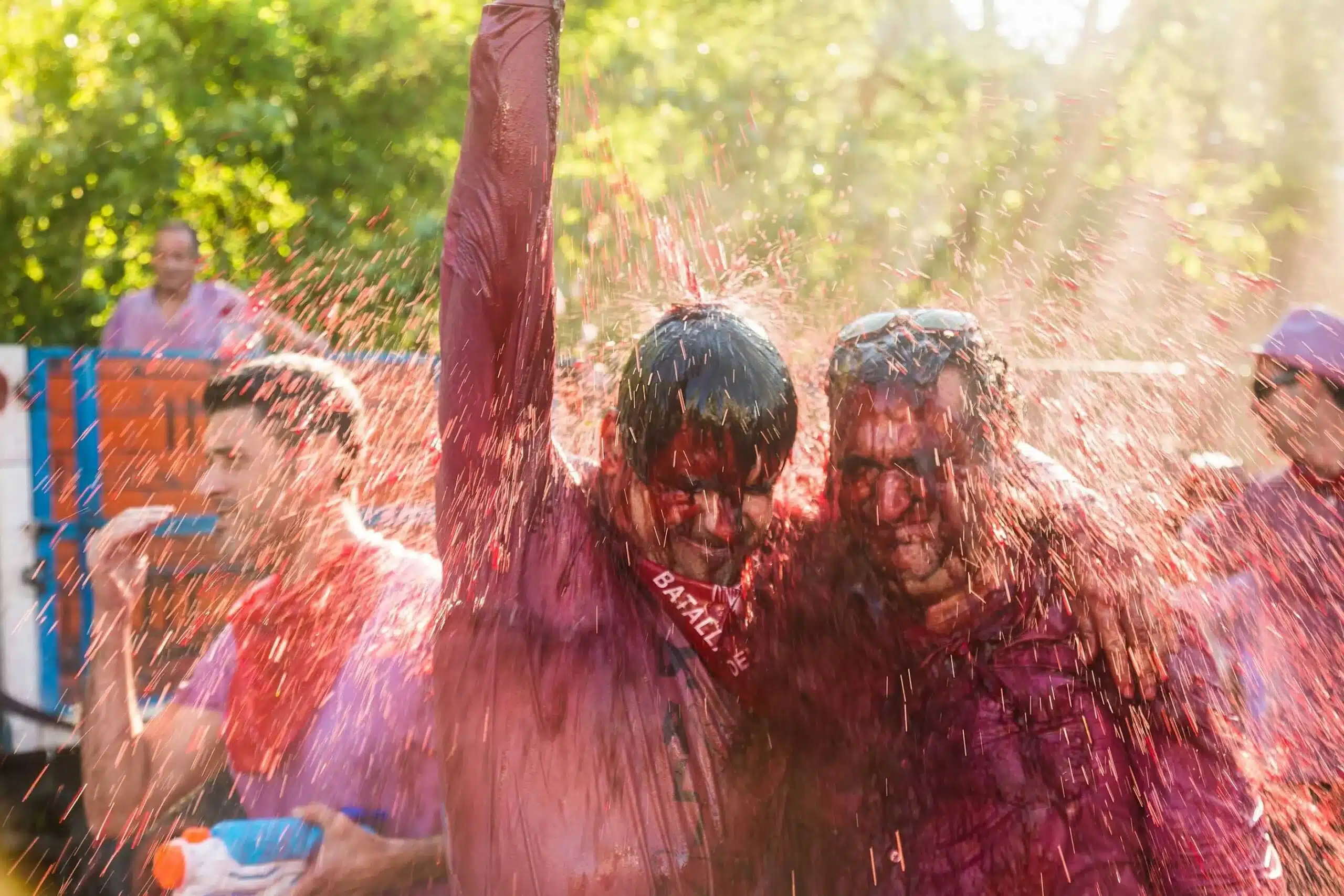
Batalla del Vino de Haro 2027 is one of Spain’s most unusual wine and cultural celebrations, bringing together Rioja wine, local tradition, pilgrimage, music, food and an enormous outdoor wine fight. Held in Haro in La Rioja, the event centres on the Riscos de Bilibio, where participants gather for a festive tradition in which wine is thrown over one another until the hillside and participants are covered in deep red and purple colour.
The celebration is closely connected with Haro’s identity as an important wine-producing centre in La Rioja. Rather than being a conventional food or wine festival focused on tastings and formal presentations, Batalla del Vino offers a highly participatory experience in which wine becomes part of a centuries-old local celebration.
The event is recognised as a Fiesta de Interés Turístico Nacional, reflecting its cultural and tourism importance. Spain’s official tourism portal describes the central activity as a peaceful battle in which two groups throw large quantities of wine at one another before participants return to Haro and gather in the Plaza de la Paz.
Enjoy Your Event Stress-Free with Spain Travelo
Planning a trip around a festival, concert, cultural celebration, or business event in Spain can be time-consuming—finding tickets, accommodation, transportation, and local information takes effort. Spain Travelo makes it easier by bringing essential event information, travel planning, and support together in one place.
The experience combines a religious pilgrimage to the San Felices area, a communal outdoor celebration, traditional music, food and wine. Visitors should therefore approach it as both a cultural tradition and a lively local festival rather than simply a wine-tasting event.
What Makes This Food Event Special
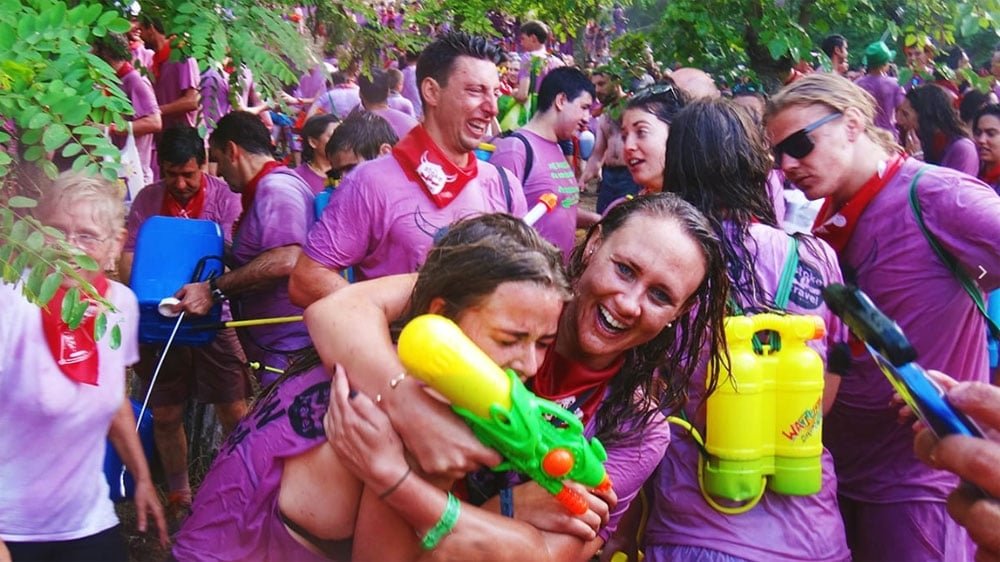
The defining feature of Batalla del Vino is its unusual relationship with wine. Wine is not simply served for tasting; it becomes the central element of a playful communal tradition in which participants use buckets, bottles, wine skins, water-style sprayers and other suitable containers to soak one another.
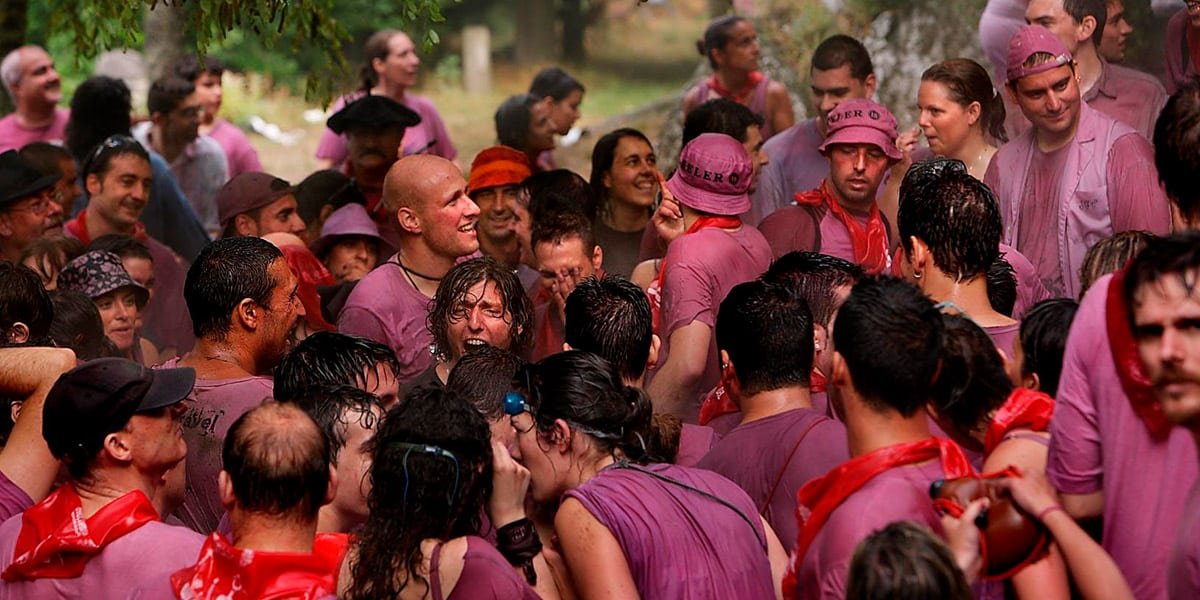
Participants traditionally dress in white clothing with a red festival scarf. The white clothing makes the transformation particularly dramatic as the celebration progresses, with participants becoming covered in red and purple wine stains.
The setting is another major part of the experience. The Riscos de Bilibio provide a natural landscape outside Haro, with the San Felices religious site forming an important part of the tradition. The celebration begins with the pilgrimage and religious element before developing into the famous wine battle. Spain’s official tourism information identifies the Riscos de Bilibio as the location of the festive confrontation.
The event is also strongly community-oriented. It attracts local residents as well as visitors from elsewhere in Spain and abroad. Recent editions have involved thousands of participants and very large quantities of wine, demonstrating the scale that the celebration can reach.
The event also connects directly with the wider Rioja wine culture. Visitors can combine the festival with visits to wineries, wine museums, traditional restaurants and other attractions throughout the Haro and Rioja Alta area.
Food, Cuisine & Specialties
Wine is naturally the central product of Batalla del Vino, but the food experience is equally connected with the social traditions surrounding the pilgrimage and outdoor celebration.
Participants commonly bring food to enjoy during the gathering, turning the area around the Riscos de Bilibio into a large communal picnic environment. The meal traditionally follows the wine battle, allowing participants to relax, eat and socialise after the most energetic part of the celebration.
The wider cuisine of Haro and La Rioja provides plenty of options for visitors extending their trip beyond the event itself. Regional dishes include patatas a la riojana, a hearty preparation of potatoes and chorizo, as well as grilled lamb chops cooked over vine prunings, known locally as chuletillas al sarmiento.
Riojan cuisine also includes vegetables, cured meats, cheeses, seasonal produce and traditional tapas. Wine is an important accompaniment to many of these dishes because Haro is one of the best-known wine centres in the Rioja region.
Visitors can also explore pintxos and tapas in Haro’s historic centre. Local establishments provide opportunities to experience Rioja wine in a more traditional tasting environment after experiencing the outdoor celebration.
Chefs, Restaurants & Food Vendors
Batalla del Vino is not organised around celebrity chefs or a formal lineup of restaurants and culinary exhibitors. Its food culture is primarily local and communal, with the celebration centred on traditional eating, wine and socialising rather than chef demonstrations.
Food available during the wider festivities can include traditional local dishes, snacks, drinks and communal picnic-style meals. The exact selection of vendors and food services can vary according to the programme announced by the municipality.
The strongest culinary experience is often found beyond the main battle itself. Haro is surrounded by wineries, wine bars, tapas establishments and restaurants where visitors can explore Rioja food and wine in a more conventional setting.
For visitors interested in wine tourism, Haro’s Barrio de la Estación is particularly important. The historic winery district contains several prominent Rioja producers and provides opportunities for cellar visits and wine-focused experiences, subject to individual winery schedules and reservations.
Rather than expecting a food festival with dozens of branded stalls, visitors should think of Batalla del Vino as a traditional community celebration embedded within one of Spain’s most important wine regions.
Food Experience
The food experience begins with the communal nature of the pilgrimage and continues through the post-battle celebrations. Participants often bring provisions for an outdoor meal and spend time eating, drinking and socialising with friends and family.
One of the most important aspects is the combination of wine with traditional Riojan food. The event provides an unusual way to experience the social role that wine has historically played in the region.
Visitors should be prepared for an informal environment. Clothing, food containers and personal belongings can become covered in wine, so the event is not comparable with a formal winery tasting or gastronomic fair.
For a more conventional culinary experience, visitors can plan winery tastings, restaurant meals and tapas visits before or after the main celebration. This makes Haro particularly suitable for travellers who want to combine an unusual cultural event with a broader Rioja food-and-wine itinerary.
The festival’s food experience is therefore best understood as a mixture of communal outdoor eating, regional cuisine and the wider gastronomic culture of Rioja.
Date & Schedule
Batalla del Vino de Haro 2027 is officially listed for June 29, 2027, coinciding with the feast of San Pedro. Spain’s official tourism portal currently confirms the event date and identifies the celebration as a Fiesta de Interés Turístico Nacional.
The main celebration takes place during the morning. The established programme begins with the gathering and departure of the romeros toward the Riscos de Bilibio, followed by the religious ceremony at San Felices and then the wine battle.
A typical programme structure includes:
- Early morning gathering of participants in Haro
- Transfer or procession toward the Riscos de Bilibio
- Pilgrimage to the San Felices area
- Religious ceremony
- Start of the traditional wine battle
- Charanga and live musical atmosphere
- Communal food and socialising
- Return of participants toward Haro
- Traditional celebrations and music in the town
- Further festivities around central Haro
Previous official municipal programmes have included buses transporting participants toward the festival area, music from local charangas, the religious ceremony, the wine battle and the return of the romeros to the Plaza de la Paz.
The exact timetable for the 2027 edition should be checked against the final programme issued by the Ayuntamiento de Haro because transport arrangements, music and supporting activities can change.
Visiting this event? Don’t miss out on these amazing activities and local experiences while you’re here.
Location & Venue
The principal location is the Riscos de Bilibio, a historic natural area associated with San Felices and located outside Haro in La Rioja, Spain.
The Riscos de Bilibio are central to the identity of the celebration because the wine battle takes place there. The location combines natural scenery with the religious and historical traditions associated with San Felices.
The event also extends into Haro itself. After the main activity at the Riscos de Bilibio, participants traditionally return to the town and gather around central public spaces including the Plaza de la Paz.
Haro is widely associated with Rioja wine and is an important destination for wine tourism. The combination of vineyards, historic wineries, traditional architecture and the annual wine battle makes the city particularly attractive to visitors interested in food and drink culture.
The main battle area is outdoors, so visitors should prepare for uneven terrain, crowds, wet clothing and exposure to the elements.
Getting to the Event
Haro is located in La Rioja in northern Spain and can be reached by road and public transport from several major cities in northern Spain.
For international visitors, Bilbao is one of the most practical major airport gateways to the Rioja region. Logroño is the regional capital and can also serve as a useful transport base for travellers exploring La Rioja.
Visitors travelling by car can reach Haro through the regional road network. On the day of the main celebration, however, traffic and parking restrictions can be more complicated than on ordinary days because of the large number of visitors travelling toward the Riscos de Bilibio.
Official municipal programmes have provided organised bus transport from Haro toward the festival area, with specific pickup arrangements and operating periods announced for the celebration. Visitors should check the latest municipal instructions rather than relying on ordinary local transport arrangements.
If travelling without a car, staying in Haro and using the official event-day transport can be more convenient than attempting to walk or find private parking close to the Riscos.
Where to Stay Nearby
Staying in Haro is the most convenient option for visitors who want to experience the event fully. The town offers hotels, guesthouses and apartments within reach of the central festival areas.
Accommodation can become highly sought after around the celebration because the event attracts visitors from outside the region. Booking early is therefore advisable, particularly for travellers who want to stay within walking distance of Haro’s centre.
Logroño provides a larger selection of accommodation and restaurants and can work well as a base for visitors combining the event with a wider Rioja trip.
Other towns in Rioja Alta can also provide alternatives for travellers with a rental car. Choosing accommodation outside Haro may provide more availability, but visitors should plan transportation carefully because the busiest event period can create congestion.
For the most convenient experience, staying in Haro allows visitors to experience both the Riscos de Bilibio celebration and the town’s evening food, wine and cultural atmosphere without relying on long-distance transport.
Things to Do Before or After the Event
A visit to Haro can easily be expanded into a broader Rioja wine trip.
The city’s historic winery district, Barrio de la Estación, is one of the main attractions for wine enthusiasts. Several established wineries operate in the area, offering tours and tastings subject to reservation and individual opening schedules.
Visitors can also explore the historic centre of Haro, including its squares, churches, traditional streets and wine-related landmarks.
The wider Rioja Alta region offers vineyards, wine routes, villages and scenic countryside. Travellers with additional time can visit nearby wine-producing towns and explore the region’s traditional wineries.
Logroño is another useful addition to a Rioja itinerary. Its historic centre is known for its tapas and pintxos culture, making it a strong destination for visitors interested in combining wine with regional cuisine.
For travellers who enjoy cultural tourism, the area also provides historic monasteries, churches, museums and traditional villages.
Restaurants & Local Food to Try
Haro is an excellent destination for visitors interested in traditional Riojan cuisine. Restaurants in the city commonly combine regional dishes with wines from local producers.
One of the dishes to try is patatas a la riojana, a traditional combination of potatoes and chorizo. Another regional speciality is chuletillas al sarmiento, lamb chops traditionally grilled over vine prunings.
Visitors should also try local cheeses, cured meats, seasonal vegetables and other Rioja products. These dishes pair naturally with the region’s red wines.
For a more casual experience, the historic centre offers tapas and pintxos bars where visitors can sample several small dishes during an evening.
Wine is central to the local dining culture, but visitors who do not drink alcohol can still find a wide selection of traditional food and non-alcoholic drinks in Haro’s restaurants and bars.
Because Batalla del Vino is a very busy local celebration, visitors should consider making restaurant reservations in advance if they want a sit-down meal around the event.
Dietary & Food Allergy Information
The festival itself is not primarily organised as a dedicated food market with standardised allergen labelling, so visitors with food allergies should take a proactive approach.
People with severe allergies should ask individual restaurants, food vendors or catering providers about ingredients and preparation methods before ordering. Cross-contact can be more difficult to control at busy outdoor celebrations than in a dedicated restaurant environment.
Visitors following vegetarian or vegan diets can generally find plant-based dishes in the wider Haro restaurant scene, although availability at temporary festival food points can vary.
Those with gluten intolerance should ask about bread, sauces, fried foods and cross-contamination before eating. Traditional Riojan cuisine includes many naturally gluten-free ingredients, but preparation methods differ between establishments.
Because the wine battle involves large quantities of liquid being thrown around, visitors with food or drink sensitivities should also consider protecting personal belongings and keeping food securely covered during the outdoor celebration.
Ticket Information
The main Batalla del Vino is a public traditional celebration and does not normally require an admission ticket. Recent practical information lists the wine battle as free to attend, while the municipality’s official programme focuses on public access to the pilgrimage, battle and town celebrations.
General admission: Free
Main wine battle: Free public access
Transport: Event-specific buses or other transport arrangements may be provided by the municipality and should be checked against the official programme.
Food and drinks: Purchased separately or brought by participants depending on the activity.
Winery visits: Separate reservations and charges may apply at individual wineries.
There is no verified 2027 admission price to convert because the main public wine battle is not a ticketed event. Visitors should be cautious about third-party packages that charge for accommodation, tours, transport or guided experiences, as these are separate commercial products rather than admission to the public festival.
Official Event Information
Batalla del Vino de Haro is an annual cultural and wine tradition organised in Haro, La Rioja. The Ayuntamiento de Haro is responsible for the local festival programme and practical arrangements, while Spain’s official tourism portal lists the event as a Fiesta de Interés Turístico Nacional.
Event: Batalla del Vino de Haro
Location: Riscos de Bilibio and Haro, La Rioja, Spain
Festival type: Wine and cultural celebration
Category: Food & Wine
Admission: Free for the main public celebration
Official website: Batalla del Vino de Haro
Official organiser: Ayuntamiento de Haro
The official festival website is batalladelvino.com, while the Ayuntamiento de Haro provides municipal programme information and practical announcements. Spain’s official tourism portal also provides an event listing and confirms the festival’s national tourism-interest designation.
Tickets Sell Out
in Minutes
Maps
Video
FAQ's
What is Batalla del Vino de Haro?
Batalla del Vino de Haro is a traditional wine celebration in which participants gather at the Riscos de Bilibio and throw wine over one another in a playful communal battle. The event combines pilgrimage, local religious tradition, music, food and Rioja wine culture, making it very different from a conventional wine tasting or food festival.
Where does the wine battle take place?
The main wine battle takes place at the Riscos de Bilibio, a historic natural area associated with San Felices outside Haro. After the main celebration, participants return toward Haro, where traditional festivities continue in central public spaces and the local community gathers for music and social activities.
What should visitors wear to the Batalla del Vino?
Participants traditionally wear white clothing with the local festival scarf, knowing that their clothes will become heavily stained with wine. Comfortable footwear and inexpensive clothing are strongly advisable because the event involves large quantities of wine being thrown throughout the outdoor celebration.
Is Batalla del Vino suitable for people who do not drink wine?
Visitors do not need to drink wine to watch or experience the cultural side of the celebration, but wine is central to the main activity and participants can expect to be surrounded by it. People who prefer not to consume alcohol can focus on the pilgrimage, music, atmosphere, food and wider attractions of Haro while taking appropriate precautions around the wine battle.
What food can visitors try in Haro?
Haro is an excellent place to experience traditional Riojan cuisine, including patatas a la riojana, grilled lamb chops cooked over vine prunings, local cheeses, cured meats and tapas. The city is also surrounded by important wineries, allowing visitors to combine regional food with Rioja wine tourism and explore the culinary traditions of La Rioja.