


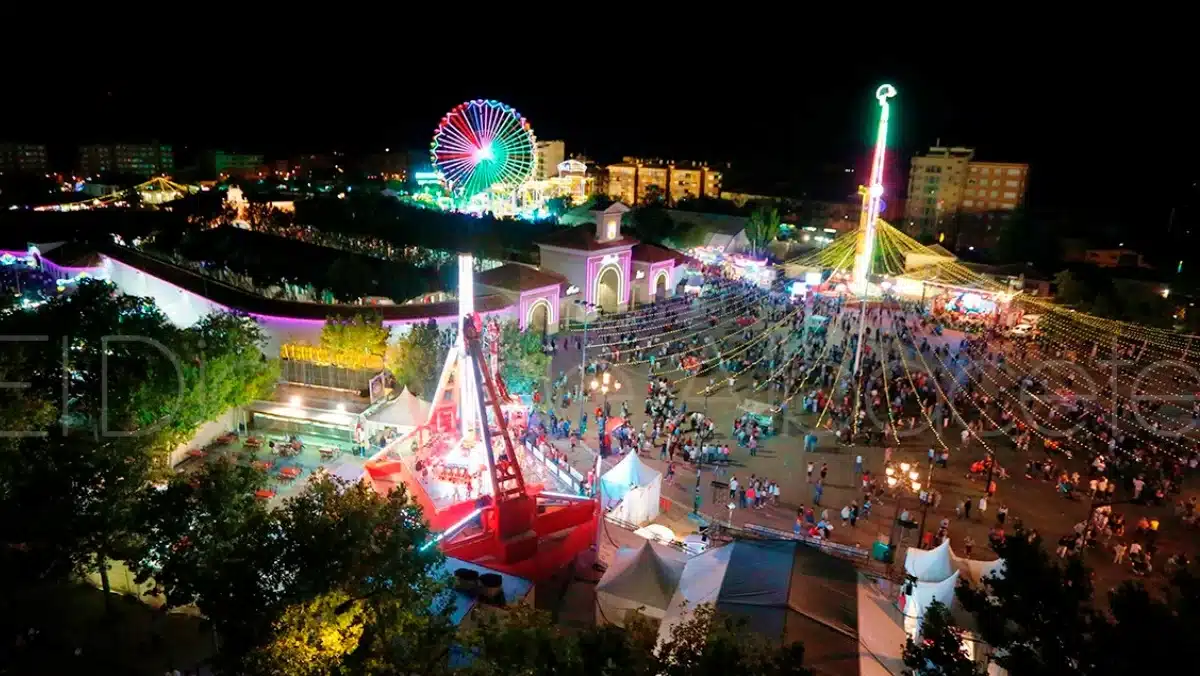
Feria de Albacete 2027 – Spain
Overview
Feria de Albacete is the principal traditional celebration of Albacete and one of the most important popular fairs in Castilla-La Mancha. Recognized as a Fiesta of International Tourist Interest, the fair combines historic traditions, religious devotion, music, gastronomy, entertainment, equestrian activities, crafts, exhibitions, theatre, sport and large-scale public celebrations.
The event has evolved considerably from its origins as a commercial and livestock fair. Today, it is a major citywide celebration that brings together local traditions and contemporary entertainment while retaining a strong connection with the cultural identity of Albacete and La Mancha.
The heart of the celebration is the historic Recinto Ferial, an unusual circular fairground commonly associated with the names “los redondeles” and “la sartén.” The distinctive structure was created in the eighteenth century and remains one of the defining architectural symbols of Albacete. Castilla-La Mancha’s official tourism website describes the venue as the social, cultural and festive center of the city during the fair.
Enjoy Your Event Stress-Free with Spain Travelo
Planning a trip around a festival, concert, cultural celebration, or business event in Spain can be time-consuming—finding tickets, accommodation, transportation, and local information takes effort. Spain Travelo makes it easier by bringing essential event information, travel planning, and support together in one place.
The atmosphere extends beyond the historic fairground. Surrounding streets and public spaces host additional stalls, entertainment, concerts, cultural activities and community events. The official Spain tourism portal describes the fair as attracting thousands of people and featuring a wide programme ranging from concerts and theatre to children’s activities, parades, bullfighting and sporting competitions.
For visitors, Feria de Albacete offers an opportunity to experience traditional Manchego culture in a lively urban setting. It is particularly suitable for travelers interested in Spanish regional traditions, food, music, crafts, popular celebrations and historic fair architecture.
Cultural Significance & Origins
The history of Feria de Albacete stretches back to the medieval period. The Portal de Cultura de Castilla-La Mancha records references to fairs in Albacete during the Middle Ages and notes documentary evidence connected with the fair by the sixteenth century.
A particularly important stage in the development of the modern fair came when King Philip V granted Albacete the privilege to hold its fair in 1710. This formal recognition helped establish the event as an important commercial institution for the town.
The permanent fairground also has considerable historical importance. The municipal authorities decided to construct the distinctive fair building in 1783. Designed by architect Josef Ximénez, the circular complex was created to provide a dedicated setting for commercial activity and was developed further afterward.
Over time, the fair moved away from its predominantly commercial and livestock character and became an increasingly popular cultural celebration. The transformation continued during the twentieth century as entertainment, tourism and popular festivities became central components.
The celebration received the designation of Fiesta of International Tourist Interest in 2008, confirming its national and international cultural importance.
Its continuing importance comes from the way it connects Albacete’s commercial history with religious traditions, Manchego identity, music, food, craftsmanship and community life.
Traditions, Rituals & Customs
Feria de Albacete combines several traditions rather than following a single ritual. Religious observances, civic ceremonies, parades, traditional dress, equestrian activities and popular entertainment all contribute to the character of the celebration.
Opening parade
The Cabalgata de Apertura is one of the most recognizable traditional events. Floats, musical groups, brass bands and community organizations take part, while many participants wear traditional Manchego clothing. Spain’s official tourism portal identifies the opening parade as the beginning of the celebrations.
Opening of the fairground
The opening of the historic fairground is another important symbolic moment. The distinctive Puerta de Hierros provides a ceremonial entrance into the traditional fair environment.
Devotion to the patron saint
The fair is held in honor of the Virgen de los Llanos, patron saint of Albacete. Religious activities connected with the patron saint form an important part of the cultural identity of the celebration.
Floral offering
The floral offering to the Virgen de los Llanos is one of the best-known religious traditions associated with the fair.
Traditional clothing
Traditional Manchego costumes are particularly visible during the opening parade and other folkloric activities, helping preserve regional identity.
Equestrian traditions
Horse and carriage displays and parades provide another connection with the historic agricultural and rural traditions of Castilla-La Mancha.
What to Expect at the Festival
Visitors should expect a very large and energetic celebration rather than a small local fair. The historic Recinto Ferial becomes the center of activity, while additional events take place in surrounding streets, public spaces and cultural venues.
The fairground contains food and drink stalls, traditional craft stalls, entertainment, children’s attractions, commercial stands and social spaces. The official Spain tourism portal notes that stalls can remain active throughout the day and into the early hours, contributing to the fair’s continuous atmosphere.
Music is another major part of the experience. Concerts can range from mainstream Spanish performers to local groups, rock and pop acts, orchestras and cultural performances.
Visitors can also encounter theatre, folklore, sporting events, exhibitions, children’s activities and equestrian displays. The programme is broad enough that different age groups can find activities suited to them.
The atmosphere becomes particularly lively in the evening, when the fairground’s illumination, music, food stalls and entertainment create a different experience from the daytime programme.
The scale of the celebration is one of its defining characteristics. Spain’s official tourism information emphasizes that the fair attracts thousands of visitors and that the fairground remains busy during both daytime and nighttime hours.
Date & Schedule
Feria de Albacete 2027 is scheduled for:
- September 7–17, 2027
Spain’s official tourism portal lists the 2027 edition as a ten-day celebration and confirms Albacete as the host city.
The detailed 2027 programme should be checked closer to the event because individual concert times, theatre performances, sporting competitions, children’s activities, bullfighting events and other activities are published separately.
The traditional programme generally includes:
- Opening parade and ceremonial activities
- Religious events dedicated to the Virgen de los Llanos
- Concerts and live music
- Theatre and performing arts
- Traditional folklore
- Horse and carriage activities
- Food and drink stalls
- Children’s entertainment
- Craft exhibitions and sales
- Sporting competitions
- Bullfighting-related events
- Exhibitions and cultural activities
Visiting this event? Don’t miss out on these amazing activities and local experiences while you’re here.
Main Events & Programme
Feria de Albacete has a programme that extends across multiple cultural and entertainment categories.
Cabalgata de Apertura
The opening parade is one of the most important public spectacles. Floats, bands, musical groups, community organizations and people in traditional Manchego dress move through the city, creating a ceremonial introduction to the fair. Spain’s official tourism portal describes the parade as potentially lasting several hours.
Puerta de Hierros ceremony
The ceremonial entrance to the Recinto Ferial is central to the beginning of the festivities. Passing through the historic entrance gives visitors access to the traditional fairground known for its distinctive circular design.
Religious programme
Religious celebrations dedicated to the Virgen de los Llanos provide the spiritual foundation of the fair. The floral offering is particularly important and reflects the relationship between the civic celebration and the patron saint of Albacete.
Concerts
Music is a major component of the modern programme. Recent editions have included performances at venues such as the Caseta de los Jardinillos and Carpa Viva, with a mixture of established Spanish performers, bands, DJs and emerging artists. Recent programmes also included free concerts alongside separately ticketed performances.
Theatre and performing arts
The wider programme includes theatre performances, street entertainment, comedy and cultural performances. Recent programmes have used venues including Teatro de la Paz and Teatro Circo.
Children’s activities
Families can find children’s shows, entertainment, attractions and dedicated cultural activities. The fairground also contains children’s amusement attractions.
Sport
Sporting activities form another part of the programme, with different competitions and community sports activities taking place during the celebration.
Bullfighting
Bullfighting has historically formed part of the Feria de Albacete programme, with events staged at the city’s bullring. Visitors interested in these activities should consult the official programme for the relevant edition.
Traditional Dress, Arts & Crafts
Traditional Manchego clothing is strongly associated with Feria de Albacete, particularly during the opening parade and folkloric activities.
Traditional women’s clothing can include regional dresses, aprons, shawls and characteristic accessories, while men’s Manchego dress traditionally incorporates items such as trousers, waistcoats, shirts and regional headwear.
The fair also provides a showcase for craftsmanship from Albacete and the surrounding region. The official Spain tourism portal specifically identifies stalls selling traditional crafts from Albacete alongside food, clothing, toys and jewelry.
Albacete also has a strong knife-making tradition. The 2026 fair programme specifically highlighted cuchillería, or cutlery and knife craftsmanship, among the cultural traditions associated with the fair.
Another important craft component is ARTESANA, a craft-focused fair held at the Ejidos of the Recinto Ferial. The official IFAB website describes it as a showcase for traditional trades, handmade products, demonstrations and creative work.
Visitors can therefore encounter both historical regional crafts and contemporary handmade products during the wider fair period.
Traditional Food & Local Specialties
Food is one of the strongest elements of Feria de Albacete.
The fairground contains numerous food and drink stalls where visitors can sample local specialties alongside broader Spanish fair food.
Miguelitos
Miguelitos are among the best-known sweets associated with the province of Albacete. These delicate pastries are particularly popular with cider and are specifically mentioned by Spain’s official tourism information as a typical local combination at the fair.
Manchego cuisine
Visitors can also look for regional dishes based on ingredients and recipes associated with Castilla-La Mancha, including meats, cheeses, vegetables and traditional stews.
Manchego cheese
Cheese from La Mancha is one of the region’s best-known food products and is widely available throughout Albacete.
Local wines
Castilla-La Mancha is one of Spain’s major wine-producing regions, making regional wines a natural part of the food experience.
Fairground food
Beyond traditional dishes, visitors can expect snacks, sweets, drinks and casual foods served from temporary stalls around the fairground.
Location & Festival Areas
The principal venue is the historic Recinto Ferial de Albacete in Albacete, Castilla-La Mancha, Spain.
The fairground is famous for its unusual circular design, which has earned it the popular nickname “la sartén,” meaning “the frying pan.” The structure consists of concentric circular areas connected by a longitudinal passage.
The official Castilla-La Mancha tourism website describes the venue as a unique architectural complex and a major symbol of Albacete’s identity. It also notes that the present fairground originated in the eighteenth century and contains the central modernist Templete.
The complex includes:
- Puerta de Hierros
- Longitudinal access passage
- Concentric circular areas
- Covered galleries
- Central Templete
- Commercial and hospitality spaces
The festival also extends beyond the physical fairground. Concerts, cultural activities, exhibitions, sports and neighborhood programmes can take place at other locations around Albacete.
Getting to the Festival
Albacete is centrally positioned within Castilla-La Mancha and has good road and rail connections with other Spanish cities.
By train
Albacete railway station provides an important connection to the Spanish rail network, including high-speed services. This makes rail one of the most convenient options for visitors traveling from larger Spanish cities.
By bus
The city is served by regional and long-distance bus routes connecting it with surrounding towns and major destinations.
By car
Albacete can be reached by road from Madrid, Valencia, Murcia and other major cities. Driving provides flexibility, although parking around the fairground can become more difficult during the busiest periods.
Within Albacete
Once in the city, visitors can reach the historic fairground and central areas by walking, taxi and local public transport. Because many activities are concentrated within the city, staying centrally can reduce the need for a car.
Visitors should check temporary traffic restrictions and public transport arrangements before traveling.
Where to Stay Nearby
Accommodation in central Albacete is the most convenient choice for visitors who want easy access to the fairground and city-center activities.
Hotels around the central district can provide convenient walking access to restaurants, shops and cultural attractions. Apartments and guesthouses provide additional choices for longer stays or groups.
Because Feria de Albacete attracts thousands of visitors, accommodation can become highly competitive. Booking well in advance is advisable.
Visitors who cannot find suitable accommodation in the immediate center can also consider areas farther from the fairground while using public transport or taxis.
For travelers prioritizing convenience, accommodation within walking distance of the Recinto Ferial is particularly useful because evening activities can continue late and central parking may be busy.
What Visitors Can Participate In
Visitors can experience much of the fair without needing to be part of a formal organization.
Explore the fairground
The Recinto Ferial is the central place to experience the traditional architecture, stalls, food, entertainment and social atmosphere.
Attend concerts
Depending on the individual performance, visitors may find free concerts as well as performances requiring separate admission. Recent programming demonstrates that both formats can coexist within the fair.
Enjoy traditional food
Visitors can sample regional sweets, Manchego products, local dishes and drinks from stalls and restaurants.
Watch parades
The opening parade and horse and carriage activities provide some of the most visually distinctive public experiences.
Visit craft displays
Visitors can purchase handmade products and observe traditional craftsmanship, particularly through craft-focused activities associated with the fair.
Join family activities
Children can enjoy attractions, performances and activities included in the broader programme.
Things to Do Before or After the Festival
Albacete has several cultural attractions that can easily be incorporated into a longer visit.
The Catedral de San Juan Bautista is one of the city’s most important landmarks. Its architecture reflects different historical periods because construction and modification continued over several centuries. Spain’s official tourism portal highlights the cathedral as a major attraction.
The Museo de Albacete provides another opportunity to learn about the region’s history, archaeology and artistic heritage.
Visitors can also explore the city’s parks and public spaces, including Parque Abelardo Sánchez.
For travelers with additional time, the province offers natural and cultural excursions. Spain’s official tourism information highlights the Montes de Chinchilla, Lagunas de Ruidera, Sierra de Alcaraz and the source of the Mundo River as nearby regional attractions.
Historic towns such as Chinchilla and Almansa can also be considered for day trips.
Local Food & Restaurants
Albacete has a strong regional dining culture, with traditional restaurants, tapas bars, bakeries and modern Spanish establishments.
Visitors looking for local cuisine should consider dishes and products associated with Castilla-La Mancha rather than limiting themselves to general Spanish tapas.
Traditional Manchego dishes
Local restaurants provide opportunities to try regional recipes based on meat, vegetables, legumes and seasonal ingredients.
Miguelitos
These pastries are especially worth seeking out in local bakeries and confectionery shops.
Manchego cheese
Look for restaurants and shops offering authentic Manchego cheese from the surrounding region.
Local wine
Regional wines provide a natural accompaniment to Manchego cuisine.
During the fair, visitors can also eat directly within the fairground, where temporary stalls and casetas create a more casual dining atmosphere.
Restaurants near the center can become busy, especially around the main fairground, so reservations are recommended for popular establishments.
Ticket Information & Access
There is no general admission ticket required simply to enter the Feria de Albacete’s public fair atmosphere. The fair is fundamentally a citywide public celebration, with the Recinto Ferial and surrounding areas forming an open festive environment.
However, individual activities may have their own admission requirements.
Recent editions have included both free and ticketed concerts. For example, the recent programme at Carpa Viva included multiple performances advertised as free, while other concerts at Caseta de los Jardinillos were presented as separately ticketed events.
The wider programme can also include theatre, bullfighting, special performances and other activities with their own ticket arrangements.
As an example of previous-edition pricing, a recent Teatro Circo event within the fair programme was listed at €5, equivalent to approximately $6 at the October 6, 2026 ECB reference rate of €1 = $1.1269.
This should not be treated as the 2027 price for any particular event. Individual ticket prices vary according to the activity, venue and performer, and the 2027 programme should be checked when official sales open.
Official Event Information
Official event website: http://www.feriadealbacete.net/
City: Albacete
Region: Castilla-La Mancha
Country: Spain
Event status: Fiesta of International Tourist Interest
Main festival venue: Recinto Ferial de Albacete
The official Spain tourism portal confirms Feria de Albacete as a major celebration of Albacete and identifies the event as a Fiesta of International Tourist Interest.
For historical information, the Portal de Cultura de Castilla-La Mancha provides detailed documentation about the origins and development of the fair, including the formal privilege granted to Albacete and the development of the historic fairground.
Visitors should use the official municipal and tourism channels for the final programme, individual event times, access arrangements and any changes affecting the fairground.
Tickets Sell Out
in Minutes
Maps
Video
FAQ's
What is Feria de Albacete?
Feria de Albacete is the principal traditional celebration of Albacete and one of Castilla-La Mancha's major popular fairs. It combines religious traditions, concerts, parades, gastronomy, crafts, theatre, sport, children's activities and entertainment around the historic Recinto Ferial.
What is the Recinto Ferial de Albacete?
The Recinto Ferial is the historic heart of the celebration and is famous for its unusual circular design. Created in the eighteenth century, it contains concentric rings, covered galleries, a longitudinal access passage and the central modernist Templete.
What traditions are associated with Feria de Albacete?
Important traditions include the opening parade, Manchego regional dress, devotion to the Virgen de los Llanos, the floral offering, horse and carriage displays, traditional food and regional crafts. The fair also preserves Albacete's historic links with commerce, livestock and craftsmanship.
Is Feria de Albacete suitable for families?
Yes, the celebration has extensive family-oriented programming alongside its adult entertainment. Recent programmes have included children's performances, attractions, cultural activities and dedicated daytime events, while the wider fairground provides entertainment for different age groups.
Does Feria de Albacete have concerts and cultural performances?
Yes, music and performing arts are major parts of the wider programme. Recent editions have included concerts, theatre, festivals, orchestras, comedy, folklore, cultural exhibitions and performances across several venues, with some activities free and others requiring separate admission.