
Moros y Cristianos de Alcoy Festival 2027 – Spain
Overview
Moros y Cristianos de Alcoy, officially known as the Fiestas de Moros y Cristianos de Alcoy-Alcoi, is one of Spain’s most distinctive historical and traditional celebrations. Held in honor of Saint George (San Jorge), the festival transforms Alcoy in Alicante province into a huge theatrical recreation of medieval conflict, combining elaborate costumes, marching bands, religious ceremonies, parades, gunpowder displays and carefully preserved community traditions.
The celebration has been held since the 16th century and commemorates the battle associated with Alcoy in 1276. According to the local tradition, the town was attacked by troops associated with the Muslim leader Al-Azraq, and Saint George appeared during the confrontation, helping the Christian side achieve victory. Alcoy subsequently adopted Saint George as its patron and developed a major annual celebration around his memory.
The festival is officially recognized as a Fiesta of International Tourist Interest. Spain’s official tourism organization describes the Alcoy celebration as the most internationally renowned example of the Moros y Cristianos tradition and notes its importance within the Valencian Community.
Enjoy Your Event Stress-Free with Spain Travelo
Planning a trip around a festival, concert, cultural celebration, or business event in Spain can be time-consuming—finding tickets, accommodation, transportation, and local information takes effort. Spain Travelo makes it easier by bringing essential event information, travel planning, and support together in one place.
A central feature is the participation of 28 filaes, organized groups whose members take an active role in the festival. Each filà has its own social headquarters, identity and distinctive clothing, contributing to the extraordinary variety seen during the parades.
For visitors, the event is much more than a parade. It is a combination of historical pageantry, religious devotion, local identity, music, gastronomy and community participation.
Cultural Significance & Origins
The roots of the celebration are connected with the medieval history of Alcoy and the wider Valencian tradition of commemorating conflicts between Muslim and Christian forces during the period of the Reconquista.
According to the traditional account preserved by Spain’s official tourism information, the battle remembered by the festival took place in 1276. Alcoy was located in a frontier environment where clashes were frequent. On 23 April 1276, troops associated with Al-Azraq attempted to attack the town. Local tradition says that Saint George appeared during the battle and helped the Christian forces defeat the attackers. The citizens subsequently recognized him as their patron and promised to honor him through an annual celebration.
Although the historical events and the religious legend are interpreted through the traditions of the festival, the modern celebration is best understood as a highly developed cultural performance rather than a literal reconstruction of medieval warfare. The streets, costumes, music and ceremonial acts combine to create a shared historical narrative that has become an important part of Alcoy’s identity.
The festival’s roots extend back to the 16th century, making it one of the oldest established celebrations of its kind in the region.
Its cultural importance was formally recognized when the celebration received International Tourist Interest status in 1980. It is also recognized as Intangible Cultural Heritage of Cultural Interest within the Valencian Community. The Associació de Sant Jordi is responsible for organizing the festival on behalf of the city.
Traditions, Rituals & Customs
The festival follows a highly structured tradition known as the Trilogía Festera, or Festive Trilogy. Its central structure revolves around the Entradas, the religious celebrations dedicated to Saint George and the Alardo.
The Filaes
The filaes are fundamental to the identity of the celebration. There are currently 28 filaes, each with its own social headquarters, costume design and traditions. Members are connected not only through participation but also through friendship, family and community relationships.
The Entradas
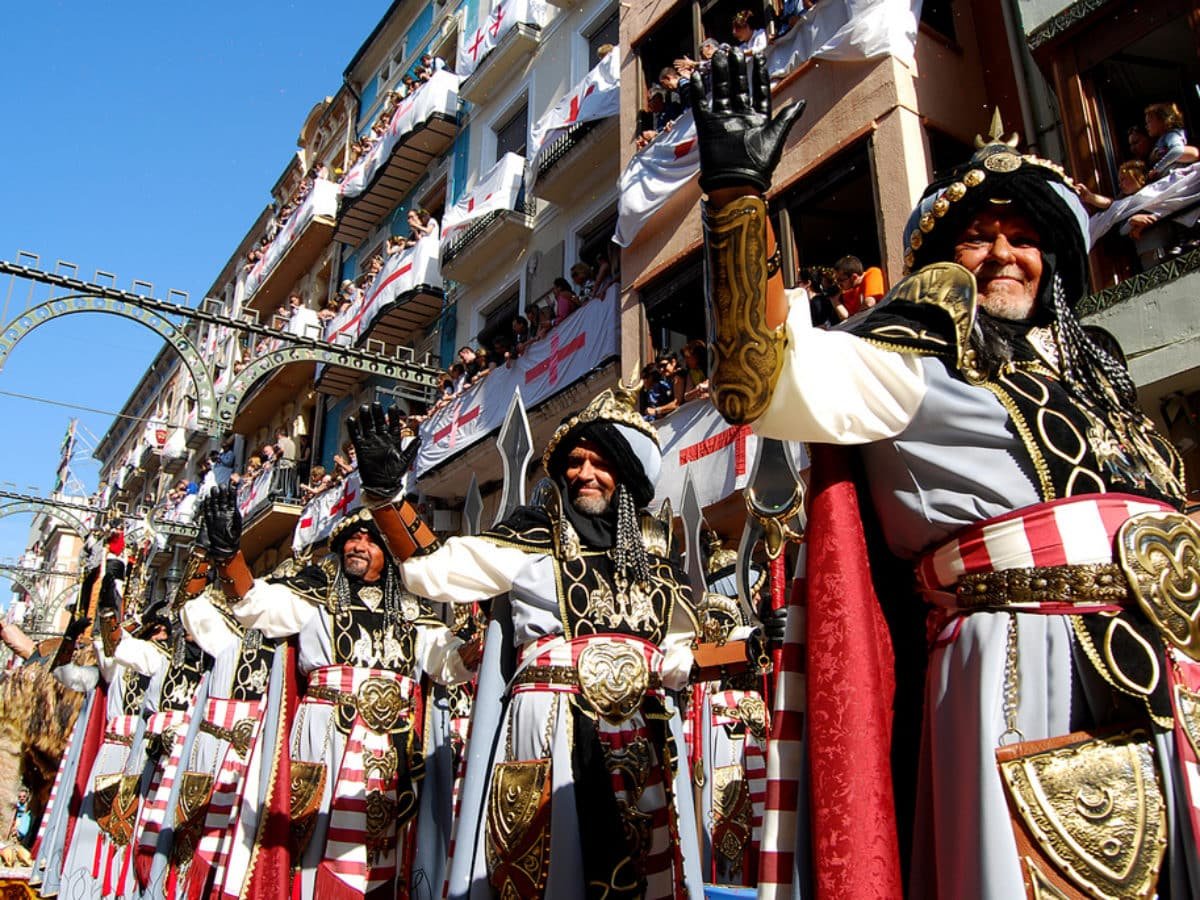
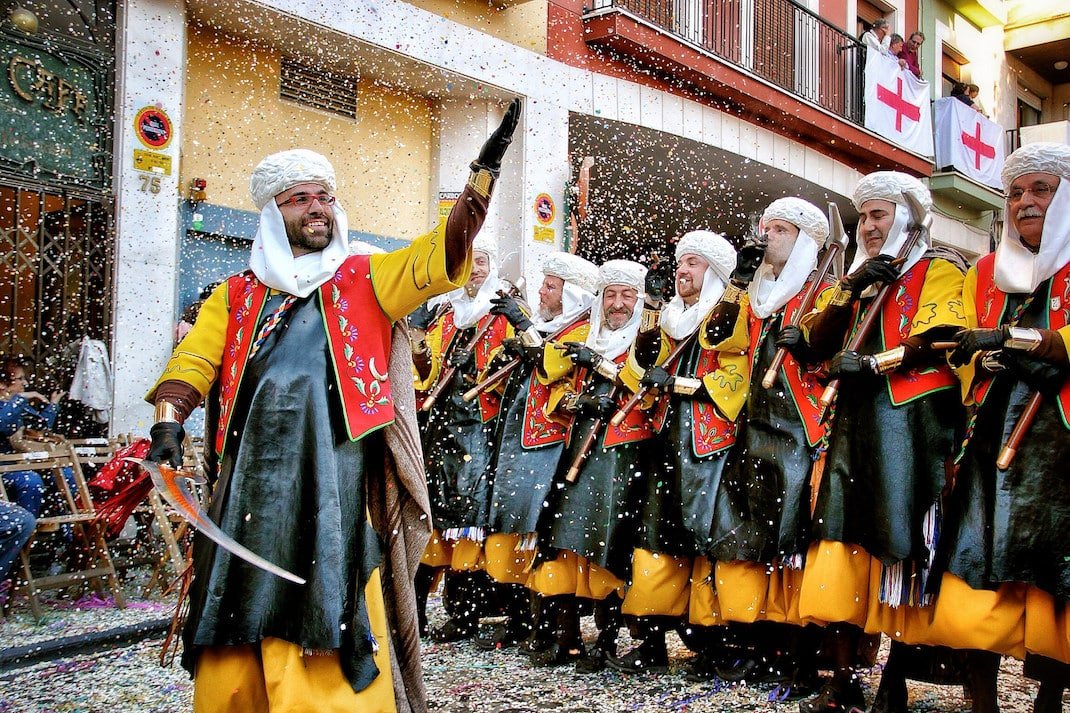
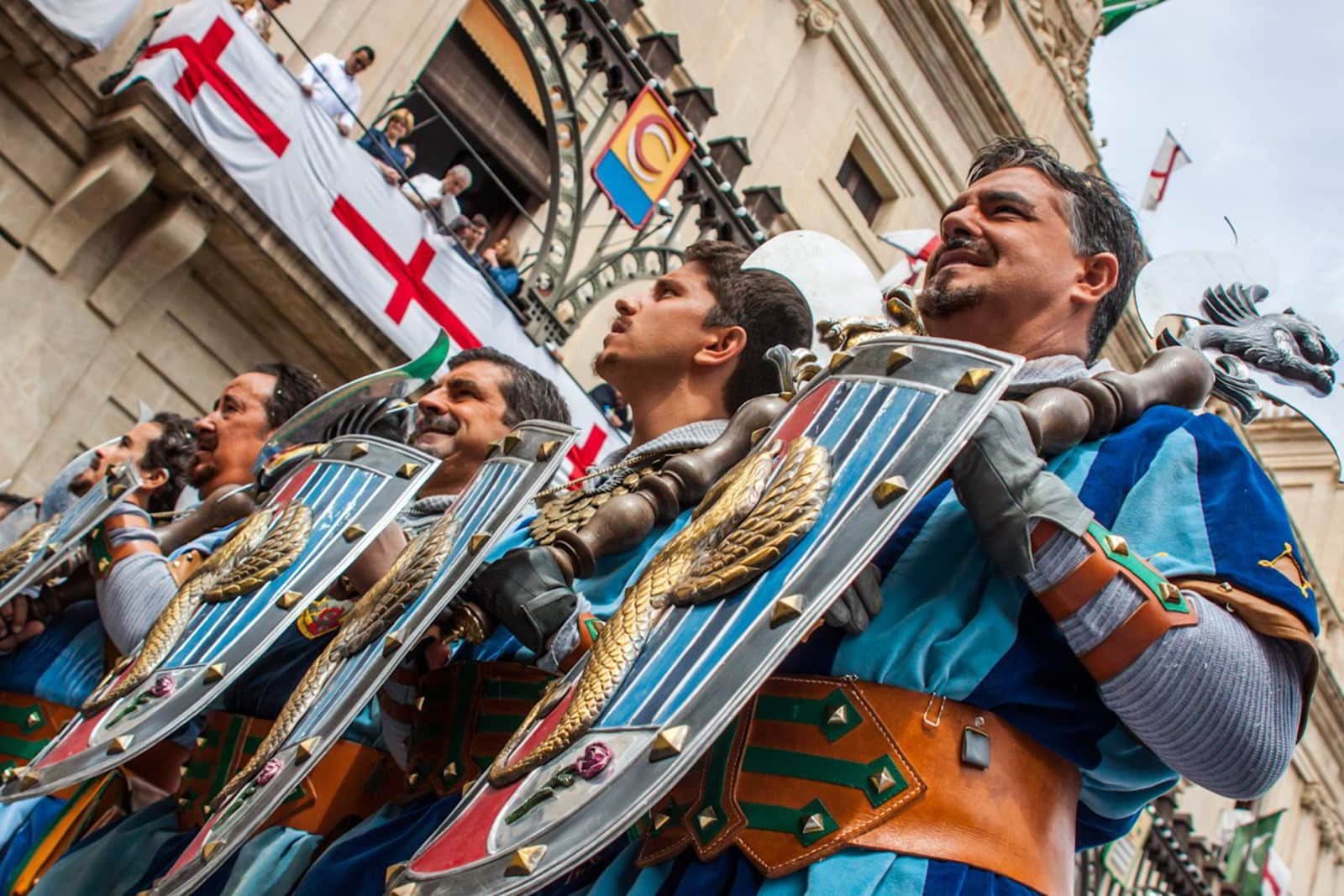
The Entradas are the major Moorish and Christian parades. The Christian side presents its formations first, followed by the Moorish side. Each group combines costumes, banners, musicians and carefully choreographed formations.
Religious ceremonies
Religious traditions dedicated to Saint George form another essential part of the festival. The processions include the participation of important festive figures, filaes and the Sant Jordiet, a child who represents Saint George and has a particularly important symbolic role.
The Alardo
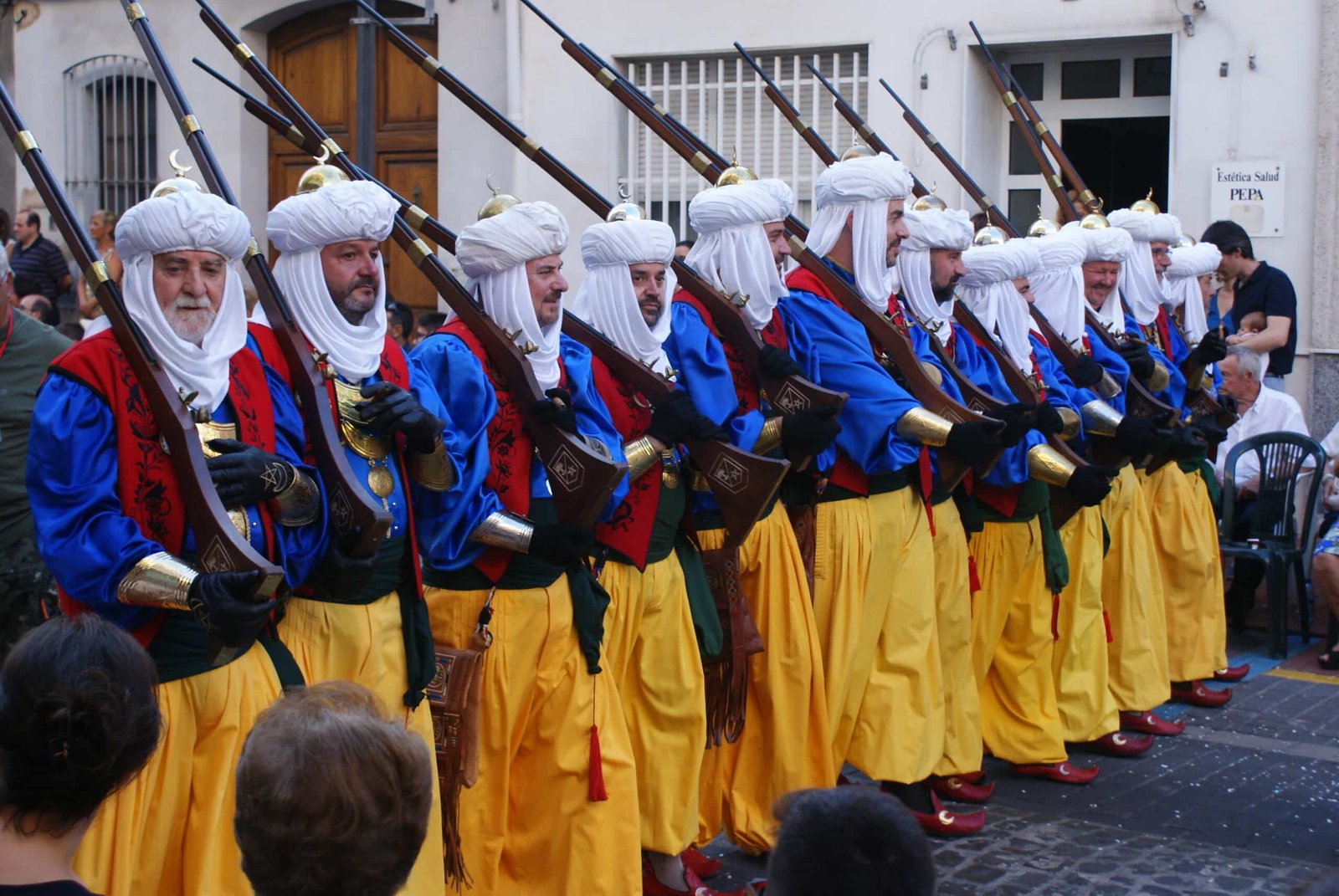
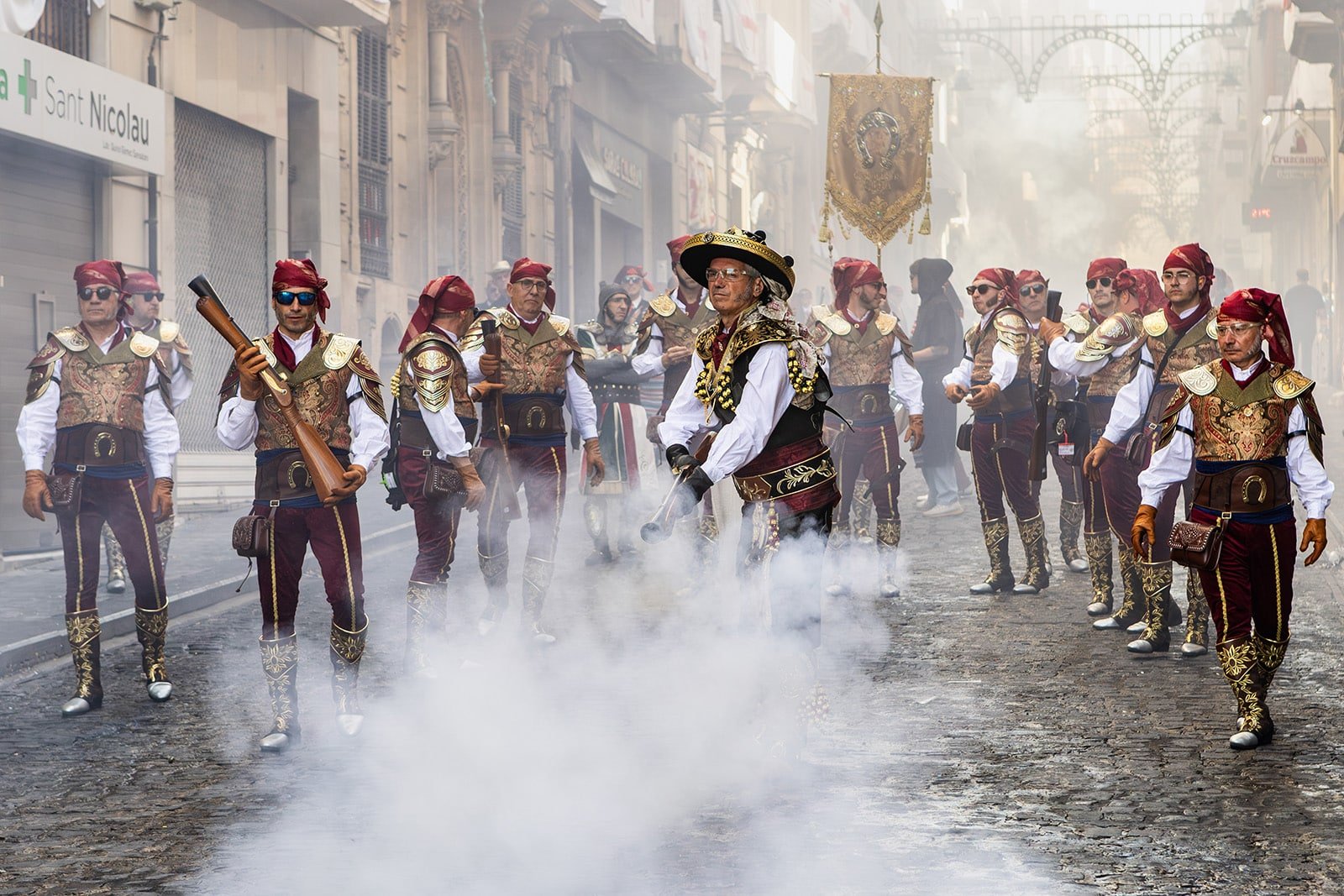
The Alardo represents the battle itself and is characterized by the firing of traditional muzzle-loading firearms and the movement of the opposing sides through the city. It is one of the most dramatic and distinctive aspects of the celebration.
Music
Music is inseparable from the festival. Marches accompany the different filaes, while bands help establish the distinctive atmosphere of the Entradas and other ceremonies. The combination of costumes, synchronized movement and live music is one of the reasons the festival has such a powerful visual and acoustic character. Spain’s tourism authority specifically identifies music, gunpowder and colorful costumes as defining elements of the wider Moros y Cristianos tradition.
What to Expect at the Festival
Visitors can expect Alcoy’s historic center to become a large-scale festive environment centered on public streets, squares and the principal parade routes.
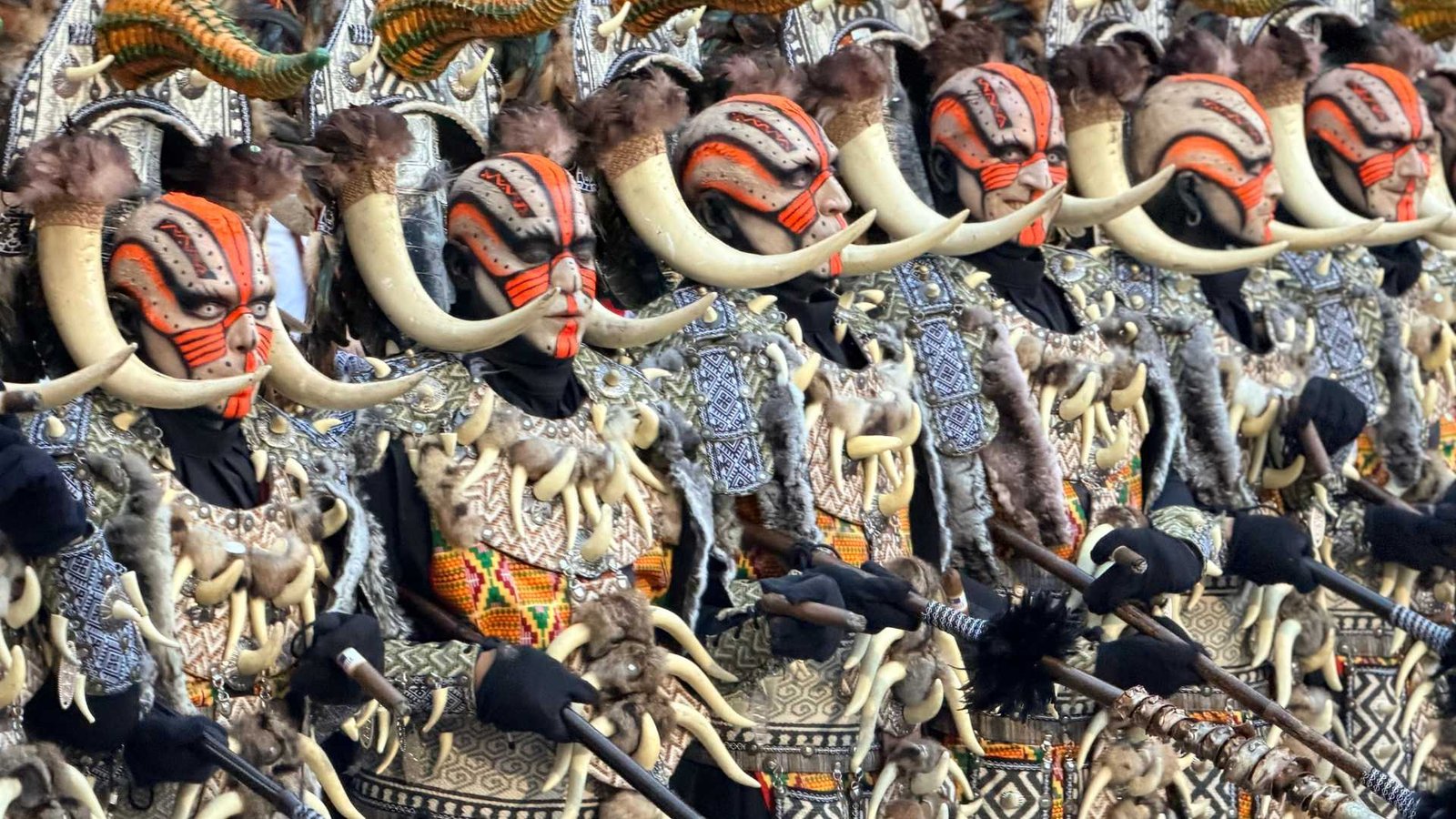
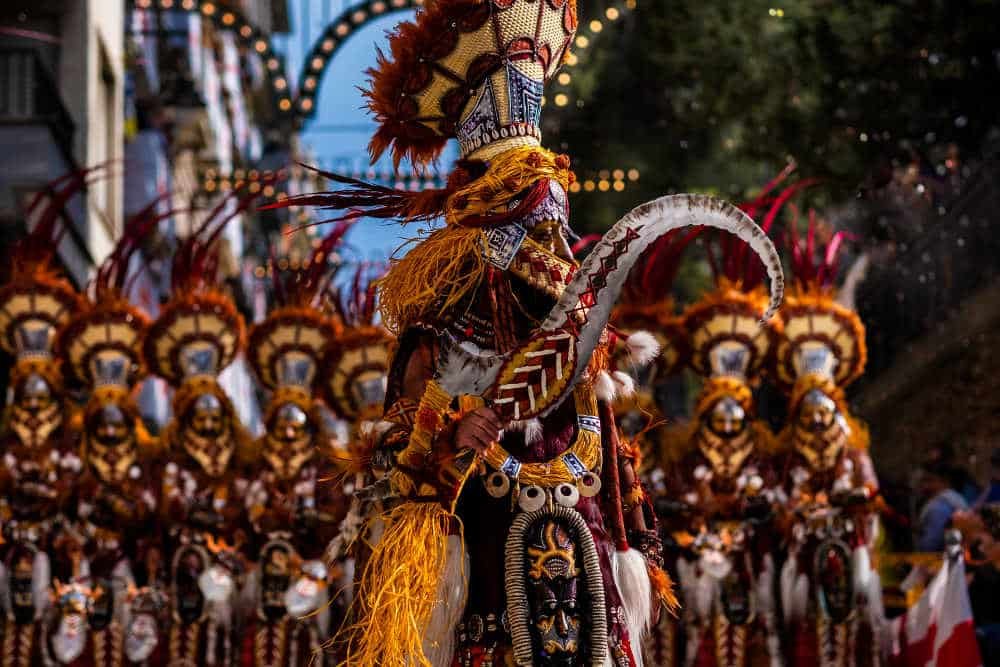
The most visually striking experience comes from the Entradas. The Christian and Moorish formations feature highly elaborate costumes, banners, musicians, horses, decorative elements and large ceremonial entourages. The Moorish parade is particularly associated with elaborate Eastern-inspired visual designs, while the Christian side often emphasizes medieval military imagery.
The festival also has a strong theatrical dimension. Important figures such as captains and standard-bearers lead their respective groups, while embassies and battle scenes help develop the narrative of the celebration.
The atmosphere changes considerably depending on the activity. A parade can be colorful and musical, a religious procession more solemn, while the Alardo is dominated by gunpowder, noise and simulated combat.
Visitors should therefore expect crowds, loud sounds and temporary changes to pedestrian and road access in the center of Alcoy.
Date & Schedule
The officially published 2027 festival dates are:
- April 24, 2027 – April 26, 2027
Spain’s official tourism portal lists these dates for the Fiestas de Moros y Cristianos de Alcoy-Alcoi.
The traditional three-part structure is expected to organize the principal celebrations:
- Day of the Entradas – Christian and Moorish parades
- Day of Saint George – religious ceremonies and processions
- Day of the Alardo – battle representation, embassies and the concluding appearance of Saint George
The exact 2027 programme and individual times should be checked with the Associació de Sant Jordi as the celebration approaches. The organization publishes the detailed programme and seating information for the festival.
Visiting this event? Don’t miss out on these amazing activities and local experiences while you’re here.
Main Events & Programme
The principal programme revolves around several major acts.
Christian Entrance
The Christian Entrance presents the Christian filaes in a large organized parade. Participants move through the central route accompanied by festive marches, banners and elaborate costumes.
The parade traditionally begins from the Partidor area and proceeds through important central streets toward Plaça d’Espanya and other parts of the official route.
Moorish Entrance
The Moorish Entrance follows the Christian parade and provides a contrasting visual style. Costumes, music, decorative displays and large entourages create a theatrical interpretation of the Moorish forces.
The 2026 programme, for example, scheduled the Christian Entrance for 10:30 and the Moorish Entrance for 17:00, demonstrating the traditional division between the two major parades. The 2027 times should be confirmed when the official programme is released.
Diana
The Diana is an early-morning festive parade associated with the opening of the major celebrations. It provides an opportunity to see the filaes in a more traditional marching format before the larger Entradas.
Procession of the Relic
The religious programme includes the Procession of the Relic of Saint George. This ceremony gives the celebration a more solemn character and places religious devotion at the center of the festivities.
General Procession
The General Procession brings together important participants from the different groups and provides another opportunity to see the ceremonial costumes and religious elements at closer range.
Embassies
The Estafeta and Embassies form part of the dramatic narrative of the festival. Representatives of the opposing sides communicate their demands before the simulated battle develops.
Alardo
The Alardo is the principal battle sequence. Gunpowder, traditional firearms, marching formations and the movement of the two sides recreate the conflict within the festival’s ceremonial framework.
The concluding appearance of Saint George above the castle is one of the most symbolic moments, representing the Christian victory in the traditional narrative. Official festival documentation describes the appearance of Saint George as taking place at the castle, accompanied by the Festival Hymn and fireworks.
Traditional Dress, Arts & Crafts
Costume is one of the most important artistic elements of Moros y Cristianos de Alcoy.
Each filà has its own distinctive design, allowing visitors to identify different groups by their colors, shapes, accessories and historical-inspired styling. The Associació de Sant Jordi’s regulations emphasize the importance of wearing the complete design of each filà during official acts.
The costumes can include armor-inspired elements, helmets, turbans, capes, embroidered fabrics, banners and elaborate accessories. Captains and standard-bearers often have especially elaborate outfits and entourages.
Beyond clothing, the festival represents a broader tradition of decorative arts. Banners, standards, parade equipment, musical instruments and festive architecture contribute to the overall visual identity.
Visitors interested in the craftsmanship behind the celebration should consider visiting the Museu Alcoià de la Festa, commonly known as the MAF. The museum is specifically connected with the history and culture of the festival and provides a useful introduction to the filaes, costumes and traditions.
Traditional Food & Local Specialties
Food is closely connected with the festive culture of Alcoy. One of the best-known local dishes is olleta alcoyana, a traditional hearty dish associated with the city and particularly connected with the festive environment.
Other local specialties highlighted by Spain’s official tourism information include:
- Bajoques farcides
- Borreta
- Olleta alcoyana
- Pericana
- Peladillas
- Torrats
- Pinyonets
- Sugared walnuts
- Pasteles de carne y gloria
- Herbero
- Coffee liqueur
- Picadetes
Food is not simply something visitors consume around the festival; it is part of the social character of the celebration. Members of the filaes traditionally gather around their own social spaces, creating an important communal dimension.
Location & Festival Areas
The festival takes place throughout Alcoy-Alcoi in Alicante province, within Spain’s Valencian Community.
The central areas around Plaça d’Espanya, Calle Sant Nicolau, Calle Sant Llorenç, Calle Sant Tomàs and surrounding streets are particularly important for festival activity. The exact parade route and seating sections can vary by act and should be checked against the official programme.
Plaça d’Espanya is especially significant because it functions as one of the principal ceremonial spaces and is associated with important festival events.
The official festival organization is based at:
C/ Sant Miquel, 62
03801 Alcoy, Alicante, Spain
The Museu Alcoià de la Festa is located nearby at C/ Sant Miquel, 60.
Alcoy itself is a historic city surrounded by attractive natural areas. Spain’s tourism authority notes that the city is approximately 54 kilometers from Alicante and 105 kilometers from Valencia.
Getting to the Festival
Alcoy is well positioned for visitors exploring Alicante province and the wider Valencian Community.
From Alicante
Alicante is the nearest major city and is approximately 54 kilometers from Alcoy. Visitors can travel by road or use regional public transport connections.
From Valencia
Valencia is approximately 105 kilometers away. The journey is longer but makes Alcoy accessible as part of a wider Valencia-region itinerary.
By car
Driving provides flexibility, particularly for visitors staying outside Alcoy. However, festival-period traffic restrictions and pedestrianized areas can make central parking difficult.
By public transport
Public transport is generally preferable when the city center is heavily occupied by festival activities. Visitors should check current bus and regional transport schedules before traveling.
During previous editions, the municipality has introduced special mobility arrangements and shuttle services to help manage festival traffic and visitor movement, demonstrating that access arrangements can be significantly different during the main celebrations.
Where to Stay Nearby
Accommodation should be booked well in advance because the festival attracts substantial numbers of visitors and accommodation capacity in Alcoy is limited compared with larger Spanish cities.
Staying in central Alcoy is the most convenient choice for visitors who want to walk to the main festival areas. It also allows easier access to restaurants, shops and public spaces.
Other options include accommodation in nearby towns or larger destinations such as Alicante. Staying outside Alcoy can provide greater accommodation choice, but visitors should allow additional travel time during the festival because road conditions and parking arrangements can change.
For the best festival experience, consider accommodation within walking distance of the historic center, particularly if attending several major events.
What Visitors Can Participate In
Visitors cannot simply join the filaes as ordinary participants because the organized groups have their own membership structures and regulations. However, there are many ways to experience the celebration directly.
Watch the parades
The Entradas are the most accessible major experience for visitors. Spectators can watch from public areas or purchase designated seating when available.
Attend religious ceremonies
Visitors are welcome to observe the religious aspects respectfully, although these events should be approached differently from the more theatrical parades.
Visit the festival museum
The Museu Alcoià de la Festa provides an opportunity to understand the costumes, filaes and historical development of the celebration outside the busiest street events.
Experience local food
Trying Alcoy’s traditional cuisine provides another way to engage with local culture beyond the major spectacles.
Explore the historic center
Walking around Alcoy between events allows visitors to appreciate the city’s medieval, Modernist and industrial heritage alongside the temporary festive decorations.
Things to Do Before or After the Festival
Alcoy is worth exploring beyond the festival itself.
The historic center contains medieval heritage, Modernist architecture and important industrial buildings associated with the city’s development during Spain’s Industrial Revolution. Spain’s tourism authority highlights sites including Casa del Pavo, Círculo Industrial, the old fire station, Ferrándiz y Carbonell and the city’s historic cemetery.
The Museu Alcoià de la Festa is particularly relevant for anyone interested in understanding Moros y Cristianos.
Nature lovers can also explore the surrounding area. Alcoy is located near the Serra de Mariola and Font Roja natural areas, while nearby outdoor destinations include the Vía Verde, Barranc del Cint, El Salt, Els Canalons and Racó Sant Bonaventura.
Visitors with additional time can also make excursions toward Alicante or other Costa Blanca destinations.
Local Food & Restaurants
Alcoy offers a strong local food culture, making dining part of the overall visitor experience.
Traditional dishes to look for include olleta alcoyana, bajoques farcides, borreta and pericana. These specialties provide a useful introduction to the cuisine of inland Alicante and the Valencian Community.
Visitors can also look for local bakeries and confectionery shops selling traditional sweets such as peladillas and sugared nuts.
During the festival period, restaurants and food establishments can become particularly busy. Reserving meals in advance is advisable, especially for larger groups.
For visitors who want the most authentic experience, ask restaurants about Alcoy-specific dishes rather than limiting meals to general Spanish cuisine.
Ticket Information & Access
The main street areas of the festival are not operated like a conventional ticketed music festival. Visitors can watch many activities from public areas without purchasing a general admission ticket.
However, designated chairs and grandstand seating are sold for important events such as the Entradas and General Procession. The Associació de Sant Jordi manages the official seating system. Its 2026 public sale included different seating sections along the parade route and tribune locations.
For 2027, official seating prices have not yet been published in the sources currently available. The official organization has historically announced public seating sales separately, so visitors should check the Associació de Sant Jordi website when the 2027 sale opens.
No unsupported 2027 ticket price is given here. The official 2026 seating information confirms that chairs and tribune places were sold for the Entradas and Procession, but the publicly indexed official page does not provide a reliable price list that can be converted into USD.
Visitors should also remember that some areas can become extremely crowded. Purchasing an official seat can be worthwhile for travelers who want a guaranteed viewing position for the major parades.
Official Event Information
The official festival organizer is the Associació de Sant Jordi, which is responsible for organizing the Fiestas de Moros y Cristianos de Alcoy. The organization describes the festival as an International Tourist Interest celebration and an Intangible Cultural Heritage event.
Official event website: https://www.asjordi.org/
Official tourism information: https://www.spain.info/es/agenda/fiestas-moros-cristianos-alcoy/
Organizing association: Associació de Sant Jordi
Official contact email: info@associaciosantjordi.org
Official contact telephone: +34 965 540 580
The official Spain tourism listing confirms the 2027 festival dates and provides the event’s Alcoy address and contact details.
For the latest programme, seating arrangements, parade routes and visitor information, the Associació de Sant Jordi should be treated as the primary source.
Tickets Sell Out
in Minutes
Maps
Contact
Video
FAQ's
Is Moros y Cristianos de Alcoy held every year?
Yes. Moros y Cristianos is an annual celebration and forms one of the central traditions of Alcoy. The festival has roots going back to the 16th century and continues to be organized around Saint George, the filaes, parades, religious ceremonies and the Alardo.
What is the main attraction of the Alcoy festival?
The major attraction is the combination of the Christian and Moorish Entradas, where the 28 filaes appear in elaborate costumes accompanied by music, banners and ceremonial formations. The Alardo, religious processions and appearance of Saint George provide additional major experiences.
Where does Moros y Cristianos de Alcoy take place?
The festival takes place throughout the city of Alcoy, with major activities concentrated around the historic center and areas including Plaça d'Espanya and the principal parade streets. Alcoy is in Alicante province in the Valencian Community and is approximately 54 kilometers from Alicante.
Can visitors watch the festival without buying a ticket?
Many street activities can be experienced from public areas without general admission, but official chairs and tribune seats are sold for major parades and certain processions. The Associació de Sant Jordi manages the official seating system, and availability and arrangements should be checked for the relevant edition.
What should visitors know before attending the festival?
Visitors should prepare for very large crowds, loud music and significant gunpowder activity during the Alardo. Comfortable walking shoes are useful because festival activity occupies central streets, while anyone sensitive to loud noises should take particular care around firearm demonstrations and other pyrotechnic elements.