

Las Fallas Valencia 2027 – Spain
Overview
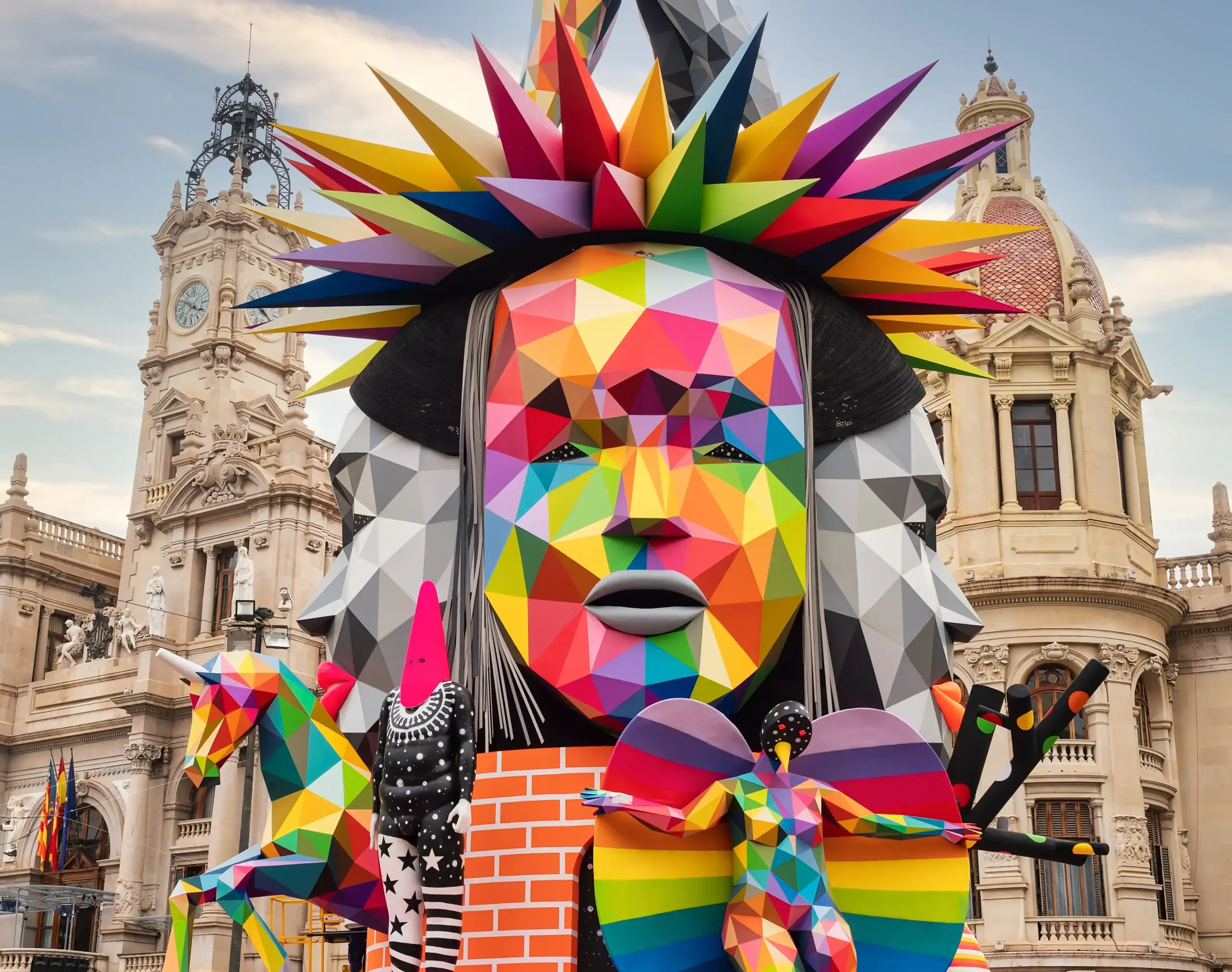
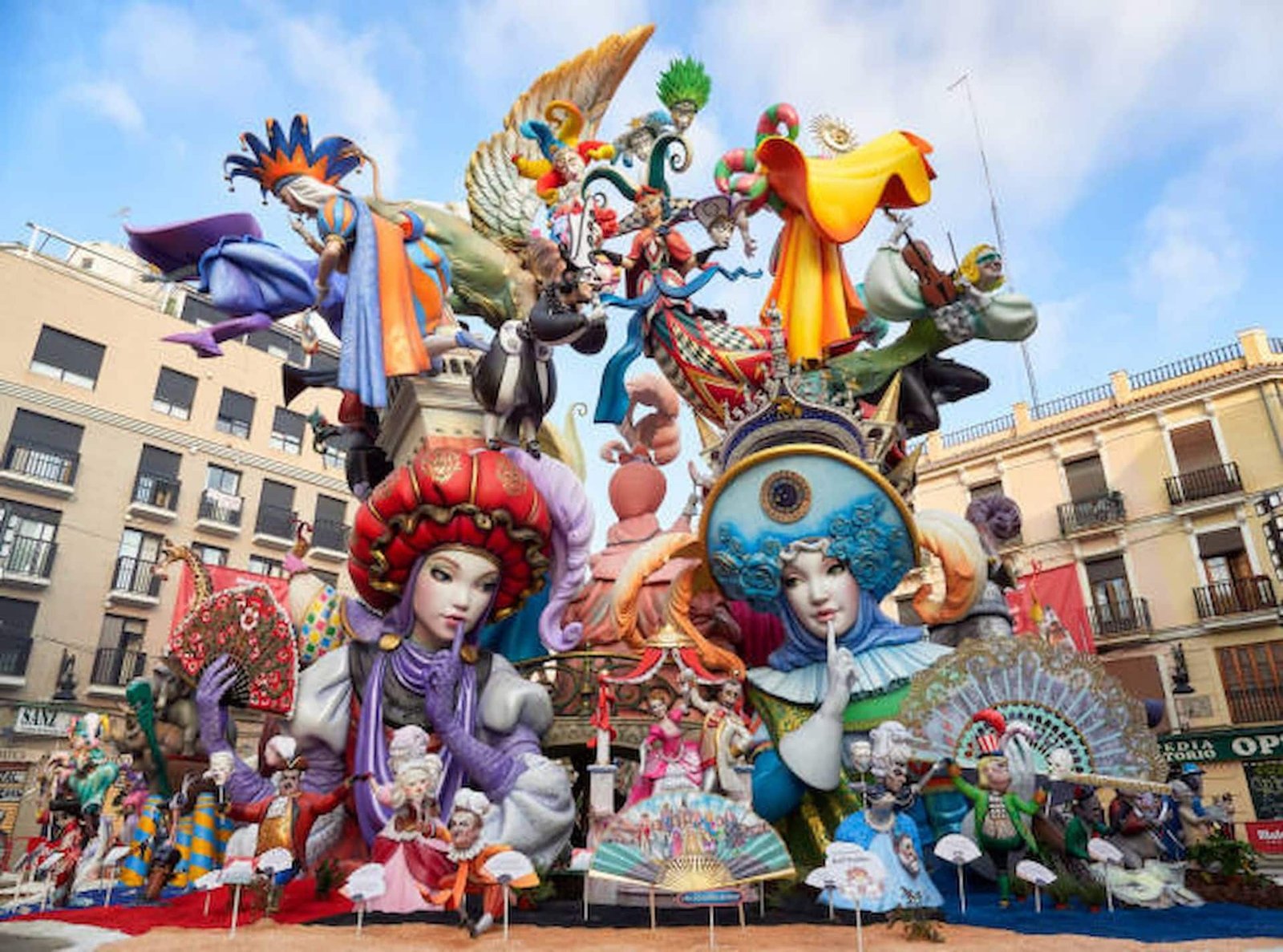
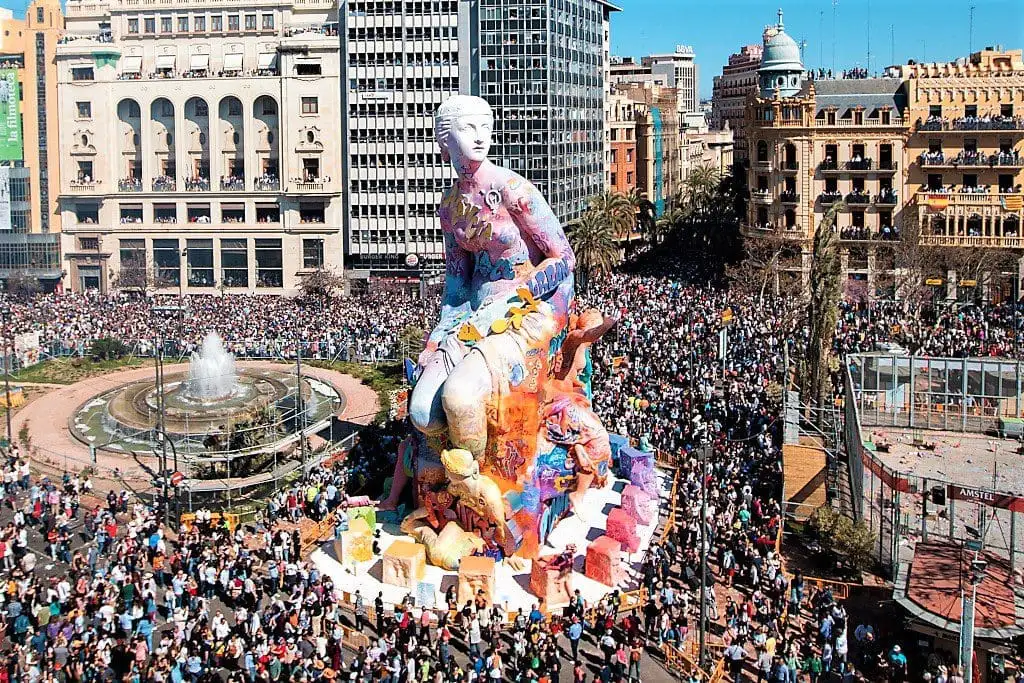
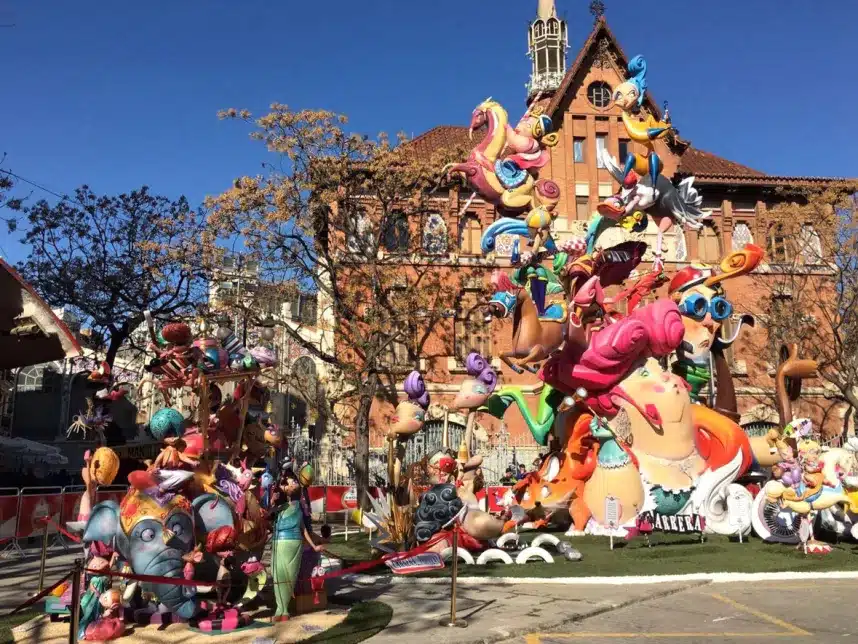
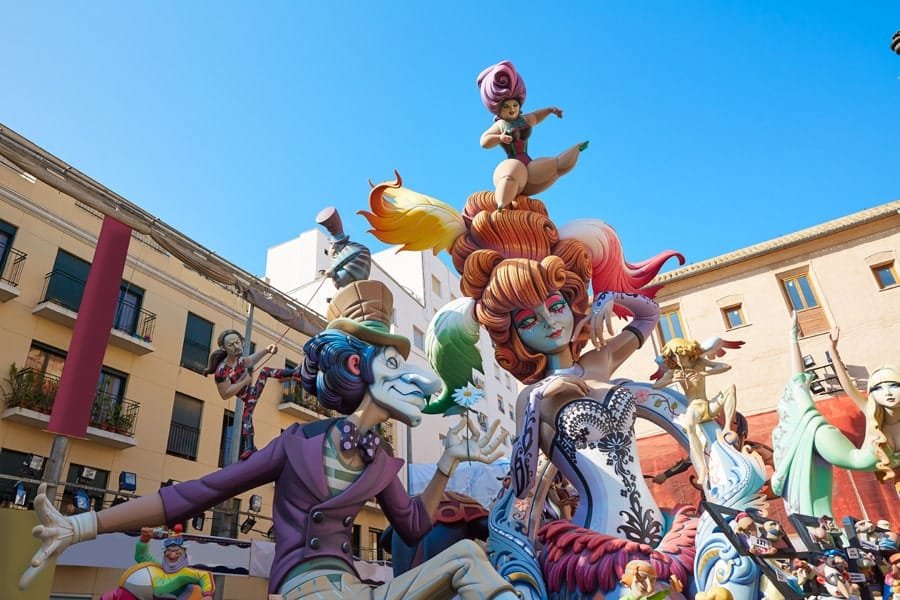
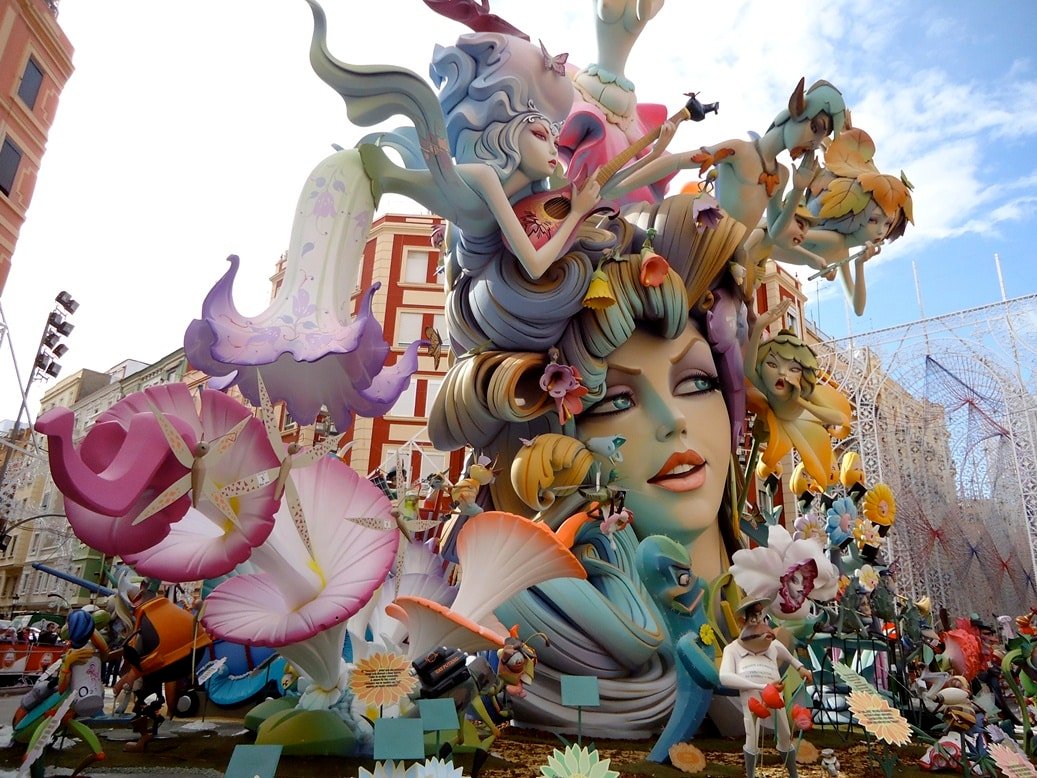
Las Fallas Valencia is one of Spain’s most important traditional celebrations and one of the most visually spectacular cultural festivals in Europe. The festival transforms Valencia into a city-wide celebration of monumental sculpture, satire, fire, music, traditional clothing, religious ceremonies, fireworks and community life. Its defining feature is the falla, a large artistic monument created by specialist artists and supported by local Fallas commissions.
The monuments are constructed from numerous sculptural figures known as ninots. These figures often represent public personalities, social issues, popular culture and current events through humour, exaggeration and satire. After being displayed throughout the city, the monuments are ultimately destroyed by fire in the Cremà, creating the festival’s distinctive cycle of creation, exhibition and renewal. UNESCO recognises the Fallas of Valencia as Intangible Cultural Heritage of Humanity because of its community traditions, craftsmanship, rituals and transmission of cultural knowledge between generations.
Las Fallas is not a single-site event. Streets, plazas, neighbourhoods, cultural institutions and public spaces throughout Valencia become part of the celebration. This allows visitors to experience both the large official ceremonies and the more local atmosphere created by individual Fallas commissions.
Enjoy Your Event Stress-Free with Spain Travelo
Planning a trip around a festival, concert, cultural celebration, or business event in Spain can be time-consuming—finding tickets, accommodation, transportation, and local information takes effort. Spain Travelo makes it easier by bringing essential event information, travel planning, and support together in one place.
The festival combines ancient customs with contemporary artistic expression. Visitors can encounter traditional Valencian clothing and music alongside enormous modern sculptures, sophisticated pyrotechnics and contemporary satirical themes. The result is a cultural celebration that is simultaneously a neighbourhood tradition, public-art event, religious observance and major tourist attraction.
Cultural Significance & Origins
The origins of Las Fallas are connected with Valencia’s historic artisan and carpentry communities and traditions surrounding the arrival of spring. Visit Valencia explains that the celebration developed from the practice of burning old furniture and wooden objects, while its connection with Saint Joseph also reflects the saint’s traditional association with carpenters.
Over time, the simple burning tradition developed into the construction of elaborate artistic monuments. Local communities began creating figures and scenes that could be displayed publicly before being burned. Satire became a central characteristic, allowing the monuments to comment humorously on politics, society, celebrities and everyday life.
The festival became increasingly organised through Fallas commissions. These neighbourhood associations play a fundamental role in maintaining the tradition, organising activities, financing monuments and passing knowledge between generations.
UNESCO’s recognition highlights the importance of the festival beyond its spectacular appearance. The cultural heritage includes sculpture, traditional clothing, music, fireworks, religious ceremonies, craftsmanship and the collective participation of local communities.
The tradition also demonstrates how an ephemeral artwork can become an important expression of community identity. The fact that the monuments are intentionally destroyed makes their creation, public display and final burning part of a continuous cultural cycle.
Traditions, Rituals & Customs
La Crida
La Crida is the traditional call that welcomes people to participate in the Fallas celebrations. It is an important ceremonial moment associated with Valencia’s Fallera Mayor and the beginning of the main festive cycle.
Mascletà
The Mascletà is one of the most distinctive traditions. Instead of concentrating primarily on visual fireworks, it is built around rhythm, controlled explosions and powerful sound. The central municipal Mascletà attracts very large crowds and has become one of the festival’s best-known experiences. Visit Valencia states that the traditional programme includes daily Mascletà performances during the main celebration period.
Plantà
The Plantà is the process of installing the Fallas monuments. Large monuments can require specialist equipment, cranes and carefully coordinated teams, while traditional methods and craftsmanship continue to form part of the practice.
Ofrenda de Flores
The Flower Offering is one of the most emotional and visually distinctive ceremonies. Fallas commissions participate in processions carrying flowers to the Virgen de los Desamparados, creating an enormous floral composition around the image of Valencia’s patron saint.
Cremà
The Cremà is the final transformation of the monuments. The Fallas are burned in controlled fires, symbolising renewal and the continuation of the tradition into another cycle. UNESCO identifies the burning of the monuments as a central part of the festival’s cultural meaning.
What to Expect at the Festival
Visitors should expect Valencia to feel substantially different during Las Fallas. The festival extends across neighbourhoods rather than being contained within a conventional event venue, so discovering the city on foot is one of the best ways to experience it.
Large Fallas monuments stand in streets and squares, often surrounded by crowds examining their detailed figures and satirical scenes. Children’s Fallas are also an important part of the tradition and provide smaller-scale versions of the monumental art.
The soundscape is equally distinctive. Marching bands, fireworks, Mascletà performances and neighbourhood celebrations create an atmosphere that can be intense, especially around major public events.
Visitors can expect:
- Monumental Fallas sculptures
- Children’s Fallas
- Satirical ninots
- Mascletà pyrotechnic performances
- Traditional Valencian costumes
- Marching bands
- Religious processions
- Flower ceremonies
- Fireworks
- Street decorations
- Neighbourhood celebrations
- Traditional Valencian food
- The final Cremà
The official tourism authority notes that hundreds of monuments are installed throughout Valencia, making the festival much larger than the central celebrations alone.
Comfortable walking shoes are recommended because visitors can spend substantial amounts of time moving between different neighbourhoods and monuments.
Date & Schedule
Festival dates: February 28 – March 19, 2027
The main programme follows the traditional Fallas calendar, although the complete official programme should be checked through the Junta Central Fallera once all activities are confirmed.
February 28: Opening celebrations and the beginning of the published festival period.
March 1–19: Daily Mascletà performances traditionally take place at Plaza del Ayuntamiento, creating one of the central recurring spectacles of the celebration.
March 15–16: The Plantà traditionally takes place, when the Fallas monuments are completed and installed for public viewing and judging.
March 16–17: Awards and recognition activities traditionally follow the judging of the monuments.
March 17–18: The Flower Offering traditionally brings thousands of participants toward Plaza de la Virgen. Major evening fireworks are also part of the traditional programme.
March 19: The festival concludes with the Cremà, when the Fallas monuments are burned in a sequence of controlled fires.
Visiting this event? Don’t miss out on these amazing activities and local experiences while you’re here.
Main Events & Programme
La Crida
La Crida is an important ceremonial opening associated with the Fallera Mayor and the city’s Fallas community. It symbolically invites Valencia and its visitors to participate in the celebrations.
Mascletà
The Mascletà is one of the most anticipated daily public events. Its emphasis on rhythm, percussion-like explosive sequences and physical sound makes it very different from a conventional fireworks display.
Plantà
The Plantà reveals the completed Fallas monuments. This is when visitors can fully appreciate the artistic work, scale, humour and craftsmanship of the monuments before they are judged and eventually destroyed.
Fallas awards
The monuments are judged according to different categories, with the Special Section containing some of the most ambitious and highly regarded creations.
Flower Offering
The Ofrenda combines traditional costumes, music, community participation and religious devotion. Thousands of participants carry flowers toward the enormous floral structure dedicated to the Virgen de los Desamparados.
Nit del Foc and fireworks
Large-scale fireworks form an important part of the night-time programme, giving visitors another opportunity to experience Valencia’s deep connection with pyrotechnic traditions.
Cavalcada del Foc
The Cavalcada del Foc is a fire-themed procession involving performers, traditional imagery, fireworks and flames. It provides a dramatic transition toward the final celebrations.
Cremà
The Cremà is the climax of the festival. The monuments that have occupied the city’s streets are transformed into ashes through controlled fires, completing the annual cycle of Fallas.
Traditional Dress, Arts & Crafts
Traditional Valencian clothing is one of the most recognisable visual elements of Las Fallas. Falleras wear elaborate dresses made with carefully selected fabrics and detailed traditional accessories.
The costumes are supported by a wider network of specialist craftsmanship, including textile work, embroidery, jewellery, hairdressing and traditional accessory production. UNESCO specifically identifies traditional dress, silk production, jewellery, fan-making and other specialist crafts as part of the cultural heritage associated with the festival.
Fallas sculpture is another major craft tradition. Artists must combine sculpture, modelling, painting, structural construction and installation techniques to create monuments that can reach considerable dimensions.
The ninots are particularly significant because they combine visual craftsmanship with storytelling and satire. Their exaggerated characters and scenes often encourage visitors to interpret contemporary society through humour.
The Fallas tradition therefore supports an extensive creative ecosystem extending far beyond the monuments themselves.
Traditional Food & Local Specialties
Food plays an important role in the social side of Las Fallas. Visitors will find temporary food stalls, bakeries, cafés and restaurants offering Valencian specialities throughout the city.
Buñuelos de calabaza
Pumpkin fritters are strongly associated with the Fallas season and are commonly served with hot chocolate. They are particularly popular from traditional bakeries and temporary street stalls.
Paella Valenciana
Valencia is internationally associated with paella. Traditional Valencian paella commonly includes rice, chicken, rabbit, green beans and garrofó beans.
Horchata
Horchata de chufa is a traditional Valencian drink made from tiger nuts. It is often enjoyed with fartons, a sweet elongated pastry.
Chocolate con churros
Hot chocolate with churros is another popular sweet option and can be particularly appealing after evening celebrations.
Visitors should also explore Valencia’s markets and traditional bakeries to discover local ingredients, pastries and seasonal specialities.
Location & Festival Areas
Las Fallas takes place throughout Valencia, with individual neighbourhoods hosting their own Fallas monuments and activities.
Plaza del Ayuntamiento: One of the most important central locations, particularly associated with the main Mascletà and municipal celebrations.
Plaza de la Virgen: A major religious and cultural focal point associated with the Flower Offering.
Ruzafa: One of Valencia’s liveliest neighbourhoods during the festival, with numerous Fallas commissions and street celebrations.
L’Eixample: A central area with numerous monuments, restaurants, shops and pedestrian routes.
Ciutat Vella: Valencia’s historic centre provides an atmospheric environment for discovering monuments alongside historic architecture.
Turia Gardens: The gardens and surrounding areas are useful for reaching different parts of the central city and are also associated with major fireworks activity.
The city-wide nature of the celebration means visitors should not limit themselves to the most famous central locations. Exploring different neighbourhoods reveals how strongly the festival is connected with local communities.
Getting to the Festival
Valencia is accessible by air, high-speed rail, conventional rail, coach and road.
Valencia Airport is the city’s principal international airport and is connected with central Valencia by public transport and road services.
Joaquín Sorolla railway station handles important high-speed rail services, including connections with Madrid and other Spanish cities. Estació del Nord provides additional railway services and is located close to the historic centre.
Visitors arriving from Madrid or Barcelona can also reach Valencia by high-speed train, making the city practical for travellers combining several Spanish destinations.
Once in Valencia, walking and public transport are generally preferable to driving because central streets can become crowded or restricted during major celebrations.
Where to Stay Nearby
Ciutat Vella: A strong choice for visitors who want to remain close to historic monuments, major squares, restaurants and central celebrations.
Ruzafa: Suitable for visitors who want a lively neighbourhood environment with restaurants, cafés, independent businesses and numerous Fallas activities.
Eixample: Offers a central location with good access to shopping, restaurants and several festival areas.
Extramurs: A practical option for visitors wanting relatively central accommodation with convenient transport connections.
Quatre Carreres: Useful for visitors interested in the southern side of the city and the City of Arts and Sciences.
Cabanyal and the beach area: Suitable for travellers who want to combine the festival with Valencia’s Mediterranean atmosphere.
Accommodation demand can be extremely high during Las Fallas, so visitors should arrange hotels or apartments as early as possible.
What Visitors Can Participate In
Visitors can experience much of Las Fallas simply by walking through Valencia and observing the monuments and neighbourhood activities.
Popular ways to participate include:
- Exploring Fallas monuments
- Visiting children’s Fallas
- Watching Mascletà performances
- Attending public processions
- Observing the Flower Offering
- Visiting the Fallas Museum
- Visiting the Ninot Exhibition
- Taking guided Fallas tours
- Sampling traditional Valencian food
- Viewing fireworks
- Exploring Fallas neighbourhoods
- Watching the Cremà from designated public areas
Visitors should remember that this is a living local tradition rather than a festival created exclusively for tourists. Respecting religious ceremonies, private neighbourhood spaces, Fallas commissions and crowd-control instructions is important.
Things to Do Before or After the Festival
Valencia offers numerous cultural and architectural attractions that can easily be combined with a Fallas visit.
The City of Arts and Sciences is one of the city’s best-known modern landmarks and includes several major cultural and scientific attractions.
The historic centre is ideal for visiting Valencia Cathedral, the Silk Exchange, Central Market and the historic city gates.
The Turia Gardens provide an extensive green corridor through the city and are suitable for walking and cycling.
Visitors can also explore the Marina of Valencia, Malvarrosa Beach and the Cabanyal district.
For those wanting to understand Fallas beyond the street celebrations, the Fallas Museum is especially worthwhile. The museum preserves the ninots that have been saved from burning through the traditional popular selection process. Valencia City Council notes that the museum also contains Fallas posters, costumes and other objects connected with the festival.
Local Food & Restaurants
Valencia’s restaurant scene provides an excellent complement to the festival.
Visitors should look for traditional restaurants specialising in paella, arroz dishes and Valencian cuisine. Ruzafa, Ciutat Vella, Eixample and Cabanyal all provide a broad choice of restaurants and cafés.
Traditional bakeries are particularly useful for discovering buñuelos and other local pastries, while horchaterías provide opportunities to try horchata with fartons.
The Central Market is another excellent place to explore Valencian produce and ingredients.
During the festival, temporary food stalls can also be found around busy areas. Visitors should expect queues at popular locations and should allow additional time for meals during the busiest celebrations.
Ticket Information & Access
Las Fallas is primarily a public street festival, meaning many of its most important experiences do not require a general admission ticket.
Street monuments, public processions, outdoor celebrations and major public spectacles are generally accessible without a festival-wide entrance fee.
Certain attractions and premium experiences can require separate tickets. For example, the Special Section Fallas ticket offered in a previous edition cost €16 for adults, equivalent to approximately $19, and €12 for children, equivalent to approximately $14. These are previous-edition reference prices rather than confirmed 2027 prices.
The Valencia Tourist Card has also previously provided public transport benefits and free or discounted admission to selected museums and attractions. Previous published adult prices were approximately $17 for 24 hours, $23 for 48 hours and $29 for 72 hours.
Visitors should check official ticket pages before purchasing because individual museums, guided tours, viewing areas and special activities may have separate admission requirements.
Official Event Information
The official authority responsible for important aspects of Las Fallas is the Junta Central Fallera, which publishes official announcements, programme information, Fallas regulations, commission information and updates concerning the festival.
Official website: https://www.fallas.com/
Official tourism information: https://www.visitvalencia.com/en/events-valencia/festivities/the-fallas
Official Valencia City Council website: https://www.valencia.es/
The Junta Central Fallera is already publishing information connected with the upcoming Fallas cycle, including official administrative procedures, monument-related preparations and the selection process for the city’s major Fallas.
The official programme should be checked before travelling because individual activities, routes, access arrangements and public-space restrictions can change.
Tickets Sell Out
in Minutes
Maps
Video
FAQ's
Is Las Fallas Valencia free to attend?
Most of the main festival takes place in public streets and squares, so visitors can see many monuments, processions and outdoor celebrations without purchasing a general festival ticket. Some museums, guided tours, Special Section viewing opportunities and other attractions require separate admission. Visitors should check the official listing for each activity before attending.
What are the most important traditions of Las Fallas?
The principal traditions include building the Fallas monuments, displaying ninots, holding Mascletà performances, participating in processions, presenting flowers to the Virgen de los Desamparados and eventually burning the monuments during the Cremà. Together these traditions combine artistic craftsmanship, community participation, religious customs, music and pyrotechnics. UNESCO recognises the festival as Intangible Cultural Heritage of Humanity because of this distinctive combination of cultural practices.
Where is the best place to experience Las Fallas?
There is no single location that represents the entire festival because Fallas monuments and activities are distributed throughout Valencia's neighbourhoods. Plaza del Ayuntamiento is particularly important for the central Mascletà, while Plaza de la Virgen is associated with the Flower Offering. Exploring Ruzafa, Eixample, Ciutat Vella and other neighbourhoods provides a broader understanding of the community-based nature of the celebration.
Is the Mascletà suitable for everyone?
The Mascletà is an extremely loud pyrotechnic experience and is designed around powerful sound, rhythm and controlled explosions rather than conventional visual fireworks. People who are sensitive to loud noises should consider standing farther from the main firing area and using suitable hearing protection. Large crowds are also common, so visitors should follow safety instructions and avoid entering restricted areas.
Why is Las Fallas recognised by UNESCO?
Las Fallas was recognised because it preserves a complex combination of community traditions, artistic skills, craftsmanship, music, traditional clothing, religious rituals and pyrotechnic practices. The festival also provides mechanisms for transmitting knowledge from older generations to younger participants through Fallas commissions, artists and specialist craftspeople. Its strong connection with Valencian identity and community participation is an important part of its cultural significance.